Abbie Lieberman
Senior Policy Analyst, Early & Elementary Education
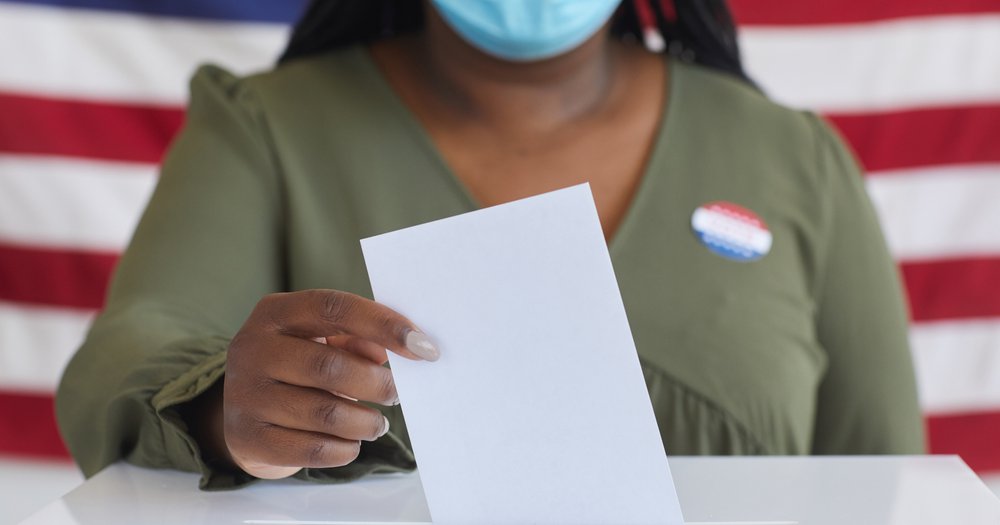

There鈥檚 just one week to go until Election Day and with so much at stake, it can be hard to think about anything other than the presidential election and which party will control Congress. Between the pandemic, resulting recession, calls for social justice and action to combat systemic racism, and the potential for civil unrest after the election, it鈥檚 not surprising that federal races are dominating the news cycle. And while the outcome of the federal elections will affect early childhood education (ECE), state elections are also important for children and families.
A significant portion of public funding for ECE is allocated at the state level. for relevant programs and initiatives and also set taxation rates or other revenue generating streams that can be funding sources for ECE. For instance, they determine how much to invest in state-funded pre-K for three- and four-year-olds and .
And the wide variation in public pre-K access and quality across states shows just how substantially these investments differ nationwide. This year, with state budgets hit hard by COVID-19, early education programs are especially vulnerable to cuts, if history is any indication. from the National Institute for Early Education Research found that the Great Recession reduced state pre-K investment long-term, and the 鈥渨orst impacts occurred up to four years after the recession began.鈥�
State leaders also influence policies around the design of ECE programs and systems. This includes creating quality rating and improvement systems, setting educator qualification requirements, determining health and safety guidelines for program licensing, and so much more. States also decide how federal ECE programs are implemented. There are multiple federal programs that support young children鈥檚 care and education. The Child Care and Development Block Grant (CCDBG), Head Start, and Preschool Development Grants are the primary ones. CCDBG, for example, is funded by the federal government but administered by states. And states have significant leeway in who qualifies for child care assistance, how subsidy payments are distributed, and how generous repayment rates are.
Given how important state leaders are when it comes to ECE, let鈥檚 look at what鈥檚 on the ballot at the state level next week.
are holding gubernatorial elections: Delaware, Indiana, Montana, New Hampshire, North Carolina, North Dakota, Vermont, Washington, West Virginia, Montana, and Utah. So are American Samoa and Puerto Rico. Montana and Utah are the only states that don鈥檛 have incumbents running, and only Montana鈥檚 open seat is a 鈥渢oss-up.鈥�
Montana鈥檚 current governor, Steve Bullock, a Democrat, made establishing a state-funded pre-K program one his in office. He was able to secure funding for a pilot program a few years back, but unfortunately, his state legislature a bill expanding the program in 2019. Bullock has reached his term limit as governor and is now running for Senate, but pre-K remains an important issue in this heated gubernatorial race.
Providing voluntary pre-K for all four-year-olds in the state is front and center in Democratic candidate . U.S. Rep. Greg Gianforte, the Republican candidate, has said that he doesn鈥檛 plan to prioritize public pre-K, and will instead focus on . Cooney also promises to 鈥渋ncrease the funding capacity for start-up, expansion, and licensing compliance grants to support early childhood businesses so that every parent who wants to work can afford to work without jeopardizing the health, safety, or development of their children.鈥�
Inevitably, many of the gubernatorial campaigns are focusing on the current COVID crisis. Because the pandemic has meant virtual learning for PreK-12 students and forced child care providers to shutter their businesses, early education has been brought into the limelight like never before. Incoming state leaders will be responsible for making tough decisions about how to keep families and educators safe and how to keep businesses afloat during the pandemic.
The outcomes of the state elections could also have a significant impact on school choice, funding, teacher pay, and other education issues. A by Kevin Mahnken at The 74 gives a helpful overview of just how much state elections can influence education policy, using North Carolina as an example. It also explains how difficult it can be for governors to accomplish their goals without support from the state legislature. States with trifectas (where executive and branches of legislature are the same party) may be more likely to pass legislation. 鈥淭rifecta status鈥� is at stake in North Carolina, as it is in all with gubernatorial or legislative elections this fall. And state legislative races are of particular importance now, as the winners (in most states) will be in 2021 and are likely to redraw maps to benefit their political party.
It鈥檚 also worth noting that are holding state board of education elections and four states will be selecting chief state school officers, both of which can significantly impact early learning. Pre-K and the early grades usually fall under the direction of the state department of education, and the Head Start Collaboration Office may also fall under the purview of these leaders.
And while many ECE policies are decided by elected or appointed officials, some issues are directly voted on with state ballot initiatives. In Colorado, Proposition EE, the Tobacco and E-Cigarette Tax Increase for Health and Education Programs Measure, could mean $2 billion over ten years for a for four-year-olds and $375 million for public schools. In California, Proposition 15, the Tax on Commercial and Industrial Properties for Education and Local Government Funding Initiative, would generate between , 40 percent of which would be dedicated to public schools and 60 percent to local governments to support other community services. Even when ECE programs are not specifically targeted, ballot initiatives about taxation will impact state budgets broadly and determine what revenue is available for public programs.
Next Tuesday鈥檚 results will have big implications for children and families for years to come. There is no doubt that a Biden administration and a Democratic majority in Congress could bring a meaningful focus on and investment in ECE. But regardless of what happens at the federal level, states have a great deal of influence over our youngest learners. Many of us think about early education year-round, and some of our readers advocate for this issue professionally; elections are a chance for each of us to influence what matters to us. So if you haven鈥檛 voted yet, do your research to figure out how your federal, state, and local elections will impact young children, families, and early childhood educators.
Interested in staying up to date on education and workforce policy? Subscribe to our newsletter to receive updates on the latest from our experts.
Senior Policy Analyst, Early & Elementary Education
Director, Early & Elementary Education Policy