Sarah Gilliland
Senior Policy Manager, New Practice Lab
Program for infants with suspected disabilities can start before they are born.

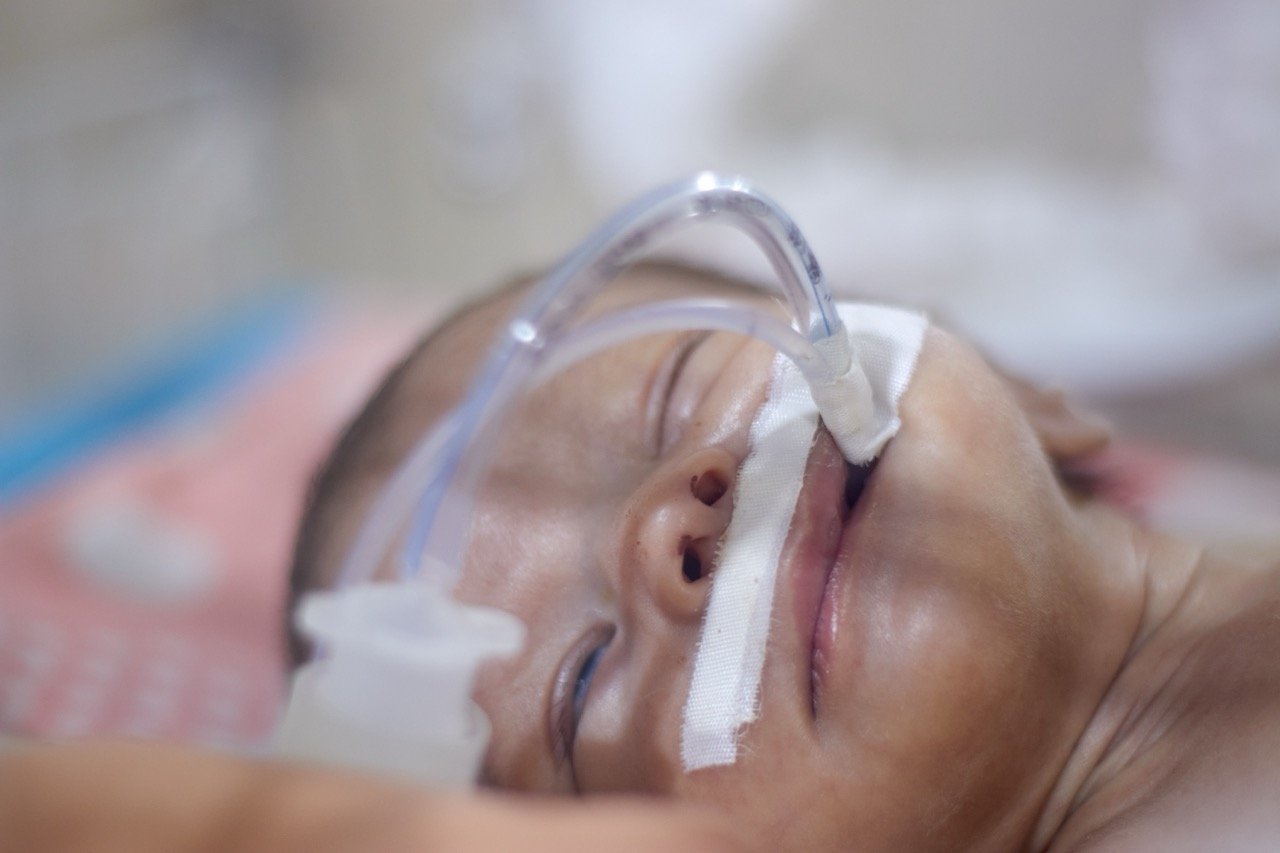
Earlier this year, language in a fiscal year 2026 appropriations bill allowed the use of federal funds to connect expectant parents with early intervention services when they receive a prenatal diagnosis of disability or delay. This policy change helps ensure that families expecting a child with Down syndrome, spina bifida, and other diagnosable conditions are notified about available developmental services and therapies, and can be quickly connected once the baby is born.聽
The provision is new this year, but it鈥檚 not a new idea. Previously proposed in Biden budgets and introduced by Democratic legislators, this bipartisan provision shows that it鈥檚 possible to advance family-forward policies in a challenging political environment.
Specifically, the language allows FY2026 Individuals with Disabilities Education Act (IDEA) Part C funds to be used to identify potentially eligible parents through , for public awareness activities, and for referrals. It also stipulates that when funds are used for these purposes, referral and eligibility processes must be completed within 45 days following a child鈥檚 birth.聽
In May, the U.S. Department of Education issued :
While the agency guidance highlights limitations to聽 鈥減olicy by appropriation,鈥� this is a step forward for the early intervention program.聽
Early intervention programs are available in every state, and help families of infants and toddlers with disabilities and developmental delays access therapies that can help them grow and thrive. The program leverages a period of intense neural development to help infants and toddlers play, grow, and learn. Multidisciplinary teams assess family routines and goals, and then evaluate infants and toddlers for program eligibility. Once eligibility is determined, families begin receiving agreed-upon services through an Individualized Family Service Plan (IFSP).聽
The recognizes evidence-based impacts of early intervention on two of its identified early childhood policy goals: parental health and emotional well-being, and optimal child health and development.

The findings on parental health and well-being are important. Beyond therapies for infants and toddlers, early intervention programs also support families through service coordination and coaching. In fact, serving families is foundational to early intervention, given that child and family well-being are so tightly linked.聽
Offering outreach and referrals in the prenatal period is a natural extension of that family-facing principle. Pregnancy is often a time of early bonding and preparation, and during a confusing and overwhelming period. Expectant parents can begin forming relationships with service coordinators and envisioning their transition from labor and delivery or neonatal intensive care unit (NICU) to home, knowing they will have support.聽
Early intervention is also designed, in part, to help prepare children with delays and disabilities for educational services throughout childhood and into early adulthood. Eligible children can be connected with early childhood special education (IDEA Part B Section 619) and then special education (IDEA Part B).聽
Thus, connecting expectant parents with early intervention may also provide them with information about disabled children鈥檚 educational opportunities and rights. Though school may seem distant in pregnancy, expectant parents may find it reassuring to know that disabled children are guaranteed education services that meet their needs and strengths.

However, strong policy must be supported with strong implementation. We reported on early intervention service connection to families with babies who are premature, low-birthweight, or with NICU stays, and found that cultural, technological, structural, and procedural barriers interrupt successful service delivery. A one-time funding increase鈥�though welcome鈥�will not begin to chip away at these challenges. Many states struggle to deliver timely services due to longstanding funding gaps and workforce shortages. It is difficult to imagine new initiatives performing well in a system already under significant pressure.聽
State Part C coordinators and federal agency counterparts should consider the following questions:聽
Can your current early intervention system support prenatal connection now? The new language does not require states to connect expectant parents with early intervention services. Part D of the document . However, many Part C plans have been submitted. In those cases, states that would like to use this flexibility can revise them to include prenatal connection, but those revisions are subject to a required comment period.聽
Considering the moving parts, this may be a time for pilots and cost-modeling rather than a full-fledged, expanded service model. Many states would benefit from modernizing their systems to meet current needs before taking on new challenges. Early intervention programs rely on data systems that don鈥檛 interact with others, or provide feedback loops between care team members, physicians, and families. Focusing on critical needs first will enable smoother service expansion.聽
Who will champion early intervention most effectively? The guidance provides broad flexibility on this point, but states should consider how best to coordinate with expectant parents. Genetic testing companies and genetic counselors are options, but ob-gyn and midwifery practices, as well as doulas working with Medicaid-enrolled families, may also be important touchpoints. Connection with early interventionists themselves can be ideal, as parents in one study wanted to work with professionals who Connecting expectant parents with other families of disabled children can be helpful, but so is hearing directly from disabled adults who can share their experiences, challenges, and hopes for their lives.聽
Who will be eligible? States set their own eligibility criteria for early intervention services, and qualifying conditions vary widely from place to place. The recent guidance does not specify which prenatal diagnoses will qualify for identification and referral. This is likely by design; many policy decisions in early intervention programs are delegated to states, but this contributes to unequal access. One recommendation from an expert in the field is that .聽 It might also be time for a broader conversation about aligning eligibility criteria more consistently across states and across all ages served in early intervention.聽
This new flexibility may reflect a shift in policymakers’ thinking about the current state of early intervention, which has largely remained unchanged since passage in 1986. Lack of program interference may signal bipartisan acknowledgment that early intervention matters deeply to people and should not be tinkered with lightly. However, federal investments in Part C have not kept pace with program demand, and states are struggling to serve eligible families. Each state coordinator could tell a tale of unmet need, and children not receiving services despite Part C鈥檚 lofty goal of evaluating and serving all eligible children.
On the positive side, over half a million鈥�or about seven percent鈥�of children under age three are being served with early intervention in the United States every year, and this is something to be proud of. However, we don鈥檛 have a good sense of how well families are served by the program in its current state, not to mention how many never get it. We are working to understand that better across our respective programs, the New Practice Lab and Early and Elementary Education Policy, which focus on both the policy and the implementation of early care and education services for children.
For families with prenatal diagnoses, this policy change supports more timely referral and services on the early side of a relatively short eligibility period. For infants and toddlers not referred until delays are noticed, there is more ground to make up and a shorter timeframe to help families before toddlers age out of services. Transitions out of services can be stressful, as families who have just become acclimated to the program and providers shift to a new service model through preschool special education. Alternatively, a few states, such as Maryland and Tennessee, allow parents to extend early intervention up to age five if they prefer to be served in that modality鈥�an important acknowledgment that parent choice and preference should be honored as they support their child鈥檚 ability to develop and thrive.聽 The future state of early intervention programs, and all early childhood programs, can benefit from a stronger family voice. We need to ask鈥�and policymakers need to listen.
Senior Policy Manager, New Practice Lab
Project Director, Early Development & Disability