
What Now for Yemeni Detainees?
Millions of people travel to Saudi Arabia each year. Last month, nine of them were detainees from Guantanamo Bay.
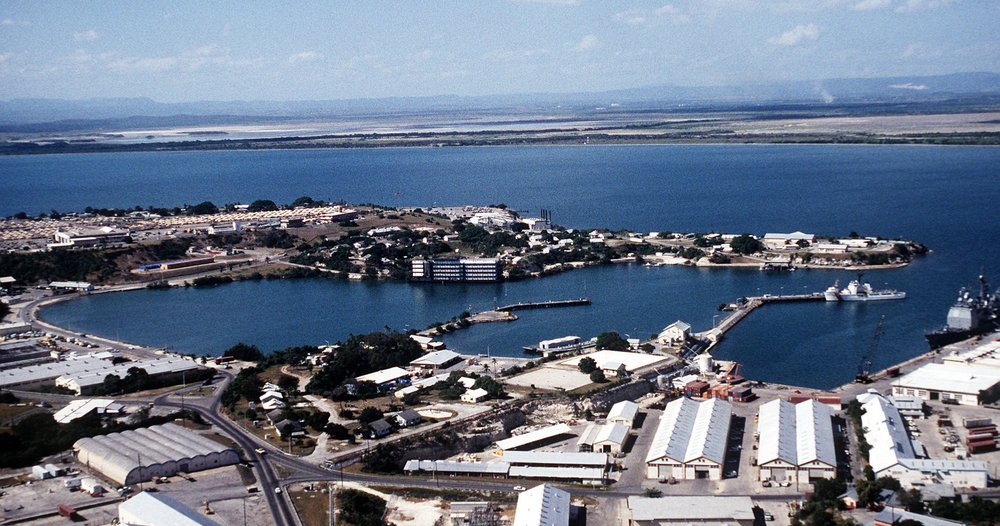
After 14 years of detention at the U.S. Naval Station Guantanamo Bay, a detention facility about 400 miles from Miami, FL, Tariq Ba Odah, a high profile detainee and Yemeni national, on April 16, 2016, was repatriated to Saudi Arabia along with eight other Yemeni detainees. Ba Odah achieved notoriety as one of the longest hunger strikers at the infamous camp, located in the tropical Oriente Province on the southeast corner of Cuba. Numerous reports written about him, including a profile in Rolling Stone magazine, brought attention to the atrocities prisoners experience under U.S. supervision, such as routine force-feeding, which Ba Odah endured twice daily, and which involves strapping down the detainee and pumping a liquid dietary supplement into the stomach through a tube forced into the nostril.
The roughly 780 suspected terrorists who have been ushered through the gates of the detention facility have come from 49 nations鈥�115 people from Yemen, or about 15 percent, according to data from the comprehensive New York Times Guantanamo Docket. The U.S. government is prohibited by law from transferring Guantanamo detainees back to Yemen, which is racked by civil war and home to al Qaeda in the Arabian Peninsula. This means that, with 263 days left on the GTMO clock, a website counting the remaining days President Obama has to close the facility before he leaves office, 80 detainees remain鈥� Yemeni.
Obama announced on February 23 the submission of his national security team’s proposal to Congress to close the enduring American institution, calling it a “stain on our broader record of upholding the highest standards of rule of law.” Among other challenges, removing this stain will require negotiating with willing third nations the resettlement of 43 Yemenis.
The first step in the president鈥檚 four-part strategy is to transfer the detainees that have already been approved for transfer, a somewhat dubious category that detainees can remain in for years, provided that proper security conditions are not met in their home nations. (Those charged or convicted in the Military Commissions System and those deemed too hazardous to American security to ever be released comprise the other three categories of detainees.)
Eighty percent of captives approved for transfer indeed are Yemeni, complicating the president鈥檚 task of repatriating them. The environment in Yemen is deemed too dangerous by the U.S. government to repatriate Yemenis to their country of origin. Yemen鈥檚 ongoing civil war exacerbated an already fragile security environment that enabled AQAP to thrive, seizing more territory across the embattled nation than in history.
With at least four foreign nations pursuing their own agendas at the southern tip of the Arabian Peninsula — Saudi Arabia and the United Arab Emirates backing Yemen鈥檚 government against the Iran-allied Houthi rebel group, and the United States conducting a separate, but overlapping drone war — it is unlikely that the Yemenis stuck in America鈥檚 offshore detention facility will ever be returned to their beset homeland.
鈥淏ecause of the situation in Yemen right now, we don鈥檛 have any way for the detainees to return to Yemen,鈥� said Ali Omiran, the deputy consular at the Embassy of the Republic of Yemen, in a phone conversation (his statements were translated by an assistant).
鈥淭he bottom line will be, now we are not sending anyone back. We are not issuing any letters for these people to go back because there is no way they can go back right now.鈥�
Which is why, last month, nine detainees made the journey to Saudi Arabia. In addition to Ba Odah, the other prisoners released were: Ahmed Umar Abdullah Al-Hikimi; Abdul Rahman Mohammed Saleh Nasir; Ali Yahya Mahdi Al-Raimi; Muhammed Abdullah Muhammed Al-Hamiri; Ahmed Yaslam Said Kuman; Abd al Rahman Al-Qyati; Mansour Muhammed Ali Al-Qatta; and Mashur Abdullah Muqbil Ahmed Al-Sabri.
In lieu of sending them back to Yemen, the Obama administration must rely on agreements with third nations to resettle the Guantanamo prisoners, a confidential process that leaves even Yemeni government officials in the dark, according to Amatalsalam Al Shami, the political officer at the Embassy of the Republic of Yemen responsible for managing the detainee files.
鈥淭hey prepare everything, and they do all the procedures. And when they are just ready to release [prisoners], they just give us a note. That鈥檚 all,鈥� Ms. Al Shami said on the resettlement process.
Ms. Al Shami meets with her counterparts from the Department of State frequently to discuss the status of the Yemeni detainees designated for transfer. At a meeting in Yemen鈥檚 embassy last month, U.S. Special Envoy for Guantanamo Closure Lee Wolosky assured Ms. Al Shami that they 鈥渨ere going to close Guantanamo for sure鈥� she said in an interview. 鈥淎nd now,鈥� she continued, 鈥渢hey are just waiting for other governments to accept Yemenis.鈥�
Mr. Wolosky鈥檚 office at the Department of State ignored a request for comment on the matter.
When asked about other countries aside from Oman and Saudi Arabia, which resettled Yemeni detainees in January and April respectively, which may be in talks to resettle Yemeni detainees, Ms. Al Shami said she did not know.
鈥淭he Emirates has [detainees] too. But I don鈥檛 know exactly,鈥� she said in reference to other potential resettlement nations. 鈥淚 ask him [Wolosky] the same question. He told me we are trying with some governments to accept Yemeni detainees.鈥� The Embassy official was not given further details on future third-country resettlements.
Saudi Arabia, for its part, is an appealing resettlement nation because the more stable country shares a border with Yemen and operates a successful rehabilitation program for extremists. The effort to persuade Saudi Arabia to resettle Yemenis was an on-going initiative that began during the George W. Bush administration, one that, finally, in Obama鈥檚 last months in office, has come to fruition.
While not involved in the diplomatic process, the Yemeni government was kept abreast of developments in the April transfer of nine Yemenis to Saudi Arabia.
鈥淭he last one, we were aware of that. They contacted us, they contacted the ambassador, and even when they weren鈥檛 there they contact our ambassador there in Riyadh,鈥� said Ms. Al Shami.
Yemen鈥檚 government has little information about former Yemeni detainees who were repatriated to Yemen prior to the escalation of conflict. In August 2014, the U.S. government transferred Amin al-Bakri and Fadi al-Maqaleh into Yemeni custody. Bakri and Maqaleh were imprisoned by the U.S. military at Bagram Air Base, Afghanistan, an overseas military prison operated by the United States that has also come under international scrutiny for holding suspects in indefinite detention without due process.
The Yemeni government lost contact with them almost a week after releasing them to their families due to the chaos in their home country, according to Ms. Al Shami.
This is a significant concern for the U.S. government which fears the return of detainees to terror networks upon return to their home nations.
Whether President Obama can whip the international support and assistance to resettle Yemeni detainees in third countries by the end of his tenure remains to be seen. But with the end of the Obama administration approaching, closing Guantanamo Bay may come down more to Yemen than anyone in the White House.
More 麻豆果冻传媒 the Author
Issues
Programs/Projects/Initiatives
Related

How Russia鈥檚 Undersea Nuclear Buildup Is Reshaping the Arctic

The AI Race Is a Clash of Mythologies

What the Iran MOU Gets Right, Gets Wrong, and Leaves Unresolved
