Amy J. Nelson
Director, Future Security Scenarios Lab; Senior Fellow, Future Security Program

The 60-day clock started last Wednesday.聽
Negotiators in Lucerne beginning Friday morning to start the work of converting into something durable on Iran’s nuclear program. The talks were before they began: Israeli strikes on Lebanon continued overnight, killing at least 18 people, in apparent violation of the MOU’s explicit promise to end military operations on all fronts.
The delay is a preview of the difficult road ahead. At the heart of that difficulty is a structural problem that recurs in arms control negotiations鈥攖he arms control paradox鈥攐r the idea that arms control is most urgently needed in times of highest strategic uncertainty. When adversaries are opaque about their interests, intentions and/or capabilities, reaching effective agreements is the hardest. And the concessions required to reduce uncertainty enough to get to the negotiating table are often the same concessions needed to make the agreement meaningful once negotiations begin.聽
Trump set up the test when he from the Joint Comprehensive Plan of Action (JCPOA), also called the Iran Nuclear Deal, in 2018. He called it the worst deal ever, and promised to get a better one. Whether the next 60 days can deliver that depends on what you’re measuring and on whether the administration can escape a trap it has already partly sprung.
On some dimensions, the memorandum of understanding goes further than the JCPOA ever did because its scope is broader. Due to recent military actions, it covers territory the 2015 deal never touched: a post-war ceasefire, the Strait of Hormuz, and $300 billion in reconstruction financing, and full sanctions removal. Critically, it commits to lifting primary sanctions, or prohibitions on U.S. persons and dollar transactions that the JCPOA left untouched. As opposed to the nuclear agreement that was the JCPOA, the MOU speaks to a comprehensive settlement that addresses Iran’s economic integration alongside its weapons potential.
鈥淧otential鈥� is the keyword here. A broad agreement that provides all the MOU promises would be a real achievement. The JCPOA’s fundamental vulnerability, according to the first Trump administration, was always its narrowness: a technically precise nuclear agreement embedded in a hostile political relationship, with no mechanism to address the underlying sources of that hostility, including Iran’s ballistic missile program and its support for armed proxies across the region. Critics on the right called these omissions disqualifying from the start; the JCPOA’s architects called them a necessary bracketing of the achievable. Both were partly right.聽
In terms of its breadth, the MOU’s ambition is of a different kind. The U.S. negotiating team ballistic missiles, while proxy forces and IRGC foreign operations do not appear in the text.聽
The MOU is broader than the JCPOA in some directions, but it is no more complete in others.
The MOU is far less specific on constraints on Iran鈥檚 nuclear program. It notes no enrichment ceiling, no cap on centrifuge capacity, no stockpile limit or verification protocol. The JCPOA ran to 159 pages of technical annexes negotiated by nuclear physicists over 23 months. The MOU’s nuclear provisions are a single paragraph.
Iran’s commitment not to 鈥減rocure or develop nuclear weapons鈥� is the same political declaration it has made for years, including in the JCPOA itself. The 60-day talks are precisely supposed to turn this declaration into an enforceable nonproliferation agreement.
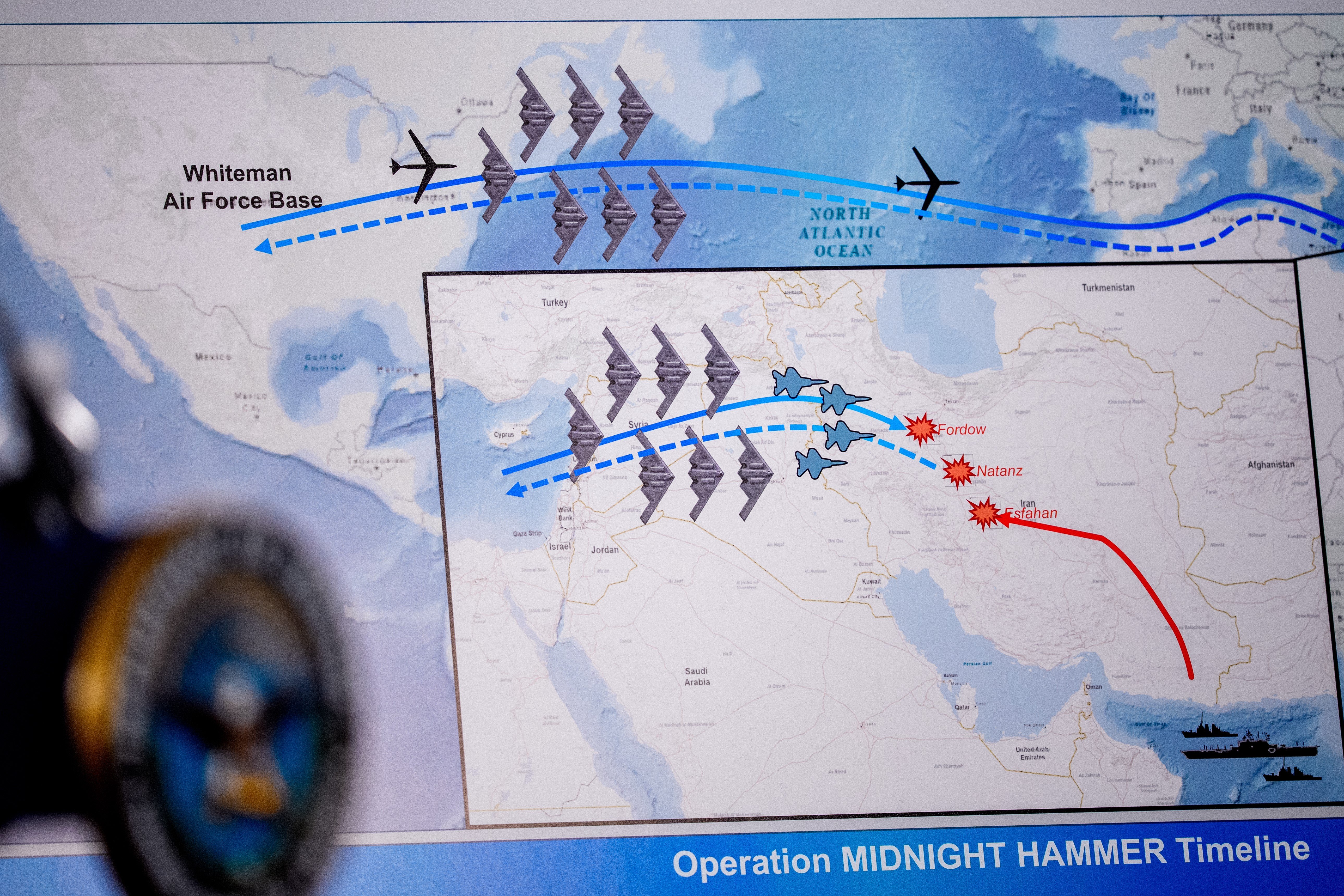
There is also the matter of Iran’s current nuclear posture. In 2015, the JCPOA froze Iran’s program at a specific, verified baseline: a breakout time of roughly 12 months, with a known stockpile and a documented centrifuge inventory. Iran’s enrichment infrastructure was subsequently by the June 2025 strikes. Thus, the MOU’s reference to preserving “the current status quo” leaves undefined exactly what that status quo is. Without an , we don’t know what we’re preserving. That ambiguity matters a great deal if the 60 days produce an agreement and even more if they don’t.
The single biggest problem going into the final deal is the order of operations.
The JCPOA was built on a specific logic: economic relief followed IAEA verification.聽
Sanctions were lifted in stages, each stage conditioned on confirmed Iranian compliance with nuclear limits. The sequencing was the deal鈥檚 primary source of coercive leverage. Iran had to 鈥渆arn鈥� each tranche of economic relief by demonstrating a measurable nuclear restraint.
The MOU reverses that logic: oil sanction waivers have , and the naval . Meanwhile, Iran is billions in oil revenue during the 60-day window. The $300 billion reconstruction commitment is also looming in the background, and all before enrichment limits, centrifuge caps, or a stockpile disposition timeline exist.
This is the arms control paradox. The actions required to reduce uncertainty sufficient to stop the war鈥攖o get Iran to open the Strait, and to bring it to the negotiating table鈥攚ere paid in the currency that determines what nuclear limits are applied to the negotiation sequence.聽
Every concession front-loaded to secure the ceasefire is a concession that can no longer be conditioned on nuclear outcomes. Iran’s incentive to make those concessions diminishes in proportion to the economic relief already flowing. The leverage that was supposed to purchase nuclear limits has, in significant part, already been spent.
This problem was, in a sense, unavoidable. To stop the war, the U.S. needed Iran to open the Strait of Hormuz. To get Iran to open the Strait, the U.S. had to demonstrate a credible willingness to engage economically. The price of uncertainty reduction (of getting Iran to the negotiating table at all) was paid in the currency that matters most at the table itself. That is a real dilemma, and naming it clearly is the prerequisite for understanding what the 60-day talks can actually achieve.
To deliver on the promise of a better deal, the administration needs to treat the next 60 days as the negotiation that the MOU has not yet accomplished.
Debatable. The MOU is broader in ambition and shallower in nuclear specifics compared to the JCPOA. Its sequencing has front-loaded economic concessions in ways that constrain what the 60-day talks can achieve. And it has launched a nuclear negotiation before the foundational technical baseline has been established.
But the architecture is not foreclosed. A final agreement that re-sequences remaining economic concessions, specifies nuclear limits, and builds a durable verification regime could justify the MOU’s ambitions. The question is whether the administration uses the next 60 days to negotiate what the memorandum left unresolved, or whether the 60 days produce another framework that defers the hardest questions again.
Iran has already demonstrated that it can impose costs severe enough to force the United States to seek a way out. It comes to Lucerne having shown Trump and the world the power it can wield over the global economy. The next deal will be built in the shadow of that demonstration.
Director, Future Security Scenarios Lab; Senior Fellow, Future Security Program