A Chapter of: U.S.-Iran Proxy Competition in Iraq
Background: Past to Present External Intervention and Proxy Legacies
External intervention has long been a critical dynamic in Iraq, with indirect or proxy intervention influencing Iraq鈥檚 internal and external relations since the creation of the Iraqi state. Historical or current proxy 鈥榩atrons鈥� in Iraq have included the United States, Iran, Turkey, the United Kingdom, and Saudi Arabia, as well as other Gulf countries.1 Many of the Iraqi forces or actors that are framed as proxies of external powers emerged out of past cycles of external intervention. Since the 1960s, the two main Kurdish parties, the Kurdish Democratic Party (KDP) and the Patriotic Union of Kurdistan (PUK), have been willing to work with both Iran and the United States in their efforts to undermine the government in Baghdad鈥攁 pattern that continues to the present.2 During the Iran-Iraq war in the 1980s, Iran and Iraq cultivated proxy forces against each other, including Iran鈥檚 support to the then-exiled Iraqi Shi鈥檃 group, the Badr Brigades, now known as the Badr Organization and one of the most significant political forces and potential proxies in Iraq.3
The proxies and relationships of influence that emerged after the 2003 U.S. invasion are even more salient for current political dynamics. After the U.S. invasion, Iran supported a number of Shi鈥檃 parties and militia groups in Iraq,4 including the Badr Organization, the Mahdi Army under Moqtada al-Sadr,5 Asa鈥檌b Ahl al-Haqq (AAH), or 鈥淟eague of the Righteous,鈥�6 and Kata鈥檌b Hezbollah (KH).7 These groups waged a bloody campaign against U.S. forces in Iraq, and both then and now, have been at the center of allegations of proxy warfare.8
Beyond backing Shi鈥檃 militia groups, Iran also invested heavily in developing a network of political proxies and partners, supporting Shi鈥檃 political parties and leaders to advance to senior positions in the Iraqi government.9 It was the strategy of both Iran and the United States after 2003 to turn the re-emerging Iraqi institutions, particularly the security apparatus, to their side.10 In the initial period following the U.S. invasion, the United States was considered to be strongly in control of the Ministry of Defense, the intelligence service, and their associated security forces, while from 2005, pro-Iran politicians and parties (notably Badr and its political affiliates) gained and held control of the Ministry of Interior (MoI).11 Members of the Shi鈥檃 militia forces noted above then intermingled with and became virtually indistinguishable from MoI-controlled Iraqi security forces.12
Pro-Iran parties and militias became even more ascendant under Nouri al-Maliki鈥檚 second term (2010 to 2014). Maliki was initially selected with full U.S. buy-in鈥攅ven characterized as a U.S. proxy by some.13 But it was Iranian pressure and backroom deals that enabled him to succeed to his second term after his coalition did not win enough votes in the 2010 parliamentary elections.14 After that point, he relied even more strongly on pro-Iranian militias and Shi鈥檃 political networks to maintain his hold on power.15
The United States of course also built its own partners and surrogate forces in the post-2003 period, which have their own legacy effects for current proxy dynamics. Much of the U.S. influence over Iraqi security and political institutions, which it rebuilt from 2003 on, was systematically eroded under Maliki鈥檚 second term, and especially after the U.S. withdrawal in 2011.16 However, the United States has maintained significant influence with the Counter-Terrorism Service (CTS), the elite security forces that U.S. Special Forces have closely mentored for a decade and a half.17 The U.S. invasion and rebuilding of the Iraqi state also enabled much greater autonomy and political weight for the Kurds, who still retain a special relationship with the United States and other Western states.18 From 2006 to 2008, the United States was the architect behind the Sunni sahwa (鈥淎wakening鈥�) or Sons of Iraq initiative, with nearly 100,000 predominantly Sunni tribal fighters on the U.S. payroll by 2008.19 These past associations have created a lingering perception of the Kurds and Sunnis as U.S. proxies within Iraq (a claim that will be analyzed in subsequent sections).
Regional actors like Turkey and Saudi Arabia also cultivated partners in Iraq in the post-2003 period, particularly in the lead-up to the U.S. withdrawal in 2011.20 Saudi Arabia and other Gulf countries provided intermittent funding to some Sunni Arab leaders,21 while Turkey developed warmer relations and economic ties with the KDP.22 These more limited strategies of influence never really achieved the degree of control or coercion that Iran enjoyed with its Iraqi partners. Nonetheless, they help illustrate the range of regional proxy intervention in Iraq and the way that particular geographic areas within Iraq can feature as a 鈥減layground鈥� for competition between regional powers.23
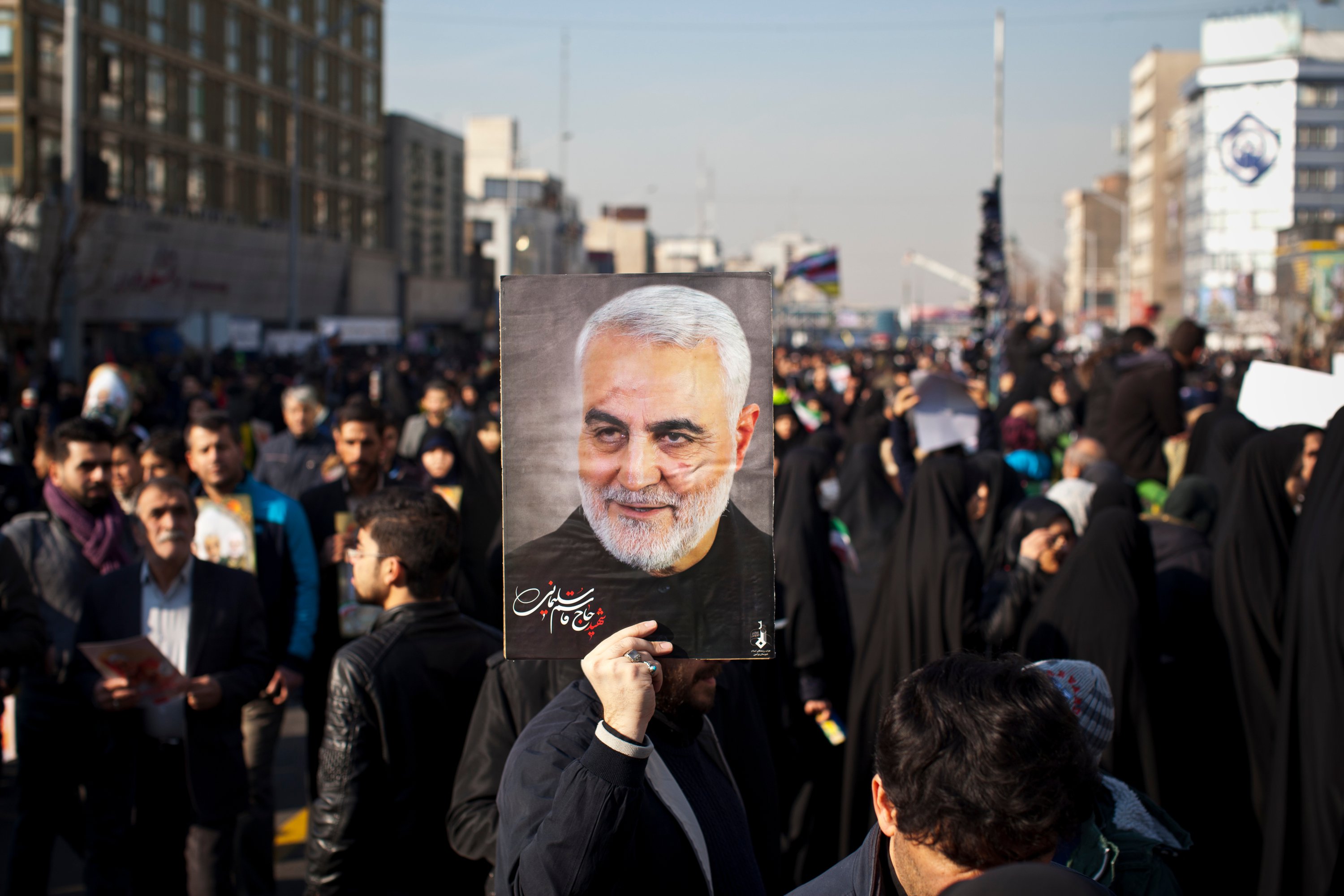
Nearly all of these same domestic forces and external relationships of influence continue to exist, and to raise allegations of proxy warfare. In particular, the Iraqi Shi鈥檃 militias that Iran had supported for more than a decade were at the center of escalating tensions and tit-for-tat attacks or threats between the United States and Iran over the course of 2018 and 2019.24 A series of attacks allegedly by and against Kata鈥檌b Hezbollah in December 2019 were the immediate precursor25 to the targeting of Soleimani, as well as of the Iraqi military leader Abu Mahdi al-Muhandis, who was travelling with Soleimani and killed in the same drone strike.26 The founder of Kata鈥檌b Hezbollah, al-Muhandis, had been designated as a U.S. global terrorist since 2009 and long regarded by the United States as an Iranian proxy, despite his official leadership position within the Iraqi National Security Council and prominent role in the campaign against the Islamic State in Iraq and Syria (ISIS).27 Proxy warfare allegations were at the heart of the U.S. strikes that killed Soleimani and Muhandis 鈥� the U.S. justification for the strike was that Iran-directed groups had attacked a U.S. base and the U.S. embassy in Baghdad in December 2019, and that Soleimani was preparing further attacks on U.S. personnel or interests in Iraq and in the region, potentially executed by these Iraqi proxy forces.28
To understand how the escalation began, it is important to first fix the status of these forces within the post-2014 security landscape in Iraq. When the Iraqi army collapsed in the face of ISIS advances in mid-2014, Iran and the Iraqi militia forces it had long supported were among the first to respond and hold them off.29 This popular and militia resistance was quickly baptized the Hashd as-Shaabi, the Popular Mobilization Force (PMF or Hashd is used interchangeably hereinafter).30 As the name would suggest, the Hashd is a distinct security force that is comprised not of regular Iraqi security force units but of a collection of popular or militia-mobilized units, many of which pre-existed the 2014 crisis. It was created by prime ministerial decree in June 2014, and then legalized by the Iraqi Parliament as an official Iraqi force in late 2016.31
Although the PMF incorporated members and groups from across the sectarian, ethnic, and political spectrum in Iraq (as detailed further below), the Shi鈥檃 militias that the United States has long viewed as Iranian proxies鈥攇roups like the Badr Organization, Asa鈥檌b Ahl al-Haq, and the Hezbollah Brigades鈥攈old the reins of the PMF, and an estimated 60 percent of the PMF鈥檚 more than 125,000 forces draw from Iranian-associated militias.32 As a result, the United States has tended to view the PMF鈥檚 expanding political influence, force strength, strategic positioning, and territorial control since 2014 as a growing Iranian proxy threat, and almost since the PMF鈥檚 inception, has pressured the Iraqi government to disband or otherwise reign it in.33
U.S. apprehension over the PMF and Iran鈥檚 influence in Iraq came to a head over the summer of 2019. In March and April 2019, the United States designated the IRGC and one of the Iraqi PMF groups, the al-Nujaba force, as terrorist groups.34 This plus U.S. threats to strangle Iranian oil exports sparked increased tensions in the region,35 and in early May 2019, the White House announced that it was deploying aircraft carriers and additional Air Force bombers to the region to be in position to counter a potential threat by Iran or its proxy forces.36 A few days later, U.S. Secretary of State Mike Pompeo made an emergency trip to Baghdad to explicitly warn Iraqi officials that the U.S. had a right to respond to attacks 鈥渂y Iran or its proxies in Iraq or anywhere else.鈥�37 Shortly thereafter, all non-essential personnel were evacuated from Iraq, on the grounds that Iranian-backed Iraqi armed groups (implicitly some of the PMF) posed an 鈥渋mminent threat.鈥�38 U.S.-Iranian tensions and proxy warfare continued to escalate across the region over the summer of 2019, ultimately resulting in attacks on half a dozen oil tankers in the Persian Gulf, a cyber-attack on an Iranian intelligence group, the downing of a U.S. surveillance drone, crippling attacks on Saudi oil facilities, and nearly a direct U.S. missile strike on Iranian territory.39
Across these escalating tensions and tit-for-tat attacks, a core question has been whether these Iranian-affiliated PMF groups (as well as other Iranian-affiliated groups in other countries) were acting as proxies of Iran, such that any acts of aggression or threats by them might be attributed to Iran, and responded to accordingly. A second issue is whether some of the U.S. efforts to influence Iraq or to subvert Iranian interests in Iraq might themselves have been interpreted as proxy intervention, in essence a two-sided proxy war. To consider these questions, the subsequent sections will explore how the post-2014 environment in Iraq shaped the potential for proxy warfare and for external patron control.
Citations
- See, e.g., Charles Tripp, A History of Iraq (Cambridge: Cambridge University Press, 2007); Ariel I. Ahram, Proxy Warriors: The Rise and Fall of State-Sponsored Militias (Stanford University Press, 2011), 56鈥�93.
- Quil Lawrence, Invisible Nation : How the Kurds鈥� Quest for Statehood Is Shaping Iraq and the Middle East (New York: Walker & Co., 2008), 18鈥�33; Ahram, Proxy Warriors: The Rise and Fall of State-Sponsored Militias, 79鈥�80, 112鈥�13; Douglas Little, The United States and the Kurds: A Cold War Story, Journal of Cold War Studies, vol. 12 (MIT Press, 2010), 85鈥�97; Joost Hiltermann, 鈥淐hemical Wonders,鈥� London Review of Books (London, February 2016),
- Daniel Byman, Deadly Connections (Cambridge: Cambridge University Press, 2007), 37鈥�44; Ahram, Proxy Warriors: The Rise and Fall of State-Sponsored Militias, 79鈥�80, 112鈥�13; Little, The United States and the Kurds: A Cold War Story, 12:85鈥�97. For more on the background of the Badr Organization (hereinafter 鈥淏adr鈥�), see Garrett Nada and Mattisan Rowan, 鈥淧art 2: Pro-Iran Militias in Iraq,鈥� Wilson Center, 2018, ; 鈥淢apping Militant Organizations: Badr Organization of Reconstruction and Development,鈥� Center for International Security and Cooperation, Stanford University, 2019, ; Andr谩s Derzsi-Horv谩th and Erica Gaston, 鈥淲ho鈥檚 Who: Quick Facts about Local and Sub-State Forces,鈥� Project on Local, Hybrid and Substate Actors in Iraq, Global Public Policy institute, 2017,
- Toby Dodge, Iraq: From War to a New Authoritarianism (Abingdon, Oxon: Routledge, 2017), 186鈥�88; Doron Zimmermann, 鈥淐alibrating Disorder: Iran鈥檚 Role in Iraq and the Coalition Response, 2003鈥�2006,鈥� Civil Wars 9, no. 1 (March 2007): 8鈥�31, ; Tim Arango et al., 鈥淭he Iran Cables: Secret Documents Show How Tehran Wields Power in Iraq,鈥� The New York Times, November 19, 2019,
- Marisa Cochrane, 鈥淛aysh Al-Mahdi,鈥� Institute for the Study of War, 2009, ; 鈥淢apping Militant Organizations: Mahdi Army,鈥� Center for International Security and Cooperation, Stanford University, 2017,
- AAH was formed out of the 鈥榮pecial forces鈥� of Moqtada al-Sadr鈥檚 Mahdi Army. 鈥淢apping Militant Organizations: Asa鈥檌b Ahl Al-Haq,鈥� Center for International Security and Cooperation, Stanford University, 2018, ; Nada and Rowan, 鈥淧art 2: Pro-Iran Militias in Iraq鈥�; Derzsi-Horv谩th and Gaston, 鈥淲ho鈥檚 Who: Quick Facts about Local and Sub-State Forces.鈥�
- Nada and Rowan, 鈥淧art 2: Pro-Iran Militias in Iraq鈥�; 鈥淢apping Militant Organizations: Kata鈥檌b Hezbollah,鈥� Center for International Security and Cooperation, Stanford University, 2017, ; Derzsi-Horv谩th and Gaston, 鈥淲ho鈥檚 Who: Quick Facts about Local and Sub-State Forces.鈥�
- David H. Petraeus, 鈥淩eport to Congress on the Situation in Iraq鈥� (2007), ; Simon Tisdall, 鈥淚ran鈥檚 Secret Plan for Summer Offensive to Force US out of Iraq,鈥� The Guardian, May 21, 2007, ; Kenneth Katzman, 鈥淚ran鈥檚 Activities and Influence in Iraq鈥� (Washington, D.C., 2007), Scholars Eric Herring and Glen Rangwala argue that characterizations of Iran acting as a sort of monolithic provocateur during this early period tended to be overstated, lacked reliable evidence, and conflated the actions of all Shi鈥檃 political parties with that of Iran鈥攁n argument that could also be made of the same groups and proxy allegations today. Eric Herring and Glen Rangwala, Iraq in Fragments: The Occupation and Its Legacy (London: Hurst & Co., 2006), 137鈥�40.
- Arango et al., 鈥淭he Iran Cables: Secret Documents Show How Tehran Wields Power in Iraq.鈥�
- Iran worked to develop ties and levers of influence in ministries or key positions beyond the security institutions. For example, the Ministries of Transport, Oil, Finance, and Education, were led or significantly staffed by pro-Iran and Shi鈥檃 party allies at different points in the post-2003 period. Herring and Rangwala 130-32. See also Arango et al., 鈥淭he Iran Cables: Secret Documents Show How Tehran Wields Power in Iraq.鈥�
- Herring and Rangwala, Iraq in Fragments: The Occupation and Its Legacy, 129鈥�32; Dodge, Iraq: From War to a New Authoritarianism, 63鈥�65; Loveday Morris, 鈥淎ppointment of Iraq鈥檚 New Interior Minister Opens Door to Militia and Iranian Influence,鈥� The Washington Post, October 14, 2014,
- Dodge, Iraq: From War to a New Authoritarianism, 62-65; Christopher Allbritton, 鈥淲hy Iraq鈥檚 Police Are a Menace,鈥� Time, March 20, 2006,
- On U.S. initial support to Maliki and then his defection, see David A Lake, 鈥淚raq, 2003-11: Principal Failure,鈥� in Proxy Wars: Suppressing Violence through Local Agents (Ithaca: Cornell University Press, 2019), 238鈥�63; Dexter Filkins, 鈥淲hat We Left Behind,鈥� The New Yorker, April 2014,
- Dodge, Iraq: From War to a New Authoritarianism, 187鈥�88; Renad Mansour, 鈥淚raq after the Fall of ISIS: The Struggle for the State鈥� (London: Chatham House, 2017), 7鈥�8,
- Mansour, 7鈥�8; Renad Mansour and Faleh Jabar, 鈥淭he Popular Mobilization Forces and Iraq鈥檚 Future鈥� (Washington, D.C.: Carnegie Middle East Center, 2017), 6鈥�9,
- Marisa Sullivan, 鈥淢aliki鈥檚 Authoritarian Regime鈥� (Washington, D.C.: Institute for the Study of War, 2013), ; Dodge, Iraq: From War to a New Authoritarianism, 126鈥�28.
- David Witty, The Iraqi Counter Terrorism Service, Brookings Institution (Washington, D.C.: Brookings Institution, 2016),
- See sources in supra note 6. See also Joost Hiltermann, 鈥淭wilight of the Kurds,鈥� Foreign Policy, January 2018, ; Rick Noack, 鈥淭he Long, Winding History of American Dealings with Iraq鈥檚 Kurds,鈥� The Washington Post, October 17, 2017, ; Peter Galbraith, 鈥淭his Is Where Iran Defeats the United States,鈥� Foreign Policy, September 10, 2018,
- Stephen Biddle, Jeffrey A. Friedman, and Jacob N. Shapiro, 鈥淭esting the Surge: Why Did Violence Decline in Iraq in 2007?,鈥� International Security 37, no. 1 (July 2012): 7鈥�40, ; Thanassis Cambanis et al., Hybrid Actors: Armed Groups and State Fragmentation in the Middle East (New York: Century Foundation, 2019), 96鈥�106.
- Frederic Wehrey et al., 鈥淪audi-Iranian Relations since the Fall of Saddam鈥� (Washington, D.C., 2009), 62鈥�63, ; Henri J Barkey, 鈥淭urkey鈥檚 New Engagement in Iraq: Embracing Iraqi Kurdistan鈥� (Washington, D.C., 2010).
- Frederic M. Wehrey, Sectarian Politics in the Gulf : From the Iraq War to the Arab Uprisings (New York: Columbia University Press, 2014); Wehrey et al., 鈥淪audi-Iranian Relations since the Fall of Saddam.鈥� Dodge, Iraq : From War to a New Authoritarianism, 190-102.
- International Crisis Group, 鈥淎rming Iraq鈥檚 Kurds: Fighting IS, Inviting Conflict,鈥� 12鈥�17; G眉rcan Balik, Turkey and the US in the Middle East: Diplomacy and Discord During the Iraq Wars (New York: Bloomsbury, 2016), 87鈥�89. In addition to indirect support, Turkey has engaged in direct intervention and territorial incursions in northern Iraq more frequently since 2003. See, generally, Dodge, Iraq: From War to a New Authoritarianism, 188-89; International Crisis Group, 鈥淎rming Iraq鈥檚 Kurds: Fighting IS, Inviting Conflict.鈥�
- For example, the International Crisis Group characterized Iraqi Kurdistan as a natural 鈥減layground鈥� between Iran and Turkey, with geopolitical rivalries, trade routes and oil revenues, as well as politico-ethnic fault lines all incentivizing competing strategies of influence between the two regional powers. International Crisis Group, 鈥淎rming Iraq鈥檚 Kurds: Fighting IS, Inviting Conflict,鈥� 12.
- Colin Kahl, 鈥淭his Is How Easily the U.S. and Iran Could Blunder into War,鈥� The Washington Post, May 23, 2019, ; Michael Weiss, 鈥淚ran鈥檚 Qasem Soleimani Is the Mastermind Preparing Proxy Armies for War With America,鈥� The Daily Beast, May 18, 2019,
- Ahmed Aboulenein, 鈥淯.S. Civilian Contractor Killed in Iraq Base Rocket Attack: Officials,鈥� Reuters, December 27, 2019, ; 鈥淯S Attacks Iran-Backed Militia Bases in Iraq and Syria,鈥� BBC News, December 30, 2019, ; Luke Harding and Julian Borger, 鈥淭rump Threatens Iran Will Pay 鈥榓 Very Big Price鈥� over US Embassy Protests in Baghdad,鈥� The Guardian, December 31, 2020, ; Thomas Gibbons-Neff, 鈥淎fter Embassy Attack, U.S. Is Prepared to Pre-Emptively Strike Militias in Iraq,鈥� The New York Times, January 2, 2020,
- Alan Yuhas, 鈥淎irstrike That Killed Suleimani Also Killed Powerful Iraqi Militia Leader,鈥� The New York Times, January 3, 2020,
- Nour Malas, 鈥淭he Militia Commander Beating Back ISIS in Iraq Makes the U.S. Nervous,鈥� Wall Street Journal, June 2, 2016, ; 鈥淢apping Militant Organizations: Kata鈥檌b Hezbollah.鈥�
- The rationale for the U.S. strike changed in the days following the strike. See, e.g., Zachary B. Wolf and Veronica Stracqualursi, 鈥淨asem Soleimani: The Evolving US Justification for Killing Iran鈥檚 Top General,鈥� CNN, January 8, 2020, ; Aaron Ruper, 鈥淢ike Pompeo鈥檚 Justification for Killing Soleimani Has Shifted,鈥� Vox, January 7, 2020, ; Dan Lamothe, 鈥淣ational Security Adviser Says Soleimani Was Plotting Attacks on U.S. 鈥榮oldiers, Airmen, Marines, Sailors and against Our Diplomats,'鈥� The Washington Post, January 3, 2020, ; Michael Georgy, 鈥淚nside the Plot by Iran鈥檚 Soleimani to Attack U.S. Forces in Iraq,鈥� Reuters, January 3, 2020, See also further discussion in notes 204鈥�208 and accompanying text.
- Shi鈥檃 military forces, supported by Iran, were among the first to respond, and to hold the line across southern Salah ad-Din, in Diyala and the northern Baghdad belt. Suadad Al-Salhy and Tim Arango, 鈥淚raq Militants, Pushing South, Aim at Capital,鈥� The New York Times, June 11, 2014, ; Martin Chulov, 鈥淚ran Sends Troops into Iraq to Aid Fight against Isis Militants,鈥� The Guardian, June 14, 2014, ; Babak Dehghanpisheh, 鈥淪pecial Report: The Fighters of Iraq Who Answer to Iran,鈥� Reuters, November 12, 2014,
- On the Hashd, its background, composition, and formation generally, see Mansour and Jabar, 鈥淭he Popular Mobilization Forces and Iraq鈥檚 Future鈥�; Renad Mansour, 鈥淢ore than Militias: Iraq鈥檚 Popular Mobilization Forces Are Here to Stay,鈥� War on the Rocks, April 2018, ; Hassan Abbas, 鈥淭he Myth and Reality of Iraq鈥檚 Al-Hashd Al-Shaabi (Popular Mobilization Forces) : A Way Forward鈥� (Amman: Friedrich-Ebert-Siftung, 2017); Inna Rudolf, 鈥淔rom Battlefield to Ballot Box: Contextualising the Rise and Evolution of Iraq鈥檚 Popular Mobilisation Units鈥� (London: ICSR, 2017), ; Derzsi-Horv谩th and Gaston, 鈥淲ho鈥檚 Who: Quick Facts about Local and Sub-State Forces.鈥�
- Reuters, 鈥淚raqi Parliament Passes Contested Law on Shi鈥檌te Paramilitaries,鈥� Reuters, November 26, 2016, ; Mansour and Jabar, 鈥淭he Popular Mobilization Forces and Iraq鈥檚 Future,鈥� 6鈥�7..
- One Iraqi researcher who closely monitored the budgetary allocations estimated that as of spring 2019, pro-Khameini groups comprised some 50 to 60 percent of the PMF鈥檚 salary allocations, and the Sadr and Shrine groups another 30 percent. Interview with local researcher, March 12, 2019, Baghdad, Iraq. For an earlier point of reference on the share of positions allocated to these different camps, see Mansour and Jabar, 19鈥�20. On PMF numbers over time, see infra note 47. For further discussion of what constitutes the Sadr and Shrine groups, see the subsequent discussion in the section on post-2014 dynamics.
- Qassim Abdul-Zahra and Bassem Mroue, 鈥淥nce Again, Iraq Caught up in Tensions between US and Iran,鈥� Associated Press, May 18, 2019, ; Edward Wong and Eric Schmitt, 鈥淯.S. Pressures Iraq Over Embrace of Militias Linked to Iran,鈥� The New York Times, March 19, 2019, ; Phillip Smyth, 鈥淚ranian Militias in Iraq鈥檚 Parliament: Political Outcomes and U.S. Response,鈥� The Washington Institute for Near East Policy, June 11, 2018,
- 鈥淧ress Statement: State Department Terrorist Designation of Harakat Al-Nujaba (HAN) and Akram 鈥橝bbas Al-Kabi, March 5, 2019鈥� (Washington, D.C.: United States Department of State, 2019), ; The White House, 鈥淪tatement from the President on the Designation of the Islamic Revolutionary Guard Corps as a Foreign Terrorist Organization,鈥� April 8, 2019, . The U.S. would later also designate the group Asa鈥檌b ahl al Haq and its leader Qais al-Khazali as terrorists in December 2019 and January 2020, in connection with attacks on protestors and the December 31, 2019 protestor attack on the U.S. embassy. U.S. Department of State, 鈥淧ress Release: State Department Terrorist Designations of Asa鈥檌b Ahl Al-Haq and Its Leaders, Qays and Laith Al-Khazali,鈥� Office of the Spokesperson, U.S. Department of State, January 3, 2020, ; Jerry Dunleavy, 鈥淚ran-Backed Terrorist-Turned-Politician Leads Demonstration against US Embassy in Iraq,鈥� The Washington Examiner, December 31, 2019, .
- BBC News, 鈥淚ran Seizes British Tanker in Strait of Hormuz,鈥� BBC News, July 20, 2019, ; The White House, 鈥淧resident Donald J. Trump Is Working to Bring Iran鈥檚 Oil Exports to Zero,鈥� White House Fact Sheets, April 22, 2019,
- Gordon Lubold and Michael R. Gordon, 鈥淯.S. Deployment Triggered by Intelligence Warning of Iranian Attack Plans,鈥� The Wall Street Journal, May 6, 2019, ; Edward Wong, 鈥淐iting Iranian Threat, U.S. Sends Carrier Group and Bombers to Persian Gulf,鈥� The New York Times, May 5, 2019,
- Falih Hassan, Megan Specia, and Rick Gladstone, 鈥淧ompeo Makes Unscheduled Trip to Iraq to Press U.S. Concerns 麻豆果冻传媒 Iran,鈥� The New York Times, May 7, 2019, ; Abdul-Zahra and Mroue, 鈥淥nce Again, Iraq Caught up in Tensions between US and Iran.鈥� Whether there was actually credible evidence of an increased threat by Iraqi militias remains a point of debate and was contested by other security officials, including the British general who is second in command of the international coalition in Iraq. Helene Cooper and Edward Wong, 鈥淪keptical U.S. Allies Resist 麻豆果冻传媒 New Claims of Threats From Iran,鈥� The New York Times, May 14, 2019, ; Betsey Swan and Adam Rawnsley, 鈥淭rump Administration Inflated Iran Intelligence, U.S. Officials Say,鈥� The Daily Beast, May 18, 2019,
- Edward Wong, 鈥淯.S. Orders Partial Evacuation of Embassy in Baghdad,鈥� The New York Times, May 15, 2019, ; Cooper and Wong, 鈥淪keptical U.S. Allies Resist 麻豆果冻传媒 New Claims of Threats From Iran;鈥� Jennifer Hansler and Devan Cole, "State Department Orders Non-Emergency Employees to Leave Iraq Amid Iran Tensions," CNN, May 15, 2019,
- For descriptions of some of these attacks, see Peter Baker, Eric Schmitt, and Michael Crowley, 鈥淎n Abrupt Move That Stunned Aides: Inside 麻豆果冻传媒 Aborted Attack on Iran,鈥� The New York Times, September 21, 2019, ; Ben Hubbard, Palko Karasz, and Stanley Reed, 鈥淭wo Major Saudi Oil Installations Hit by Drone Strike, and U.S. Blames Iran,鈥� The New York Times, September 14, 2019, ; Cooper and Wong, 鈥淪keptical U.S. Allies Resist 麻豆果冻传媒 New Claims of Threats From Iran鈥�; Lubold and Gordon, 鈥淯.S. Deployment Triggered by Intelligence Warning of Iranian Attack Plans鈥�; Farnaz Fassihi and David D. Kirkpatrick, 鈥淚ranian Force Exults in Downing of U.S. Drone With a Feast and a Prayer,鈥� The New York Times, June 22, 2019,