David Zikusoka
Non-Resident Senior Fellow, Future Frontlines
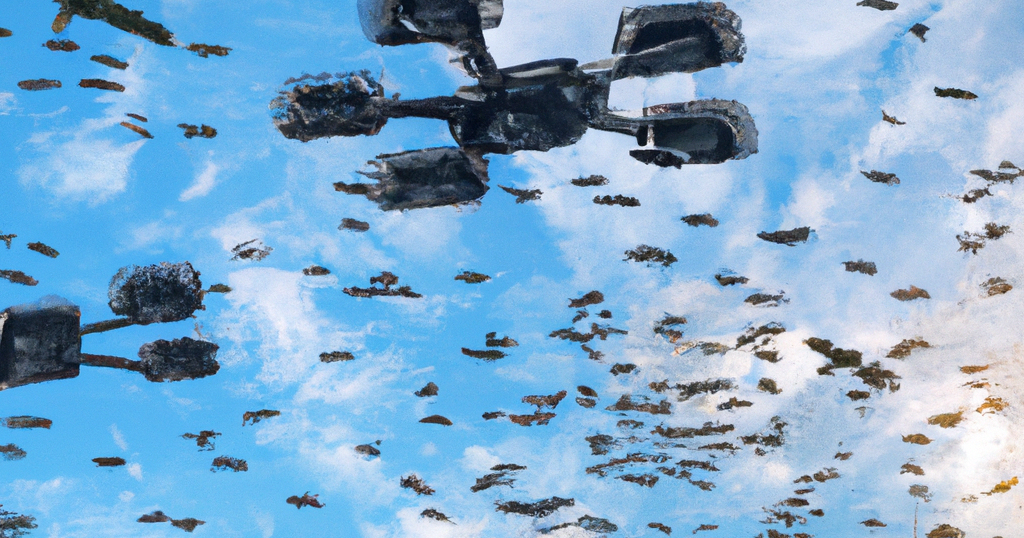
In the laboratory for modern war that Ukraine is today, electronic warfare is evolving at an unprecedented pace. It鈥檚 cat-and-mouse, move, and countermove. Ukraine鈥檚 military wreaks devastation with explosives to off-the-shelf commercial drones that can evade Russian jamming systems. Russian forces adapt their jammers; Ukrainian operators helplessly as their drones lose their signal and drop from the sky. Engineers are ramping up new . Drone operators on the ground shift frequencies to evade detection. The battle for dominance between the jammer and the signal is in constant overdrive.聽
It鈥檚 not only drones. Russia and Ukraine are competing for supremacy in the electromagnetic spectrum, which shapes every other domain of war鈥攍and, water, air, space, and cyberspace. They use electronic warfare to deny radar coverage, cripple command and control, hinder navigation, and guide lethal attacks. Advanced militaries, like those of the United States and China, are watching closely to see how things play out.聽
Russia came into the wider 2022 invasion of Ukraine with a track record of effective electronic warfare. After its underperformance in the 2008 invasion of Georgia, Russia broadly modernized its military and acquired hundreds of new electronic warfare systems, which have been a constant, effective presence on the battlefields of eastern Ukraine since Russia鈥檚 takeover of Crimea in 2014. During the ensuing conflict in Donbas, Ukrainian forces fought under a cloud of Russian electronic attacks, losing hundreds of drones to Russian jamming efforts. In 2015, Russian forces even transmitted a into the Ukrainian forces鈥� most popular military radio, forcing troops to rely on vulnerable commercial radios and cellphones.聽
Confounding widespread , Russia struggled to field an effective electronic warfare posture in the opening weeks of the 2022 invasion. Rain and muddy terrain funneled Russian forces onto roads that quickly became congested, bringing their to a grinding halt. Fast-moving Ukrainian hunter-killer units鈥攕mall teams equipped with drones and Javelins鈥攑icked off military assets stalled in traffic.聽
With almost a decade of experience fighting under electronic warfare conditions in the Donbas and years of training with Western militaries, Ukrainian forces adopted a Western-style 鈥溾�� mindset, where forces are less dependent on higher command. When Russian electronic warfare cut off Ukrainian units from their commanders, these units had sufficient knowledge of their commander's intent to carry out their missions autonomously.
Loath to risk electronic warfare assets for fear they would be destroyed or, worse, captured, Russian commanders left the bulk of those systems in , well out of range of the frontline. against Russia in place since 2014 have raised barriers to quick acquisition of the sophisticated semiconductors needed to build electronic warfare systems, leading Russia to deploy its systems more cautiously. Ukraine鈥檚 local cellular communications networks continued to function, allowing ordinary citizens to become intelligence sources on Russian movements in their area.
Against orders, individual Russian troops and even commanders used personal, unsecured cellphones on the battlefield. Using Western-provided electronic support systems, the Ukrainian military was able to geolocate them and destroy Russian assets, including electronic warfare systems. Early in the war, Ukrainian forces even managed to and kill a Russian general who used unsecured communications. Ukraine used intercepted phone calls for propaganda value as well, broadcasting desperate calls home by demoralized Russian soldiers.聽
Russian forces also fell victim to 鈥�,鈥� the electronic warfare equivalent of friendly fire. Russian electronic warfare pods aboard jets interfered with radars aboard other Russian jets. Ground-based jammers interfered with Russian army communication. Forced to choose between jamming Ukrainian systems or effectively leading their own forces, Russian commanders often opted for the latter.聽
After weeks mired in mud, the Russian military abandoned its objective of taking Kyiv and withdrew to the eastern part of the country, where warfare is less geographically dynamic: soldiers fight over open fields and urban landscapes from tanks and trenches, a good terrain for Russia to array its vehicle-mounted advanced electronic warfare systems. This shift marked a turning point, giving Russia the upper hand in electronic warfare, as Ukraine has , although Ukraine鈥檚 military has managed to punch above its weight in this domain of the conflict.
Electronic warfare is 鈥渢he ,鈥� says Ukraine鈥檚 commander-in-chief of the armed forces, Valery Zaluzhny, speaking of the drone war. Both Russia and Ukraine rely heavily on commercial quadcopter drones manufactured by the Chinese company . In the civilian world, these drones, which cost roughly to , are used for photography and videography. On the battlefields of Ukraine, they are used for reconnaissance and (modified with explosives) lethal strikes, missions once reserved for multimillion-dollar manned aircraft. Ukraine deploys these drones by the thousands and uses systems like quadcopters and fixed wing Bayraktar drones to devastating effect on the western front. Now, Ukraine loses up to , mostly to electronic attack from Russia, while in , for instance, Russia is fielding perhaps twice as many drones as Ukraine.聽
DJI drones maintain a signal to their operator for guidance and commands, a link that can be tracked, analyzed, and geolocated using a DJI hardware/software package called , originally intended to help sites like government facilities secure themselves from drone overflight. Russian electronic support operators coopted AeroScope to gain key intelligence, locate the drone operators, and guide rapid artillery and air strikes. In response, Ukrainian drone operators their drones鈥� ability to transmit the information AeroScope picks up, using a software program freely available on the internet, and replicated DJI drone signals with additional software, fooling the adversary into detecting spoof drones on the battlefield.聽
Ukraine relied on the unerring aim of GPS-guided Joint Direct Attack Munition (JDAM) bombs and Excalibur artillery rounds鈥攑rovided by the United States and its allies鈥攆or early successes, until Russia deployed , their . After some adaptations in technique, they鈥檙e reportedly striking their targets again.聽
Since the war鈥檚 outset, Ukraine has used SpaceX's satellite internet service for battlefield communication, allowing units at the front to maintain connectivity with each other and with higher echelons of command. Starlink's support of maneuvers, fires, and special operations made it a prime target for Russian electronic attack, but so far, it鈥檚 proven fairly resilient to Russian jamming efforts. SpaceX developed an to the jamming problem, which Ukrainians augmented with lower-tech battlefield ingenuity, placing Starlink dishes in in the ground to avoid Russian signals passing overhead (jamming systems require a line of sight to affect their target).聽聽
One of Ukraine's priority missions is the long-range strike, using munitions to destroy logistical depots, vehicle repair sites, command centers, and even parked aircraft dozens of miles behind the front, affecting the war at the operational level. In May 2023, evidence of an advanced electronic attack weapon began to emerge on the Ukrainian battlefield when of the wreckage of a Raytheon ADM-160B Miniature Air-Launched Decoy appeared on X (formerly Twitter). The ADM-160 can mimic the radar signature of larger aircraft and obfuscate the direction of attack, causing air defense operators to expend time and resources intercepting them. Although the Pentagon has not disclosed any transfer of these systems, ADM-160s are to be carrying out electronic spoofing attacks on Russian radars and escorting Ukrainian strike aircraft and munitions into hostile airspace.
The world is watching and learning. Russia鈥檚 systems underperformed in significant ways, while U.S. munitions are showing vulnerabilities. The Pentagon and Russia鈥檚 General Staff are only one full round into an electromagnetic boxing match that could go on for years as the war in Ukraine rumbles on.聽
Non-Resident Senior Fellow, Future Frontlines