Camilla Pletuhina-Tonev
Research Fellow, Future Frontlines
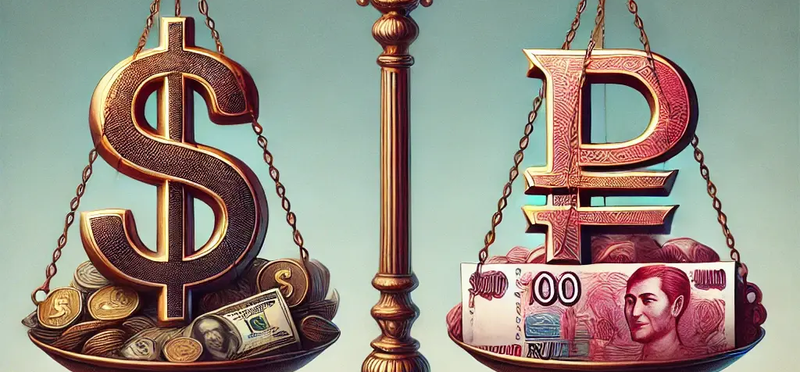


鈥淒ollar, dollar, dollar, a dirty green paper!鈥� Vladimir Zhirinovsky, the notorious founder of Russia鈥檚 Liberal Democratic Party, as he set fire to a dollar bill in 1998. At the time, his theatrical protest against U.S. currency hegemony and predictions of the dollar鈥檚 eventual worthlessness seemed outlandish. Today, his once-fringe calls for de-dollarization鈥攔educing reliance on the U.S. dollar in international trade and finance鈥攈ave evolved from political theater into systematic policy, particularly in Russia.
The for de-dollarization is real, though less dramatic than some media coverage has suggested. What鈥檚 more revealing is how different approaches to challenging dollar dominance reflect the technological capabilities of the countries hankering to exit from dollar dependence as much as their political aspirations. Russia and T眉rkiye exemplify this divide. While both countries frame de-dollarization as a path to a multipolar world order and liberation from U.S. financial dominance, their actual strategies diverge sharply.
Russia, particularly since its 2022 invasion of Ukraine triggered unprecedented sanctions, has pursued de-dollarization through massive investments in alternative financial infrastructure. Its (SPFS) now handles nearly all domestic transactions, replacing the global banking system SWIFT. Its Mir payment system accounts for half of Russian card transactions. Most ambitiously, Russia is developing a as part of a broader push for technological sovereignty, aiming to create an entirely parallel financial system outside Western influence.
But now鈥攚ith the ruble firmly after November鈥檚 of U.S. sanctions targeting four of Russia鈥檚 largest banks鈥攖here are reasons to question the viability of Russia鈥檚 maneuvers to exit the dollar and create an alternative reserve currency system. The U.S. blacklisting of Gazprombank the ruble to a low of 115 against the dollar on November 27, in the context of a currency already weakened by international sanctions since 2022.
In contrast, T眉rkiye offers forceful anti-dollar rhetoric but little concrete action. Lacking Russia鈥檚 technological capacity and facing different constraints as a NATO member, T眉rkiye鈥檚 de-dollarization efforts exist more in political discourse than concrete infrastructure development. President Recep Erdogan鈥檚 calls to 鈥渟ave鈥� economies from dollar dependence serve more to leverage T眉rkiye鈥檚 position between East and West than to build genuine alternatives to the dollar-based system.
In fact, much such as delayed banking sector reform, loosely regulated investment markets, and longstanding EU aversion to investment in a risky Turkish economy are obstacles to Erdogan鈥檚 de-dollarization ambitions. To some degree, T眉rkiye鈥檚 recent bid to join the BRICS+ bloc underscores the point. Ankara is in no position to act on its own and so is seeking the shade that Russian president Vladimir Putin seems to be offering via his bid to launch a . Yet there are reasons to be skeptical of Putin鈥檚 ability to manage the tricky balance between a push for 鈥溾�� and de-dollarization amid a war in Ukraine that has profound implications for the future of semiconductor supply chains and critical minerals markets. In the end, it may be the rivalry between the U.S. and China, rather than Russia, that dictates the terms of a transition away from the dollar.
Nonetheless, the technological divide between authoritarian and liberal market economies reveals a deeper irony: rather than creating a multipolar world order, de-dollarization efforts are reinforcing a new bipolarity. As countries deliberate over how to align their economic priorities with the established global financial system where the dollar remains the predominant reserve currency, structural barriers such as muddled banking regulations, imbalances of power between central banks and the executive branch of government, and low technological capacity will increasingly determine whether they will seek out alternatives. The result is not multipolarity but rather an emerging disjuncture between those with the capacity to build alternative financial infrastructure and those without it.
In Russia鈥檚 approach to de-dollarization, technological capability shapes geopolitical strategy, and vice versa. Since 2014, and accelerating after its 2022 invasion of Ukraine, Russia has methodically constructed alternative financial infrastructure in areas such as payment messaging, consumer payments, and digital currency.
SPFS, Russia's SWIFT alternative, now processes nearly all domestic financial operations. By January 2024, Russia claims, 557 financial institutions across 20 countries to the system, but these figures are difficult to verify. The Bank of Russia no longer publishes its client list, and previously available versions entities such as South Ossetia and Abkhazia, which few countries recognize as nations. Several states, including and the , reportedly expressed interest in connecting their banks to SPFS, but their current involvement remains unclear.
The system's international expansion has faced significant challenges, among them regulatory pressure from the European Union and United States. The EU SPFS in June 2024, prompting countries such as Switzerland to in SWIFT alternatives. In November 2024, the U.S. Treasury's Office of Foreign Assets Control (OFAC) that institutions joining SPFS risk sanctions under Executive Order 14024, charging Russia with designing SPFS with the 鈥渆xpress purpose鈥� of evading sanctions and funding its war.
Similarly, Russia鈥檚 Mir payment system, launched in 2015, has grown from a contingency plan into a cornerstone of domestic commerce, 50 percent of card transactions within Russia. More importantly, Mir鈥檚 acceptance in countries from Belarus to Venezuela signals Russia鈥檚 ability to extend its financial infrastructure beyond its borders, albeit primarily to politically aligned states.
Most ambitious is Russia鈥檚 of the digital ruble, accelerated by post-2022 sanctions. Unlike T眉rkiye 鈥檚 more rhetorical challenges to dollar hegemony, Russia鈥檚 central bank digital currency (CBDC) project involves substantial technological investment and systematic testing with commercial banks. The digital ruble aims not just to circumvent sanctions but to create an entirely new financial rail that could eventually with other countries鈥� CBDCs, particularly China鈥檚 . But, again, the viability of a currency鈥攆iat, digital, or otherwise鈥攄epends on the strength of its national economy along with the prevailing geopolitical winds.
Significant hurdles, technological and otherwise, remain. The digital ruble is playing catch-up to China鈥檚 efforts. Public skepticism about state surveillance through digital currency is high, with only of Russians expressing interest in using it. Perhaps most critically, Russia鈥檚 alternative financial infrastructure still operates primarily within a sphere of aligned states rather than offering true global alternatives to Western systems. The Kremlin鈥檚 lock on state-managed oil and gas enterprises like Gazprom and Rosneft and mandatory tithing to Russia鈥檚 sovereign wealth fund also impose constraints on proposed alternative financial systems and monetary instruments鈥攄igital or otherwise鈥攅specially in light of international sanctions. Nonetheless, Russia鈥檚 rapid development of alternative financial rails promises to further weaken a sanctions regime that was meant to be a . Will Russia manage to strengthen the digital ruble enough to rival the dollar? The answer likely depends not only on the ruble鈥檚 valuation in conjunction with the dominance of Gazprom and Rosneft in the Russian energy export market, but also on battlefield outcomes in Ukraine and instability in other frontline states where Russia鈥檚 military is entrenched, like Mali.
By contrast, T眉rkiye鈥檚 de-dollarization project has proven more rhetorical, sporadic, and constrained. While President Erdogan has that 鈥渢he world is bigger than five,鈥� Western-dominated international institutions and advocating for multipolarity, T眉rkiye鈥檚 actual capacity to build alternative financial infrastructure is hindered by economic and technological limitations, as well as the country鈥檚 commitments as a NATO member.
Some constraints are rooted in T眉rkiye鈥檚 persistently shaky economy. T眉rkiye spends far more on imports and foreign debt payments than it earns from exports and foreign investment鈥攁 gap called the current account deficit. While this deficit has recently, narrowing to $19.1 billion by July 2024, it still requires T眉rkiye to constantly borrow from abroad in order to keep its economy running. This dependence on foreign funding makes T眉rkiye particularly vulnerable to shifts in international investor confidence.
The resulting has driven Turkish citizens to seek alternatives to their national currency. Inflation, while down from its peak of 75.5 percent in May 2024, at 49.4 percent in September, particularly affecting necessities like housing, where rental costs have by over 120 percent. This environment has pushed many Turks toward both dollars and cryptocurrencies as stores of value, with crypto adoption from 40 percent to 52 percent of the population over the past year and a half, one of the in the world. Ironically, despite T眉rkiye鈥檚 government鈥檚 of waging an 鈥渆conomic war of independence,鈥� its citizens are increasingly seeking refuge in alternative currencies.
Lagging Russia鈥檚 functioning alternatives like SPFS and Mir, T眉rkiye鈥檚 digital lira project is in its early stages. T眉rkiye鈥檚 central bank has had to rely heavily on external technological partners, that essential components like cryptography and specialized hardware are not yet 鈥渨ithin [its] expertise.鈥�
The gap between rhetoric and reality shows in T眉rkiye鈥檚 recent efforts to stabilize its economy. The central bank has managed to improve its position significantly, with net reserves $48.8 billion by mid-September 2024 and total official reserves at $152.1 billion. This stability has come in part through deeper integration with global financial markets: portfolio investment 22.4 percent to $118.0 billion compared to the end of 2023, and T眉rkiye has successfully returned to international bond markets, raising in its third global bond sale of 2024. Traditional has driven much of this renewed investor confidence, not a radical break with the dollar-dominated financial system.
Meanwhile, T眉rkiye鈥檚 of cryptocurrencies presents another paradox. While regulatory clarity crypto adoption, which in turn could theoretically support de-dollarization by providing alternatives to U.S. dollar dominance, Turkish citizens have overwhelmingly opted for stablecoins pegged to the dollar. T眉rkiye in stablecoin purchases relative to GDP, with $38 billion in purchases 4.3 percent of the nation鈥檚 GDP. This flight to dollar-denominated digital assets represents yet another way that attempts to escape dollar dependence may have inadvertently reinforced it.
Unlike Russia, which views de-dollarization as part of a comprehensive strategy to build parallel financial infrastructure, T眉rkiye鈥檚 approach is more opportunistic. Its BRICS and its rhetoric about multipolarity serve less to create genuine alternatives to the dollar-based system than to maximize T眉rkiye鈥檚 leverage between competing power blocs. As a NATO member that has in the past, T眉rkiye seeks to maintain flexibility rather than commit fully to either financial sphere.
As T眉rkiye navigates between these diverging financial blocs, the technological divide between them appears set to widen further. The incoming Trump administration鈥檚 plans to develop and elevate America鈥檚 domestic cryptocurrency industry鈥攊ncluding the anticipated appointment of a federal 鈥溾�� to liaise with industry and coordinate policy across agencies鈥攕ignal an intensifying competition over the future of digital finance. These plans align with 麻豆果冻传媒 muscular 鈥淎merica First鈥� foreign policy. On November 30, he BRICS+ members directly, warning they would 鈥渇ace 100% tariffs and should expect to say goodbye to selling into the wonderful U.S. economy鈥� if they pursued plans for an alternative to 鈥渢he mighty U.S. dollar.鈥� This blend of aggressive with suggests a new phase in the battle over global financial infrastructure.
Russia and T眉rkiye鈥檚 divergent approaches to de-dollarization point to the emerging shape of global finance. Rather than a complex multipolarity, a few competing blocs are emerging, defined as much by technological capacity as shared geopolitical and economic interests.
Russia鈥檚 approach鈥攂uilding alternative payment systems, developing a digital ruble, and creating parallel financial infrastructure鈥攄emonstrates both the possibilities and limitations of thoroughgoing de-dollarization. While Russia has progressed in developing alternatives to SWIFT and Western payment systems, these achievements have come at a high cost and primarily serve domestic needs or transactions with willing partners like Iran and China.
T眉rkiye鈥檚 experience, meanwhile, shows how economic realities can force pragmatism even in the face of strong anti-dollar rhetoric. Despite Erdogan鈥檚 calls for financial sovereignty, T眉rkiye has positioned itself between the dominant dollar-based system and nascent alternative financial networks. Its approach to digital currency development and cryptocurrency regulation suggests a future where countries may seek to augment, rather than fully escape, the dominant Western financial order.
This emerging financial geography suggests not a multipolar world of sovereign financial systems but rather one of asymmetric blocs. On one side stands the existing dollar-based system with its established infrastructure, technical standards, and overwhelming network effects. On the other, an emerging alternative system, centered largely around China and Russia, that offers partial independence from Western financial controls鈥攂ut at the cost of increasing dependence on these new central powers.
For most countries, the choice is not between one or the other, but rather how to position themselves relative to these unequal blocs. The technological and economic requirements for true financial sovereignty鈥攁s demonstrated by Russia鈥檚 costly efforts and T眉rkiye鈥檚 constraints鈥攁re too high for most nations to achieve on their own. The result is not the multipolar order that de-dollarization advocates claim to seek, but rather a world of competing financial spheres in search of a center of gravity in an extremely turbulent time.
Research Fellow, Future Frontlines
Fellow, Future Security
Senior Fellow, Future Security