Supporting Caregiver Students: A Two-Generation Model
This is the fourth post in our ongoing series on caregiver students.
When Pooja Adhikari moved to the United States from Nepal in 2006, she dreamed of becoming a teacher. But her dream wasn鈥檛 immediately achievable. Her need to provide childcare for her son, born a year after she arrived, was one barrier. And her lack of proficiency in and confidence using English prevented her from getting the U.S. college degree necessary to work as an educator.
鈥淚 couldn鈥檛 express what I wanted to say,鈥� she says. 鈥淚 was hesitant to approach people. When I [had] to talk in front of people, I was so nervous, like people might not understand me. I used to think, 鈥極h my god, what are they going to think?鈥欌��
Across the nation, many caregiver students are in a similar situation: They desire to attend college but lack the necessary prerequisites. In Pooja鈥檚 home of Washington, D.C., economists project that by 2020, of jobs will require some postsecondary education. Many residents will not be prepared. Over D.C. residents don't have a high school credential and do not possess the basic reading, writing, math, or English language skills needed to succeed in postsecondary education and the workplace.
Two-generation programs are a solution, and Pooja鈥檚 alma mater, Briya Public Charter School (Briya), is an exemplar.
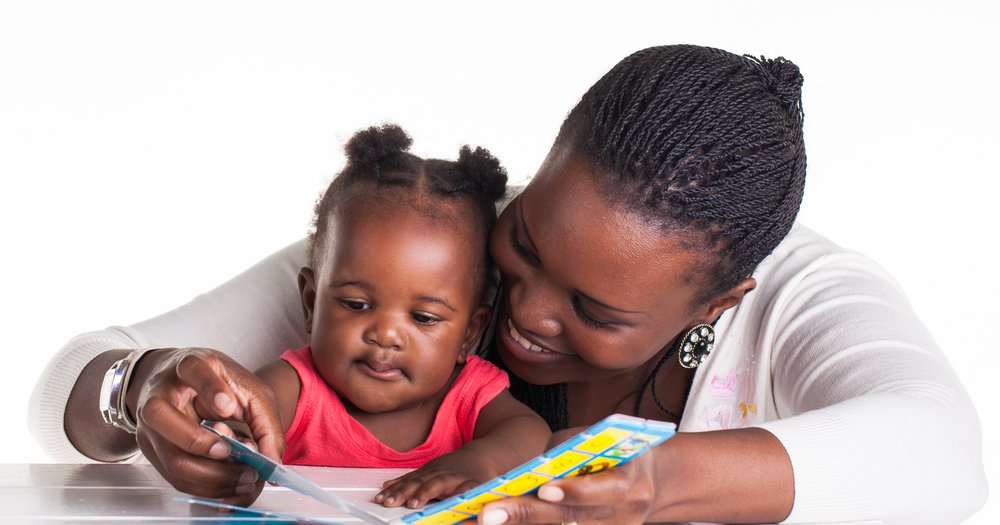
provides a two-generation model of education where parents and their young children enroll together. Adults acquire English, parenting, and digital literacy skills while their children, six weeks through five years old, learn in their own classrooms across the hall at no cost to families. Parenting classes equip adults with skills to help their children succeed. And the real-world skills and confidence-building gained at Briya can make a significant difference in parents鈥� ability to manage life as a caregiver student.
Because the school recognizes that students cannot succeed in school if their basic needs are not met, Briya provides onsite medical, dental, mental health, and social services by strategically co-locating with , a community health center. Co-location is important because caregiver students already have a scarcity of time balancing work, parenting, school, and running a household.
The majority of Briya students are immigrants and the first in their family to attend college. To ensure students make a successful transition from Briya to postsecondary institutions, the school employs a transition coordinator to assist with college admissions, applying for financial aid, and enrollment processes.
Briya鈥檚 comprehensive model garners tremendous results. Both the adult education and pre-K programs regularly receive the from the D.C. Public Charter School Board based on measures of student outcomes and program quality.
Pooja enrolled in Briya with her son, then fourteen months old. She spent a year improving her English, as well as gaining parenting skills, while her son was nurtured and prepared for future success in his own class right across the hall. 鈥淚 became a better writer,鈥� Pooja says. 鈥淎nd we used to have discussions [on] different topics and we had to present in front of all the students. This helped me gain confidence and become a good speaker. And parenting classes nourished me with various skills and knowledge. I learned so many things as a parent at Briya.鈥�
After achieving English proficiency at a high-school level, Briya students can take the next step on a path to a stable career by earning their high school diploma or enrolling in the school鈥檚 workforce development programs, which offer a tuition-free opportunity to become a registered medical assistant (RMA) or child development associate (CDA). The RMA and CDA are credentials with minimal barriers to entry that can serve as springboards for obtaining an associate or bachelor鈥檚 degree.
Pooja was excited to learn the CDA credential would allow her to work as an assistant teacher. She enrolled in the program while her son continued to attend early education classes at Briya. And upon graduating, she was offered jobs both at Briya and at the local public elementary school where she volunteered. She accepted the job at Briya, where she now works full time as an infant and toddler teacher.

The Briya two-generation model thrives, in part, because of the policy environment cultivated in the District. Enabling policies include:
- Adequate and Predictable Funding鈥擠.C. public education law reflects the dual needs of the community for access to both early learning and adult education. The charter school law enables Briya to receive public school per-pupil funding for pre-K, adult English as a Second Language (ESL), and workforce students. School system funding is consistent and predictable.
- Comprehensive Services through Community Partnerships鈥擠.C. has a strong public support system including health care for children and adults, universal pre-K, workforce training programs, and more. Briya ensures students gain access to these programs by hiring several full-time student services coordinators to facilitate enrollment and help to navigate complex public systems.
- Child Care Subsidy Eligibility Policy鈥擟hild care subsidy eligibility policy provides care for children of adults enrolled in job training and credit-bearing university courses. It also provides one year of child care subsidy for adults enrolled in such as ESL or GED courses. D.C. could strengthen its policy if child care subsidy eligibility were provided for the duration of enrollment in an adult education program.
- Child Care in Non-traditional Hours鈥擠.C. recently in increasing the supply of child care. Caregiver students would benefit further if some funds were targeted to increasing care available at night and on the weekends to better match the caregiver students鈥� work and study schedules.
鈥淚 wanted to move forward. I wanted to become a more professional teacher. I [wanted to] have more opportunities in the future.鈥�
As for Pooja, earning her CDA credential was a key step on her education journey, but it wasn鈥檛 the end. 鈥淚 wanted to move forward,鈥� she says. 鈥淚 wanted to become a more professional teacher. I [wanted to] have more opportunities in the future.鈥�
So she went on to college, where she first obtained her associate degree and then decided to continue, graduating with her bachelor鈥檚 degree summa cum laude in human development in spring 2018.
In the future Pooja plans to get her master鈥檚 degree, though for now she鈥檚 taking a few years off from being a student to spend more time with her son, now nine. She eventually hopes he will attend college as well. Currently, his dream is to become a teacher.
Lauren Stoltzfus is communications manager for Briya Public Charter School. Cara Sklar, currently deputy director for early and elementary education policy for 麻豆果冻传媒, previously worked for Briya Public Charter School.
More 麻豆果冻传媒 the Authors

Cara Sklar
Director, Early & Elementary Education Policy
Issues
Programs/Projects/Initiatives
Related
To Support Student Parents, Colleges Need to Know Who They Are

Appropriations Bill Brings a Holiday Gift for Federal Education Programs
Pennsylvania Makes Degree Apprenticeships Part of its Strategy for Preparing a Qualified Early Learning Workforce