
Laura Bornfreund
Senior Fellow, Early & Elementary Education
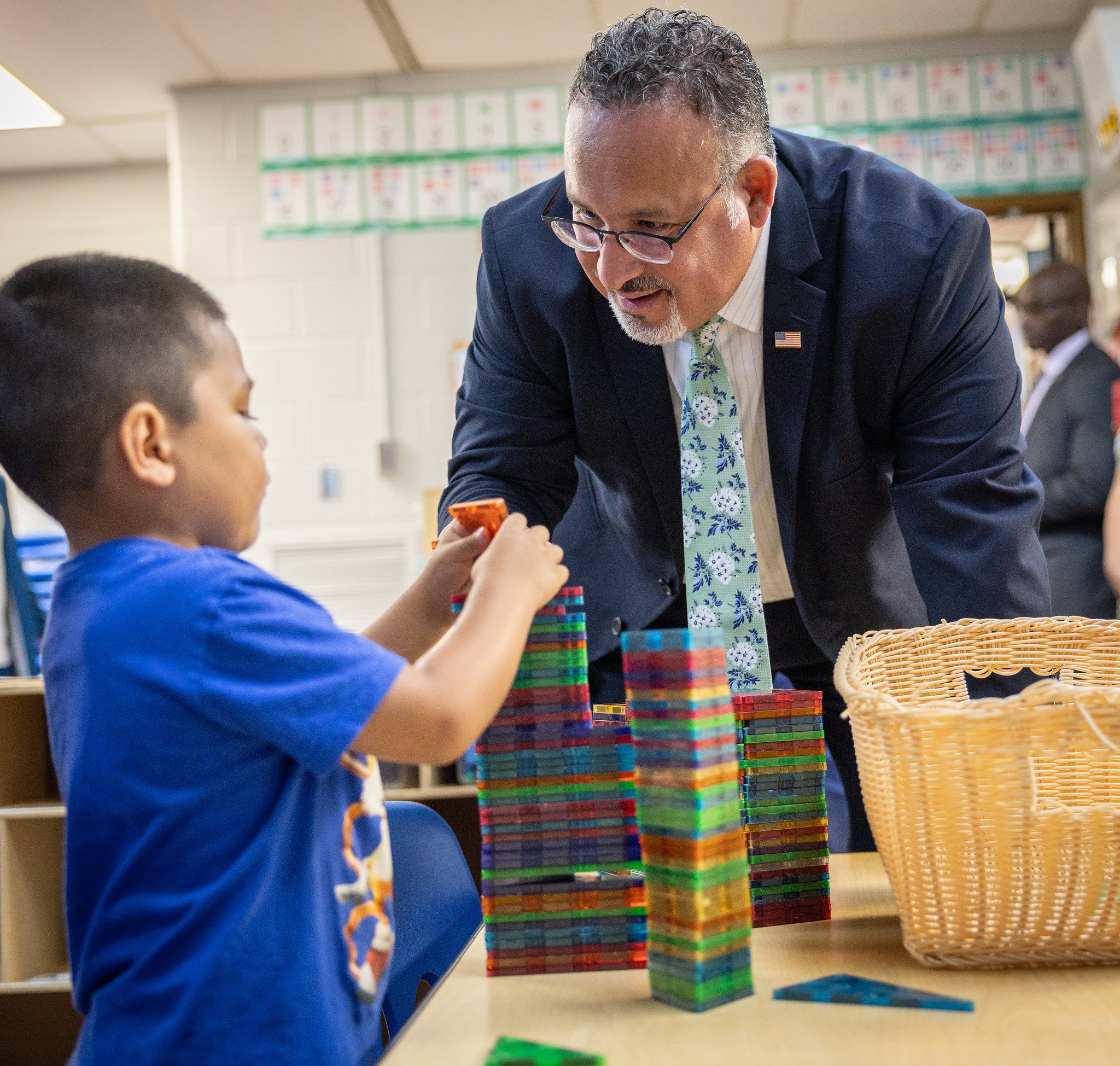
In early 2023, U.S. Secretary of Education Miguel Cardona announced the
, a call to build on approaches that work to transform education for all students. Secretary Cardona highlighted three key areas: achieving academic excellence, improving learning conditions, and creating pathways for global engagements.
Early learning, especially kindergarten, has been a significant part of the Raise the Bar Initiative. Last week, on the secretary鈥檚 Back to School Bus Tour, , saying, 鈥淓nsuring that kindergarten is a sturdy bridge between the early years and early grades is central to our efforts both to Raise the Bar for academic excellence and to provide all students with a more equitable foundation for educational success. The kindergarten year presents an opportunity to meet the strengths and needs of young learners so they can continue to flourish in the years to come.鈥�
In his remarks, Secretary Cardona announced the , a new community of practice that includes opportunities for states and school districts to learn from one another and from best practices and participate in technical assistance. (State officials interested in participating in this community of practice can indicate their .) This community of practice also brings an opportunity to grow a focus on K-3 across states and build new collaborative networks that can help transform kindergarten experiences for more students.
Part of ensuring that kindergarten is a sturdy bridge between pre-K and first grade is making sure that kindergarten is delivered in the way . We know that kindergarteners learn best through. They need well-rounded learning opportunities that center equity and connect literacy, math, science, and social studies. Kindergartners need activities and discussions that help them learn about the world and cultures around them. Through guided play, exploration, relationships, and conversations, kindergarten teachers can transform children's learning from teacher-directed and constrained to engaging and interactive.
Too many children aren鈥檛 getting the rich, developmentally appropriate described above. For many young students, their day consists primarily of English language arts and mathematics, with long stints of whole group instruction and little opportunity to explore the world around them. However, we know that some states and school districts are taking action to make kindergarten work better for young learners.
The U.S. Department of Education鈥檚 (ED) early learning focus, kindergarten community of practice, and related work have the potential to help more states and school districts rethink kindergarten and start to make positive transformations. It鈥檚 important to keep in mind that this ED initiative comes at the same time as we are seeing an intensifying focus on and are still grappling with due to COVID-19 school closures. Challenging times can lead to . Still, they can lead to further narrowing and encouraging an such as letter recognition.
As state and district officials implement newly enacted state laws related to the science of reading and learning recovery, it鈥檚 important to recognize that for children to become strong readers and lifelong learners, they need teachers who understand the science of reading, build their background knowledge, language development, and writing, and create well-rounded learning experiences鈥� including through play. The science of learning and development and the science of reading can go hand in hand with careful planning. School administrators will need to address issues that may arise in areas such as curriculum, teaching instruction, and classroom environments and guard against curriculum narrowing, overemphasis on those constrained skills, and an overall lack of joy in learning.
With ED鈥檚 focus on kindergarten, the federal agency is serving as a model for valuing kindergarten as a key ingredient to achieving academic excellence, recognizing it as a pivotal year for creating a more seamless learning experience between the early years and early grades and encouraging well-rounded kindergarten education delivered in the ways that our youngest students learn best. And I hope many states join the community of practice and follow the lead of ED and other states and districts already reimagining how to make the most of the kindergarten year.
If you are interested in other ideas on what the federal government and states can do to improve kindergarten and the early elementary grades, check out our report, 鈥�Supporting Early Learning in America: Policies for a New Decade.鈥� You can find 麻豆果冻传媒鈥檚 body of work focused on kindergarten and the early grades on our Transforming Kindergarten collection page.
Senior Fellow, Early & Elementary Education


