Rey Faustino
Fellow, 麻豆果冻传媒 CA
Earlier this year, my organization went on one of its quarterly team retreats. But it wasn鈥檛 your average off-site retreat to a board room. We went very far off site鈥攖o Montgomery, Alabama, to visit the Legacy Museum and the National Memorial for Peace and Justice.
The memorial sits atop a hill overlooking downtown Montgomery. It鈥檚 a visually stunning installation of steel and concrete, and is dedicated to the many thousands of black Americans who were lynched between the Civil War and the mid-20th century civil rights movement. As we walked by the dark, rusted columns, we felt swallowed up by the sheer size and magnitude of the structures, and also engulfed by the horror of the racial terrorism that had occurred.
One of my takeaways from the visit was that social justice moves at a glacial pace鈥攂ut more so that it takes tremendous perseverance and an expansive vision to fuel that movement.
Yet when I look at the work of social justice鈥攅specially poverty alleviation鈥攊n the United States today, I鈥檓 frustrated by our collective obsession with silver bullets. Philanthropy, in particular, seems to be preoccupied by the hottest, newest solutions, even though this narrow focus on silver-bullet solutions won鈥檛 solve the complex, stubborn problems of poverty at scale.
If big philanthropy wants a safety net that works, it鈥檚 key to support a comprehensive solution. In other words, the safety net of services must actually be a safety network: Every low-income family and individual should have their own network of social services that makes sense for them and their needs.
Understanding the stakes of this issue requires looking briefly at the current state of philanthropy. The way philanthropic funding flows to nonprofit providers is piecemeal and ad hoc. Philanthropy can be fickle鈥攇rant-makers may fund an organization one year but not the next year because their interests have changed, which makes financial sustainability difficult for organizations. In addition, grant-makers overwhelmingly prefer to fund the delivery of programs, which often leaves out organizations鈥� operational costs. And with the advent of social media, more grant-makers are implementing popularity-based grants, which require nonprofits to compete to get the most votes or 鈥渓ikes鈥� in order to win funding. I鈥檇 argue that these popularity-based grants are an inefficient use of time for nonprofit grant-seekers, and that they only perpetuate nonprofits鈥� competing with one another for limited resources.
As a result of these practices, nonprofits struggle to make critical investments in infrastructure and are prone to working in silos. Put another way, this approach creates a social safety net that will always be splintered, which is harmful to people who have to navigate that fragmentation.
But if we think comprehensively, it鈥檚 possible to address the wider range of needs of low-income and at-risk families.
To see what this could look like, consider the fact that some government agencies, mostly in the healthcare arena, have already started embracing a more comprehensive approach. In 2016, the Los Angeles County Department of Health Services launched the , a program that aims to ensure that L.A. County鈥檚 highest-need patients are connected to a broad but necessary range of services. By coordinating health and social-service agencies, vulnerable and marginalized residents can more easily secure access to the complex system of services that were created to support them in the first place. Indeed, what better way to obtain services like food, shelter, and legal help than by accessing them during a visit to the hospital?
L.A. County is giving us a glimpse of a coordinated future鈥攐ne that makes life better for low-income families.
But while the healthcare sector is coalescing around building coordinated efforts, philanthropy has been much slower to make the shift. And families don鈥檛 have time to waste.
Data from my organization, , shows that low-income people use a variety of resources to climb the ladder of opportunity. More than two-thirds of low-income families using One Degree search for services in very disparate categories. One mother, for instance, was looking for healthcare, food stamps, groceries, and divorce law. On average, low-income families use up to 12 nonprofit services to make ends meet. But too often, these families get lost in a never-ending scramble: What agency should I visit? What paperwork do I need to fill out? How will I make sure that my family is taken care in the time that it takes to do all of this?
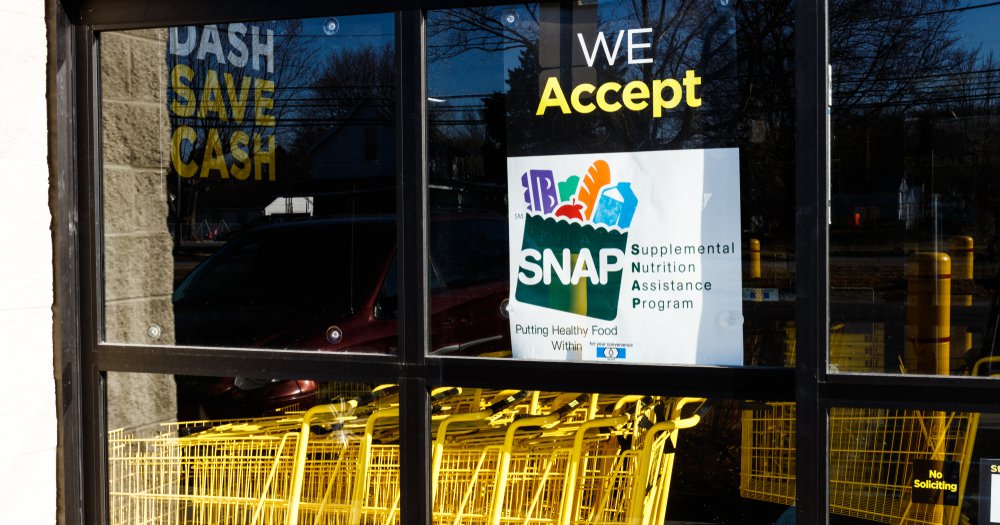
To address poverty鈥攖o achieve even some semblance of social justice for low-income families鈥攊t鈥檚 necessary to go broad, and train our attention on the full range of support people need. It鈥檚 not that other, more individual solutions鈥攍ike food stamps and charter schools鈥攁ren鈥檛 important. It鈥檚 that philanthropic organizations would benefit from zooming out and thinking about more inclusive solutions, rather than jumping from one silver-bullet fad to the next.
Crucially, I鈥檓 not saying that there aren鈥檛 any philanthropists thinking collectively. In fact, there鈥檚 a burgeoning movement called 鈥�,鈥� which is supported by philanthropy, that aims to get community-based organizations, foundations, and schools on the same page when it comes to promoting specific educational outcomes for low-income youth. Still, while the model has inspired similar work elsewhere in the country, it鈥檚 limited to youth intervention.
Social change takes time. But if we already know that low-income families take a holistic approach to solving their day-to-day challenges, philanthropic organizations should bring their work in line with these families. If they truly want to end poverty鈥攐r at least significantly chip away at it鈥攖hey need to invest in a comprehensive safety network.
Fellow, 麻豆果冻传媒 CA