Amaya Garcia
Director, PreK-12 Research and Practice
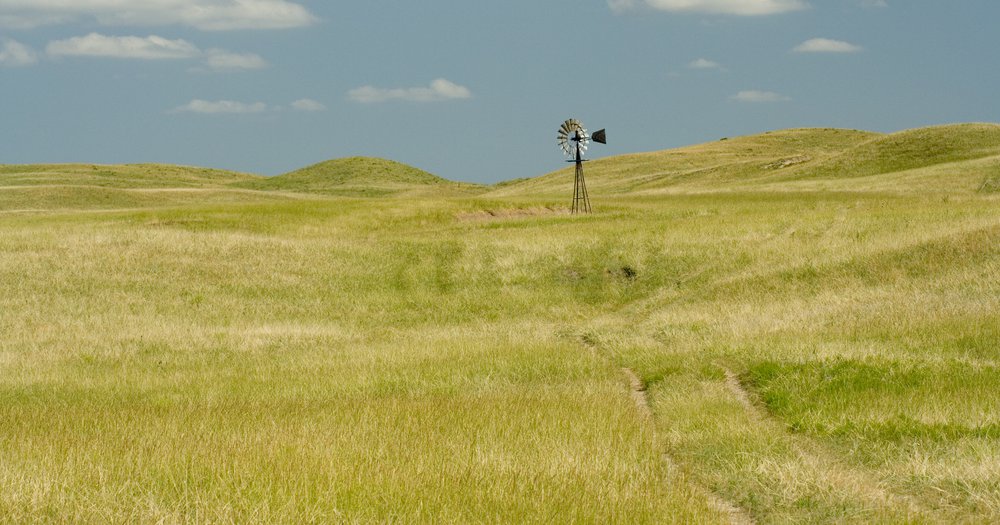
鈥淭he starting point for any effort to conserve and restore this landscape, however, must be its indigenous roots. To rebuild an enduring, resilient root system requires patience, hard work, and a deep understanding of native grasses and oaks. A resilient, productive K-12 education system for native people in northeast Nebraska reservation communities requires no less.鈥�
鈥擨ndigenous ROOTS teacher education
Vida Stabler鈥檚 career as an educator in Nebraska鈥檚 Umo鈦縣o鈦� (Omaha) Nation School began with a phone call. Stabler happened to be in the school building during the community鈥檚 annual dance celebration and picked up a call for the district鈥檚 Superintendent. 鈥淚 found him, told him there was an important phone call. I introduced myself and he said 鈥榦h, you鈥檙e a certified teacher鈥橻…] He offered me a job [as a teacher].鈥� She hesitated to accept the offer as she had already taken a job in a neighboring school district, but then the Superintendent told her about a local grant-funded program that was being started to help develop and prepare more Native teachers. 鈥淚 lit up and my heart danced. I saw this as an opportunity to have more of our people have a direct opportunity to teach our children from our perspective and in our way. Of course I turned that other position down and accepted the job here at the Umo鈦縣o鈦� Nation School.鈥�
Today, Stabler directs the tribe鈥檚 language and culture center and serves as a site mentor for the teacher education program that helped lure her to the Umo鈦縣o鈦� Nation School. ROOTS prepares cohorts of community members, many of whom are paraeducators already working in local schools, to become the next generation of teachers and is operated in close partnership with Little Priest Tribal College and the Nebraska Department of Education.
Housed at the University of Nebraska-Lincoln, ROOTS was launched in 1999 with funding from the US Department of Education Office of English Language Acquisition (OELA) as a career ladder program for paraprofessionals interested in earning their teaching degree. Now in its 20th year, the program also serves the communities of Niobrara, Macy, Santee, Walthill, and Winnebago and has expanded beyond the original career ladder model with funding from the federal program. With increasing numbers of American Indian families living and working in Omaha and Lincoln, the program has also begun to reach students living in larger Nebraska communities.
According to Nancy Engen-Wedin, director of ROOTS, the program aims 鈥渢o increase the number of Native American teachers who are working in schools serving predominantly American Indian students. These are all individual nations working to preserve and maintain their languages.鈥� The ultimate goal of the program is to increase American Indian student achievement across the state.
While American Indians make up just over one percent of the K-12 student population, these children have large opportunity gaps compared to their White and Asian peers. Nationwide, American Indian communities have among the highest rates of poverty, unemployment, and poor health. American Indian students have among the with only 75 percent of 18-24 year-olds having a high school diploma or alternative credential compared to a national average of 93 percent. also lag that of other student groups, with 19 percent of American Indian students being enrolled in college and 23 percent of students graduating from college within four years. These realities are due to a history of oppression, marginalization and forced assimilation.
In addition, many communities have seen their, in part due to policies mandating that American Indian children be educated in English-only settings. As a 2015 by researchers Teresa McCarty and Sheilah Nicholas describes, 鈥淚n 1819 the U.S. Congress passed the Civilization Fund Act to support missionary schooling, with the goal of exterminating Indigenous languages and lifeways so as to literally clear the path for the takeover of Native lands.鈥� The federal 1990 (NALA) codifies the use of native languages in instruction and education writ large, while the provided funding for language immersion programs. In addition, several states have related to providing American Indian students with instruction in their native languages and a handful have s geared towards preparing more American Indian educators, similar to ROOTS. Yet, according to the , close to half of American Indian students report never having been exposed to their native language and only 16 percent reported having a lot of knowledge about their history, traditions and culture.
Darla LaPointe, a graduate of the ROOTS program and first grade teacher in Winnebago Public Schools, has seen these trends first hand. The Ho-Chunk language is slowly eroding in the community, with only five or six fluent speakers, and so the Winnebago tribe has invested money to grow a within their schools and community. LaPointe described how she reads books about Native culture and communities to her students, 鈥淥ne student asked me, why are we reading all of these Indian books? I said because we鈥檙e all Indian. We need to learn about ourselves.鈥� She elaborated to say that she did not learn about Winnebago history until she was in college and that her hope was that her students would not have to wait that long. 鈥淚 focus not only on getting them to excel in reading and math but to excel in finding out who they are so that when they grow up they aren鈥檛 searching for something that was already in them.鈥�
Developing a pipeline of Native educators who understand the lived experiences of these students is crucial to promoting stronger outcomes and engagement. As Stabler told me, 鈥淲ithin the heart of that person is their tribe and we have been under immense, unbelievable efforts by our federal government to take away who we are. That person who enters ROOTS they carry with them an experience, a viewpoint so different than any other teacher. What鈥檚 within them from our ancestors is in them. The history that they walk with is beyond 鈥� it鈥檚 so hard to even articulate it 鈥� they are carrying so much more.鈥�
To that end, the program follows a Grow Your Own (GYO) approach whereby students are recruited from local schools and communities. are partnerships between educator preparation programs, school districts, and community organizations that recruit and prepare local community members to enter the teaching profession and teach in their communities. An increasing number of states and districts are using GYO as a strategy to ameliorate teacher shortages and increase the racial and linguistic diversity of their educator workforce.
At its core, ROOTS is focused on addressing the current shortage of Native teachers in Nebraska, particularly within Native communities. A of teacher vacancies in the state revealed that in the communities that now participate in ROOTS, only 17 out of 171 teachers were American Indian. These shortages are largely due to the lack of teacher preparation programs within driving distance of these communities and other barriers such as the financial costs of higher education, teacher licensure exams, and weak supports for non-traditional students. The program addresses these barriers in several ways.
First, students take general education coursework and earn an associate鈥檚 degree locally at Little Priest Tribal College or Nebraska Indian Community College. The partnerships between tribal community colleges and the University of Nebraska-Lincoln is an essential component of the program design and candidate success. 鈥淭he relationships between the tribal colleges and the university go hand in hand. They must push students to meet [admissions] guidelines. They cannot enter ROOTS if they have not been successful in their two year experience,鈥� said Stabler.
One unique component of the program is that participants are selected through a community review process that includes school administrators, faculty who teach in the program, representatives from tribal community colleges, former ROOTS students, and local site mentors. This process has helped the program gain buy-in from the tribal communities and create a shared sense of purpose. In addition, it ensures that program participants are from the community, allowing the schools to grow their own teacher workforce.
Once students make the transfer to the University of Nebraska-Lincoln, they are able to complete their coursework in their own community rather than having to travel two to four hours to Lincoln. This is accomplished through technology 鈥� students are provided with a laptop upon acceptance into the program and take the majority of their classes online. They communicate with their professors via email, text, and or video conference calls. In addition, they are able to complete their student teaching requirements in their community rather than traveling to a different part of the state.
The value of offering the program locally is not lost on Stabler who endured substantial hardship to earn her teaching certification. She described having to relocate to a different part of the state in order to fulfill her student teaching requirement all the while receiving no financial support to cover the cost of these additional expenses. As a site mentor for ROOTS, Stabler has placed a strong focus on ensuring that students understand the important role they are playing in their community. As a twenty year veteran, she has a lot of insights to offer to students, including the value and need to create materials that help students learn and maintain their indigenous Umo鈦縣o鈦� language. In her role as director of the language and culture center in the school district, Stabler has been and to ensuring that the work will be carried on by future generations, 鈥淚 want to see people standing beside me to my left and to my right. I want a team of people to carry this work on.鈥�
In the ROOTS program, besides getting the laptop/technology support, students receive a monthly stipend to cover the costs of their education, they get support for the cost of tuition and fees, and are eligible for tutoring services to help them prepare for the states required teacher licensure exams. Site mentors, who are previous graduates of the program, serve as a key resource for students and work closely with the students to ensure each is receiving the support necessary to persist in the program.
The program is also proactive about addressing obstacles, such as teacher certification exams, that keep racially and culturally diverse teacher candidates out of the profession. Nebraska requires that prospective teachers pass the Educational Testing Service's teacher certification exam, PRAXIS, in order to obtain licensure, a mandate that Engen-Wedin, described as a gate that may keep some individuals out of the profession. A growing highlights discrepancies in passing rates between white and non-white teacher candidates, but few states have developed strategies to address the issue. To that end, students are provided with tutoring from the get-go and with funding to help cover the cost of the exams.
LaPointe was clear that the personalized support offered by the program was integral to her success, 鈥淲ithout the program I probably would not have been able to get my certificate and be where I am today. I am thankful to Nancy [Engen-Wedin] and all her support 鈥� coming to Winnebago to talk to us, calling us, texting us. She [even] enrolled me in the classes that I needed. When I was struggling, Nancy would meet with me and the instructor. You don鈥檛 usually get that kind of help. [All] the little things she did through the program made my educational pursuit a much easier process.鈥�
To date, the program has prepared 53 Native educators who are now teaching and in leadership positions across the state. As Engen-Wedin shared, the program鈥檚 enduring strength has been its grow-your-own approach that allows students to live, study, work, get certified in their home communities. But another core strength is that the program has been designed to provide each candidate with comprehensive and personalized support to help . She characterized the ROOTS approach as 鈥淏ird by bird. It really is about focusing on the needs of each individual student, and then helping them navigate through the system and their lives, to ultimately attain their career goal of becoming an educator.鈥� However, providing this level of attention to each candidate requires a high level of capacity and impacts the scalability of these intensive models.
To be sure, not all GYO program models are alike. Some are designed as s that provide needed financial support to earn a degree and teacher certification. Others provide structured pathways to get potential teachers into the pipeline as . And still others offer small cohorts of candidates a range of supports to. But central to each program is the recognition that growing teachers from the local community is an essential tool for ensuring that more students have the opportunity to learn from a teacher who understands their culture, language and experiences.
Director, PreK-12 Research and Practice


 Video
Video