Ali Ulin
Program Associate, Partnership to Advance Youth Apprenticeship
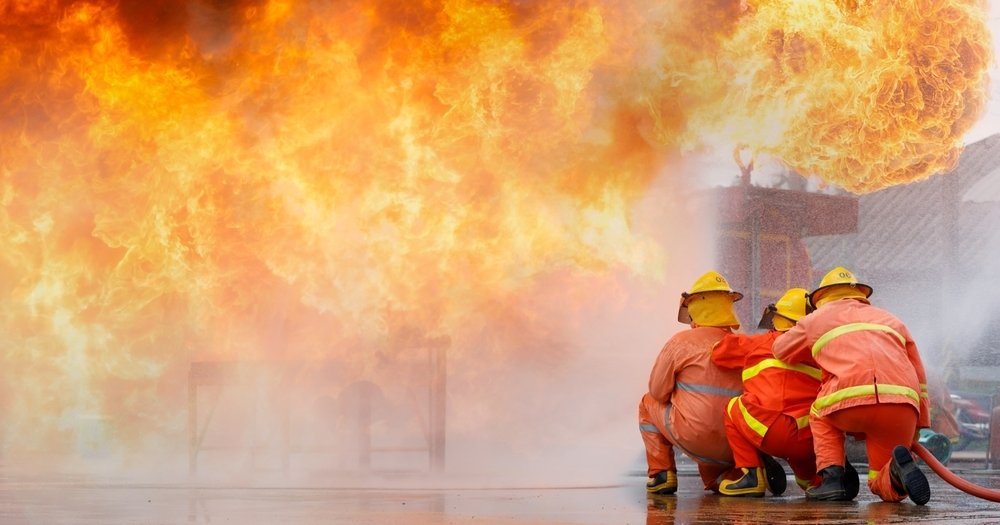
Early in January, Los Angeles was set ablaze with the largest fires in Southern California鈥檚 history. Nine fires burned tens of thousands of acres of the Los Angeles metropolitan area, destroying residences, businesses, and state parks land, as understaffed fire departments scrambled to contain fires on both sides of the county. Less than a month before the fires began, the Los Angeles Fire Commission (LAFC) filed a to LA Mayor Karen Bass, warning that 2024 budget cuts to funding for firefighters鈥� overtime shifts would severely limit the Los Angeles Fire Department鈥檚 (LAFD) capacity to prepare, train, and respond to large-scale emergencies. Just weeks later, this prediction came true, with devastating results.
California desperately needs more highly trained firefighters. Could apprenticeship be a solution? The state seems to think so and has undertaken several efforts to boost its firefighting workforce through apprenticeship.听
Since 2019, California has trained through state-supported apprenticeship programs as part of Governor Gavin Newsom鈥檚 pledge to 聽by 2029. Firefighting is the most popular apprentice occupation so far, accounting for 10 percent of all apprenticeships registered in the state as of July 2024. Today, there are , and the majority of firefighters in California are trained through an apprenticeship program.听
California鈥檚 registered firefighting apprenticeships are led by the (Cal-JAC), working in partnership with , California鈥檚 largest statewide firefighter union. Cal-JAC recruits firefighter apprentices, develops standardized training, and acts as an intermediary for apprentices and fire departments. Cal-JAC manages聽 registered apprenticeship pathways for firefighters and EMTs. Currently, Cal-JAC has nearly 200 participating departments.听
In the 2022-23 budget year, the state gave fire departments more than for apprenticeship training; though Los Angeles County did not qualify for most of them, the County received over $4 million for training reimbursement. California reimburses departments $10 per apprenticeship training hour, and firefighter apprentices must accrue per year of their apprenticeship (on-the-job training hours are not reimbursable).听
The includes a goal to expand the city鈥檚 apprenticeship programs, including programs for youth building on the the Developing a strategy for youth apprenticeship in firefighting has long been a goal of LAFD and CAL FIRE. A decade ago, the proposed more youth workforce development programming and greater uptake of the Cal-JAC program. Following the 2015-17 Plan, Fire Chief Ralph Terrazas sent the Board of Fire Commissioners a outlining LAFD鈥檚 strategies to standardize and scale their pre-apprenticeship cadet program and high school cadet magnet program. A year later, Cal-JAC Academy, California鈥檚 pre-apprenticeship program for fire careers, graduated their first class in 2018 of and entered 29 cadets the next year.
Apprenticeship could also expand opportunities for a group of workers who received a lot of attention in January: incarcerated firefighters.
Due to emergency services shortages, California has relied heavily on its incarcerated firefighters to come to the rescue. During the January fires in Los Angeles, joined the thousands of emergency responders battling the fires across the region. California鈥檚 prison system operates 35 鈥渃onservation camps鈥� in which incarcerated people with low level offenses can volunteer to do manual labor outside. These firefighters made , with an extra $1 hourly while responding to emergencies鈥� far less than their non-incarcerated counterparts, who can make six-figure salaries in Los Angeles County.听
Incarcerated firefighters typically receive training, but no credential, making the road to certification after release tenuous for those with criminal records. Because they cannot earn a Firefighter I certification while incarcerated, they are ineligible for entry level firefighting positions and union membership once released. Though a criminal record is not an explicit barrier to professional firefighting, it can bar people from EMT certification, a requirement at most fire departments. In 2021, Newsom signed to provide record expungement for formerly incarcerated firefighters to help transition them into the workforce.听聽
To help formerly incarcerated firefighters obtain credentials, the California Department of Forestry and Fire Protection (CAL FIRE), California Conservation Corps, and California Department of Corrections and Rehabilitation have partnered with the Anti-Recidivism Coalition to develop an enhanced firefighting training and certification program at the (VTC), roughly 60 miles north of Los Angeles. In 2018, VTC began training, and providing wrap-around supports (life-skills training, re-entry planning, record expungement help) to, released individuals who participated in the incarcerated firefighting force.Through this program, cadets gain qualifications for entry-level firefighter positions with local, state, and federal firefighting agencies. With over 25 programming facilities, the program has graduated through its Second Chance Apprenticeship Readiness Program. Participants in the program have a three-year recidivism rate of less than 10 percent, compared to the .听
Through strategic investments in apprenticeship programs, California and Los Angeles are building a more robust firefighting force and creating meaningful career pathways for youth, women, and incarcerated residents. The evolution of these programs, from the 2015 strategic plans to today's comprehensive approach, provides a blueprint for other states to better prepare for future fire emergencies using apprenticeship as a crucial step to a bigger and more prepared firefighter workforce.
Program Associate, Partnership to Advance Youth Apprenticeship