Introduction: A Pivotal Moment to Transform the Way We Work
鈥淭he idea that we鈥檙e ever going to go back to work like we did in 2019 is a myth. Flexibility is here to stay.鈥� 鈥� Dr. John Howard, Director of the National Institute for Occupational Safety & Health
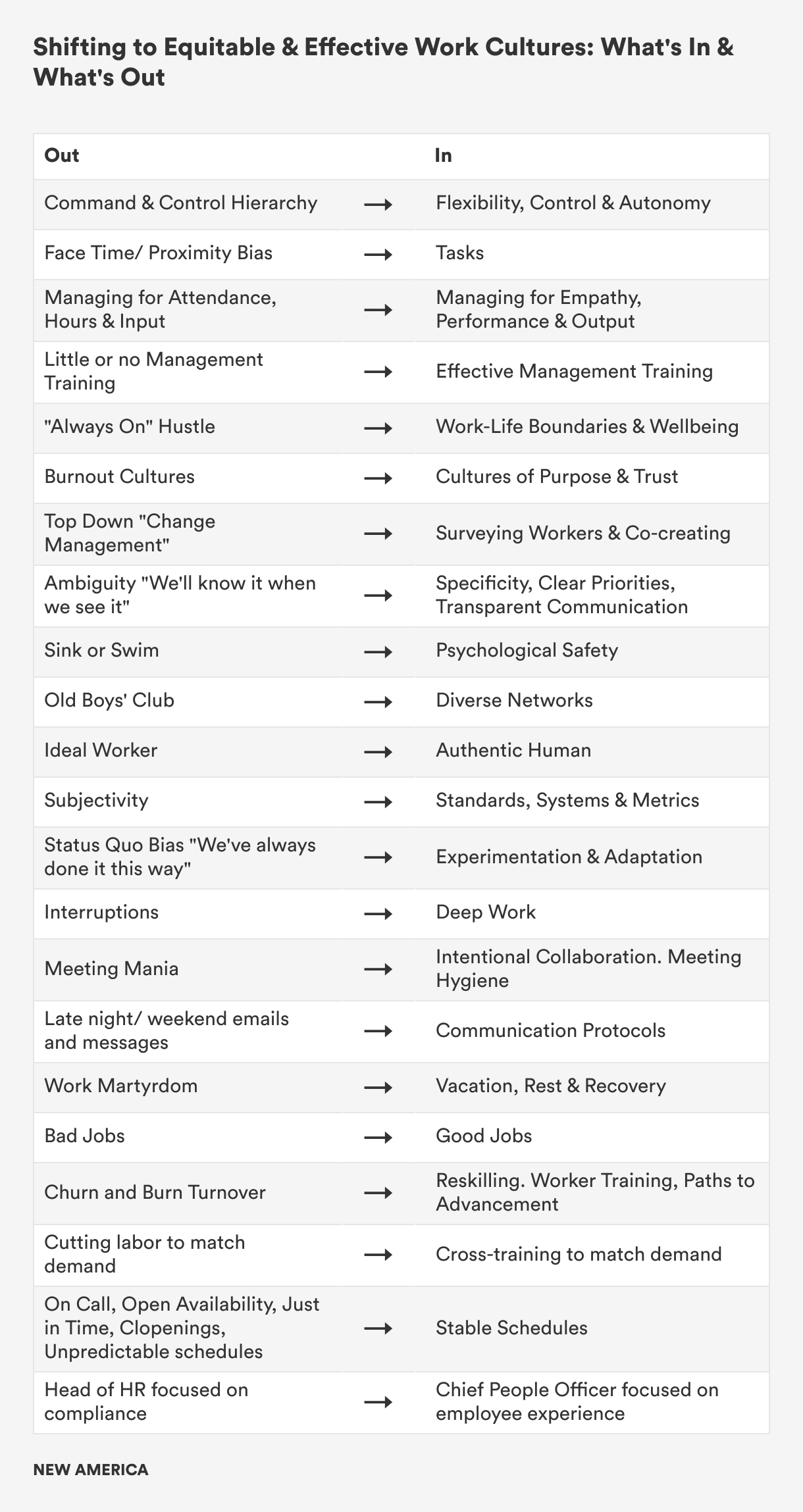
The global COVID-19 pandemic that has disrupted virtually every aspect of life has also created an unprecedented opportunity to profoundly transform the way we work, how work shapes our lives, and what productive, effective鈥攁nd equitable鈥攚ork looks like. This Toolkit is designed to help guide managers and leaders in designing high results, flexible cultures of trust and wellbeing. The time is now. Leaders who once resisted "distributed" digital or work-from-home work styles were either forced to adopt it literally overnight, or have come to embrace it as productivity has risen, even under difficult circumstances. Workers across industries are at rates never seen before, even as millions of jobs remain unfilled in what鈥檚 being called, the , or the Great Migration. Workers . Young workers are , and prioritizing value and meaning over pay and climbing the career ladder. More than – including . The long invisible and undervalued workers in the care, retail, and service sectors, where low wages, unpredictable and involuntary part-time schedules are rampant, and where, have been hailed as essential.
And, as childcare facilities and schools closed down in the face of a life-threatening virus, the near impossible dilemma鈥攁nd deep disadvantage鈥攐f women and caregivers who have long had to navigate work cultures, expectations, and practices designed for another era came into sharp relief. Women鈥檚 have risen and , as their labor force participation, particularly among, has fallen to.
In the face of such flux and uncertainty, this is a pivotal moment for business executives, organizational leaders, and managers to reimagine work in order to both promote equity and wellbeing across race, class and gender and make work more effective. To finally make work really work for both workers and employers. And, just as there is great promise, so is there great peril that this opportunity could be missed without intentional and inclusive planning, designing, and implementing.
What comes next in a "Corona-normal" future of work is uncertain. There is no work redesign playbook right now. And, as companies continue to feel their way forward as new virus variants emerge and recede and as public health guidance shifts, there continues to be much confusion, anxiety, and uncertainty.
That鈥檚 where this toolkit comes in. Designed to be a useful and practical guide for managers and organizational leaders as they continue to develop and refine what鈥檚 next in a 鈥淐orona-normal鈥� future of work, this toolkit draws together evidence-based research, expert advice, and the best of what we鈥檝e learned so far. It provides a framework for designing work for equity and effectiveness, and offers practical strategies, case studies and trend analyses for the three dominant emerging types of work: hybrid, digital and essential. (This Toolkit uses the terms "digital" or distributed instead of "remote" work, as "remote" implies real work is being done in a place somewhere else.) With links to curated resources, the Toolkit aims to help managers make the most of this pivotal and potentially transformative time for both work and workers.
One thing is clear: there is no going back. We鈥檝e seen each others鈥� bedrooms, laundry rooms, children, partners, and pets in the background of Zoom or Teams calls. We鈥檝e become digital nomads and moved around the country. We鈥檝e finally been forced to see how essential frontline workers鈥攖he grocery store clerks, care workers, retail workers, and restaurant workers who make up the majority of the U.S. workforce鈥攕truggle to make it in increasingly precarious jobs and applauded their efforts as 鈥渉eroic.鈥� (Just over at the height of the pandemic, the BLS reports. Everyone else was on site or out of work.) We've been forced to confront how, without a universal care infrastructure for our children and our disabled, ill or elderly loved ones, the ability to work is close to impossible for far too many. COVID-19 showed that the future of work is already here. And that鈥檚 a good thing, because pre-COVID work didn鈥檛 work, with outdated systems, practices, and expectations, and growing precarity driving鈥攊n one job for the professional class, and in cobbling together several low-paying, low-hour gigs for the working class鈥攁nd perpetuating in an increasingly diverse workforce.
Work is changing. We can finally make it work鈥攎ake it equitable and effective. Here鈥檚 how.
![shutterstock_1682451694 [Converted].png](https://d1y8sb8igg2f8e.cloudfront.net/images/shutterstock_1682451694_Converted.2e16d0ba.fill-1600x775.png)
Designing Equitable and Effective Workplaces for a “Corona-normal” Future of Work
- Introduction: A Pivotal Moment to Transform the Way We Work
- Five Key Principles for Designing an Equitable and Effective Future of Work
- I. Doing Digital Work Right (Digital and Hybrid Workplaces)
- II. 鈥淏e Awesome at Both鈥濃�擬ake the Most of Hybrid Digital & In-Person Work
- III. Make Essential Work Good Work
- IV. Human-centered Public Policies are Good for Business
- V. Case Studies
- VI. Resources