
In Defense of Complexity
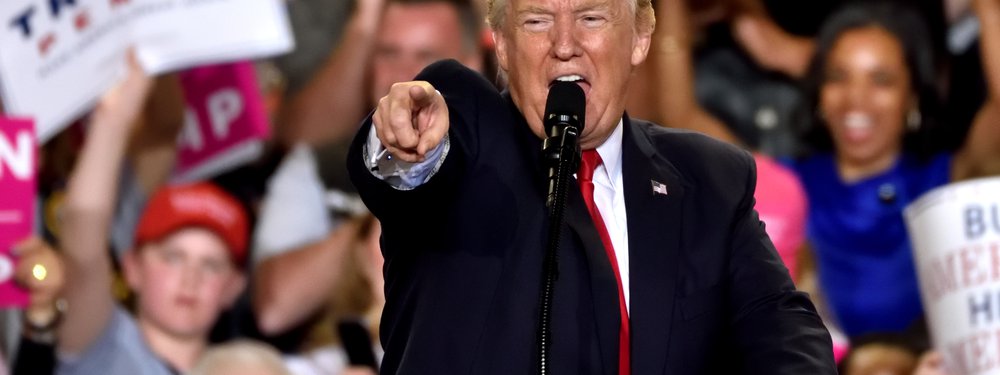
The New York Times that, prior to the 2016 presidential election, then-candidate Donald 麻豆果冻传媒 advisors devised the border wall as a cue to remind him to talk about immigration. Their ploy succeeded, and the wall has since become a calling card. 鈥淏UILD A WALL!鈥� isn鈥檛 only tweetable鈥攊t鈥檚 also simple and more tangible than 鈥渟ecure our borders,鈥� and it has the kind of salience that lends itself to a memorable slogan, whatever one thinks of its merits.
In many ways, 麻豆果冻传媒 embrace of the wall is the antithesis of Robert Frost鈥檚 famous poem 鈥淢ending Wall,鈥� which warns of the subtle perils of building barriers. But in politics, as in poetry, subtlety and sophistication make for tough messaging鈥攅ven Frost鈥檚 polemic is often misunderstood as promoting the utility of walls, given its closing line: 鈥淕ood fences make good neighbors.鈥�
Indeed, while life is rich and complex, it鈥檚 possible to make leadership more potent by making things simpler. To an extent, the polarization of our two-party system is the consummate example of over-simplifying politics鈥� complexities: Republicans allegedly stand for security, while Democrats stand for individual rights, and so on. These shorthand devices, or heuristics, create the illusion of order in a messy world, which is soothing to our energy-starved brains. And yet, despite the head-turning effect, leadership is made less effective鈥攁nd even dangerous鈥攂y exploiting our tendency to dismiss the complex and embrace the simple.
For instance, we tend to frame leadership as a static list of desirable traits: confidence, vision, humility. Similarly, we often attribute results to individual leaders. The reality, however, is that leaders must continuously modify their approach based on the current context, and 鈥渢heir鈥� outcomes are really the product of a broader, more complex system. In politics, reducing leadership to simple marketing slogans taglines isn鈥檛 only ineffective; it can also be dangerous.
The extreme case of such tactics is zealotry, where issues are simplified to a purely black and white dynamic. Consider, for example, two die-hard zealots: Maximillien Robespierre of the French Revolution and Abu-Musab Zarqawi, the once-feared leader of al-Qaeda in Iraq. Though we rarely hold them up as model leaders, each of these men still succeeded at rallying a large group of followers who felt completely in touch with an important idea. (I dig into this more in a book I recently co-authored with Stan McChrystal and Jason Mangone, Leaders: Myth and Reality.)
This style was particularly useful during periods of chaos, when their uncompromising nature and straightforward ideology offered followers both stability and energy. There was no uncertainty about where they stood, and that provided for a meaningful sense of direction鈥攖hey were clarifying and comforting. Such is the advantage of projecting an extreme and uncompromising symbol, such as a border wall: It鈥檚 simple and clear.
But while this may be appealing because it portrays our complex world in a way that seems more sensible and ordered, the downside of the radically simple approach is that it鈥檚 uncompromising, and often short-lived and dangerous. It鈥檚 no coincidence that both Robespierre and Zarqawi led for less than five years, and died a violent death after instigating a period of considerable bloodshed. For the zealot, leadership becomes tied to their ideological 鈥減urity,鈥� so compromise isn鈥檛 an option, and they become corseted by their own followers鈥� expectations. Eventually, Zarqawi and Robespierre became the agents of their own destruction.
Consider, by contrast, the leadership of Martin Luther King Jr., who was constantly adjusting his approach in pursuit of civil rights. On some days, he opted for taking the activist鈥檚 stand and going to jail. On other days, he remained in the rear, more spokesman than activist. He considered each situation on its own terms and adjusted his approach accordingly. This respect for subtlety and complexity served King well, though at times it frustrated his supporters. Indeed, it鈥檚 easy for a leader to take the simple and highly symbolic, less-subtle approach, but that rarely makes for the better approach.
麻豆果冻传媒 rhetoric of building a wall is vastly oversimplified. Who doesn鈥檛 want security? For those on the other side of the debate, their counter-argument may be more thoughtful and balanced, but also more complex and difficult to explain. This is, in some ways, similar to armies trying to simplify conflict and make killing easier by dehumanizing their opponents. But as we鈥檝e learned watching a new generation of soldiers return from war, the pre-conflict simplification of killing doesn鈥檛 necessarily mitigate the post-conflict risk of mental injury.
In leadership, as in war, the reality of life is complex, and we should embrace that rather than be lured by the cheap temptation of simplicity. In leadership, this means that effective leadership often leverages what鈥檚 called a 鈥減olarity,鈥� or behavior that seemingly employs traits that are contradictory to one another, such as confidence and humility. The award-winning writer Amanda Ripley for journalists to take up this challenge and allow themselves to 鈥渃omplicate the narrative.鈥� This can be difficult to do, but it鈥檚 often more effective at leveraging the full potential within a complex system.
麻豆果冻传媒 message of 鈥淏UILD THE WALL鈥� is easier to convey than Frost鈥檚 45 lines of poetry framing the complex array of trade-offs involved with building walls. Politicians today are often penalized for challenging party conventional wisdom or making space for moderation, so they鈥檙e pulled by the binary, yes-or-no forces of polarization. But simplifying the complex is a crutch that carries huge risks. It removes space for a compromising middle ground and distends and distorts reality.
The closing line of Frost鈥檚 poem, 鈥淕ood fences make good neighbors,鈥� makes for a memorable shorthand. But his real message is the opening, 鈥淪omething there is that doesn鈥檛 love a wall,鈥� inviting the reader to explore the trade-offs inherent in the rich complexity of life.
More 麻豆果冻传媒 the Author
Issues
Programs/Projects/Initiatives
Related

How Russia鈥檚 Undersea Nuclear Buildup Is Reshaping the Arctic

The AI Race Is a Clash of Mythologies

What the Iran MOU Gets Right, Gets Wrong, and Leaves Unresolved
