
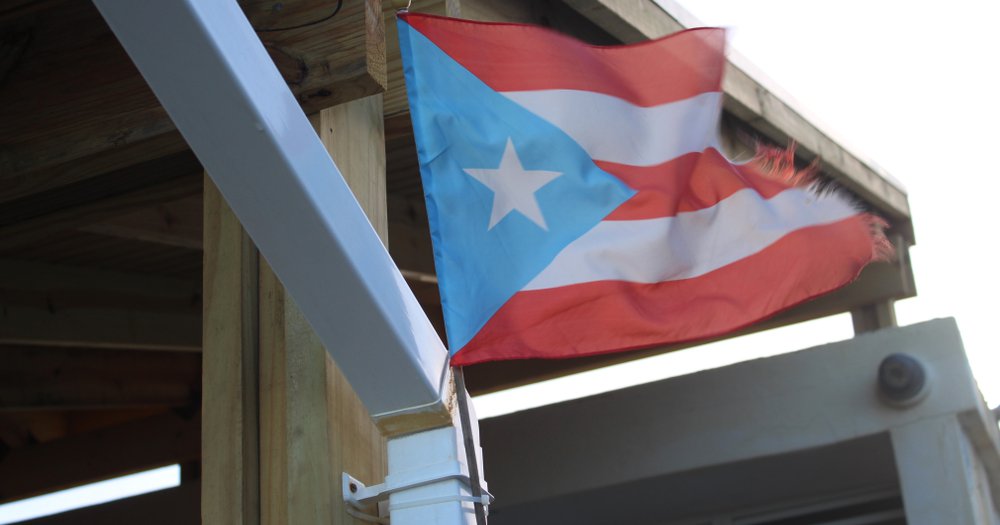
This is the first in a series of posts about property rights in Puerto Rico, see the next post here.
Destructive Cycles
When Hurricane Maria struck in Sept. 2017, Puerto Rico was already in the midst of a deep economic crisis. The unemployment rate was over 10% –the highest in the US and more than double the national average– with nearly 50% of the population living below the poverty line. The economy was in a prolonged recession and the government was undergoing the in American history. Real GDP had while the government accrued $73 billion in debt. The island鈥檚 population was dwindling as residents migrated to the mainland. This 鈥渂rain drain鈥� further weakened the island鈥檚 recovery prospects as many of the brightest and most enterprising young Puerto Ricans left in search of educational and employment opportunities commensurate with their ambitions.
All of these problems were accelerated when Hurricane Maria tore into Puerto Rico鈥檚 fragile infrastructure, leaving virtually the entire island without power and cutting off access to food, clean water, and medicine for hundreds of thousands of people. One month after Maria, in The Hill noted 鈥渢he situation is much worse, the unemployment rate is close to 100 percent and the physical infrastructure of the island had been wiped out.鈥� In November of that year, The Census Information Center of the University of Puerto Rico in Cayey estimated that the unemployment rate on the island was .
There are substantive disagreements over the best path to recovery and reform, but everyone agrees that it must be done now. Extreme weather events like Hurricanes Irma and Maria are likely to become even more frequent in the future. If Puerto Rico cannot transform its infrastructure and economy to become more resilient, it risks being trapped in a cycle of destruction and reconstruction, taking a step back for every one it takes forward.
Historical Roots of the Crisis
Puerto Rico鈥檚 infrastructure and economy are extremely fragile, a legacy of the island鈥檚 colonial past, which has seen it treated, , as 鈥渓ittle more than a profit center for the United States: first as a naval coaling station, then as a sugar empire, a cheap labor supply, a tax haven, a captive market, and now as a municipal bond debtor and target for privatization."
The power grid depends on imported fossil fuels distributed inefficiently over long distances by a government-controlled power company (PREPA) with a long history of incompetence and corruption (as evidenced by the ).
A piece of legislation called the Jones Act –passed in 1920 on national security grounds– requires all goods transported between US ports to be carried by US owned, built, and operated ships, making 鈥溾�� due to the increased shipping costs. A 2010 University of Puerto Rico study estimated the cumulative cost of the Jones Act at $537 million per year.
In spite of its fertile soils and tropical climate, of all food consumed on the island is imported. The lack of agricultural productivity is partly a legacy of the economy鈥檚 former reliance on cash crops, especially sugar cane. Operation Bootstrap, an initiative launched in 1947 to transform the island into an industrial hub for cheap domestic manufacturing, has been overtaken by globalization and has done little to develop a workforce prepared for the rise of the information economy. Puerto Rico鈥檚 is the second worst of any US jurisdiction after the District of Columbia, and the island suffers from a general lack of financial inclusion and social mobility.
Why Property Rights Matter
We have written elsewhere about the general importance of property rights. Land is the foundation of wealth, and for most Americans, real property is the primary source of capital. In the developing world, formal property rights are an important tool for , , and from encroachment by political and corporate interests.
In Puerto Rico, property rights matter because they are essential for creating resilient housing and a more inclusive economy. Informal property is rare enough in the mainland US that it is rarely discussed outside the context of international development. In Puerto Rico, an estimated 55% of properties are informal, and 30% of documented properties are not recorded in the registry.
Resiliency, Recovery, and Development
The consequences of this informality were visible in the destruction caused by Hurricane Maria. The construction quality of informal homes is typically low because they are not built to code. Without loans for construction, building is done piecemeal and corners are cut with cheap materials and unlicensed labor. Recovery was further hampered by the low rate of insurance. In Puerto Rico , meaning that informal settlements were almost entirely uninsured.
Some informal communities will likely have to be rebuilt in new areas that are less vulnerable than their current sites, which are often on undesirable, flood-prone land. In some cases these settlements were founded by people displaced by previous storms. One such community is Villa Hugo, an informal settlement of 6,000 which .鈥� As the government points out in its draft recovery plan, while informal settlements in particularly vulnerable areas will have to be resettled, elsewhere the government should help those communities rebuild and improve their properties. These structures must be replaced with strongly-built, hurricane-resistant homes, with their inhabitants鈥� property rights recorded in similarly resilient registries. Some property records were also destroyed in the hurricane, though this problem was less widespread than it might have been prior to the of Puerto Rico鈥檚 property registry.
of FEMA assistance claims were rejected, including many cases in which applicants who needed help rebuilding could not provide titles to prove ownership of their homes. The problem was so pervasive that FEMA began as evidence of property ownership in place of formal documents.
Challenges
One of the most formidable obstacles facing policymakers is the lack of information about land and property occupancy, use, and condition. Both the recovery efforts and planning for future disasters require data garnered from a comprehensive program. This will be difficult in Puerto Rico, where there are many absentee landlords and vacant rental properties. Discovering the full truth on the ground will be an expensive and time consuming endeavor, but it presents an enormous opportunity to simultaneously address one of the most fundamental obstacles to disaster resilience and to economic development. Once the data has been gathered, formalizing these properties will have the added benefit of expanding Puerto Rico鈥檚 tax base and increasing government revenues in a time of financial crisis.
It should be noted that the financial status of even the formal properties on the island is precarious. The one year foreclosure moratorium imposed by HUD in the wake of the hurricane will expire on August 16th, and it is not yet clear how many people will be able to resume payments. According to a December 2017 , 鈥渁bout one-third of the island鈥檚 425,000 homeowners are behind on their mortgage payments to banks and Wall Street firms that previously bought up distressed mortgages鈥︹�� and 鈥�… 90,000 borrowers became delinquent as a consequence of Hurricane Maria.鈥�
Property rights will also have a major role to play in the future development of Puerto Rico鈥檚 economy. Real estate is already 15% of PR鈥檚 GDP, and the government is committed to increasing investment in that sector. The key to this strategy has been offering to companies and high-net-worth individuals who relocate to Puerto Rico.
This policy, combined with the austerity measures imposed by the unelected Financial Oversight Board –a panel appointed by the federal government to manage the recovery of the Puerto Rican economy– has fueled accusations of disaster capitalism. Critics fear that the government鈥檚 policies will turn Puerto Rico into resort a for wealthy tourists while gutting essential services like education.
It is for vulnerable people to be through eminent domain in order to make way for private developments. If PR is starting to emerge from an economic low point, everyone needs to share in the growth. Granting formal rights to informal communities will help protect them from exploitation, give them equity in the reconstruction, and afford them increased access to financial markets.
Opportunities
The phrase 鈥淏uild Back Better鈥� [] has become something of a mantra for Puerto Rico Governor Ricardo Rossell贸. His government鈥檚 draft recovery plan demonstrates a clear understanding of the importance of property rights in building a more resilient and prosperous Puerto Rico. It remains unclear, however, how exactly that plan will be implemented, and if the government will have the resources to do so effectively. HUD awarded Puerto Rico an reconstruction grant, less than half of the $46 billion requested.
But the reconstruction does not have to come exclusively from the top down.The badly botched Federal response to Hurricane Maria created a widespread conviction that greater independence from the mainland (and centralized systems in general, e.g. of energy distribution) will be necessary for the creation of a truly resilient and sustainable Puerto Rico. There is real reason to hope that the many local organizations that sprang up in the wake of the storm will coalesce into a movement capable of bringing about change from the bottom up.
These include mutual-aid , , for emergency communication, and . The common elements in these projects are self-reliance, social responsibility, and the embrace of innovative technologies. The Government of Puerto Rico is providing strong incentives for entrepreneurs and technologists in order to grow and while luring back members of the diaspora, reversing the brain drain of recent years. And evacuees and other members of the diaspora are returning: .
FPR will continue to follow this story, highlighting opportunities for emerging technologies to impact land rights in Puerto Rico. The island remains in crisis as it enters another hurricane season. Time will tell whether the prevailing sense of unity and urgency, paired with tech innovation, will make the story of Puerto Rico鈥檚 recovery one of American renewal in the digital age.
More 麻豆果冻传媒 the Author
Issues
Programs/Projects/Initiatives
Topics
Related

Respecting the Agency of the Unhoused

Home Equity Investment Loans: Subprime Balloon Mortgages Coming to a Neighborhood near You

Preventing Tax Foreclosures is the Best Way Local Governments Can Protect Heirs Property Owners
