Yuliya Panfil
Senior Fellow and Director, Future of Land and Housing
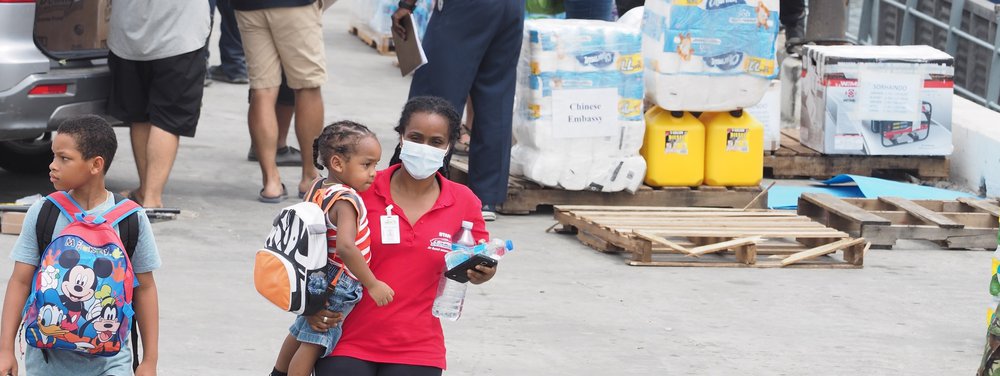
In September 2017, Puerto Rico was devastated by Hurricane Maria. Two years later, an estimated homes on the island remain covered in blue tarp, and census estimates show that people are still displaced, unable to return.
Puerto Rico has joined New Orleans in the ranks of particularly botched responses to disaster-related displacement (the fancy term for "I can't go home anymore") 鈥� but the truth is, the problem goes far beyond Puerto Rico.
According to the Internal Displacement Monitoring Centre, the United States had the world鈥檚 weather-related displacement rate in 2018: More than 1.2 million people were displaced last year, following the more than 1.6 million in 2017. The trend has particularly pernicious implications, considering the fact that our lives are oriented toward our homes. Our children鈥檚 schools and daycares, our work commutes, our grocery stores, the pharmacies where we fill prescriptions鈥攁ll of these places are chosen in relation to where we live. As a result, identify displacement as 鈥渁 permanent shock that structurally impacts the welfare of a family.鈥�
And yet, the Trump administration has failed to adequately address the increasingly salient realities of disaster displacement.
After Hurricane Maria hit Puerto Rico in 2017, FEMA denied of all aid applications鈥攁 shockingly high number, especially in light of FEMA鈥檚 鈥溾�� mission. A reason for the denials? FEMA鈥檚 inability to verify that claimants owned the property they were seeking to rebuild. The agency鈥檚 persistent failure to navigate this challenge, which during Hurricane Katrina in 2005 and during the California wildfires in 2018, evinces a glaring lack of attention to a systemic and recurring issue鈥攐ne that keeps tens of thousands displaced far longer than necessary.
The U.S. Department of Housing and Urban Planning (HUD), which is responsible for the bulk of housing reconstruction and displacement aid, is also slow on the draw: To date, the organization has spent less than .01% of the housing money it had allocated for Puerto Rico. The problem isn鈥檛 unique to Puerto Rico; in March, the United States Government Accountability Office (GAO) released a criticizing the slow disbursement of HUD funds in response to 2017 hurricanes in Texas, Florida, Puerto Rico, and the Virgin Islands.
Nor is the crowded field of Democratic presidential hopefuls doing much better when it comes to addressing disaster displacement. Candidates鈥� housing and environmental plans principally focus on pre-disaster measures, such as resilient infrastructure and adaptation planning. While these are critical long-term solutions, they don鈥檛 deal with homes that have already been built, or with people who have already been displaced.
In fact, of the ten leading candidates, only three have specific campaign policy proposals for addressing post-disaster housing recovery. Juli谩n Castro, who touched on disaster displacement during the first Democratic debate and the Climate Town Hall, has released the most proposals, calling for strengthening the National Flood Insurance Program, expanding buy-out funding and authority to help homeowners, updating the Stafford Act (which governs natural disaster assistance), and augmenting the National Disaster Resilience Grant program.
Mayor Pete Buttigieg, in a last month, unveiled a disaster relief plan that would create a Disaster Commission to streamline disaster data collection and make it easier for survivors to access rebuilding funds鈥攊ncluding via a permanent block grant program within HUD. Andrew Yang has suggested reevaluating the National Flood Insurance Plan and providing a federal fire insurance program, and in an email, Beto O'Rourke鈥檚 campaign said his climate plan would support displacement measures鈥攊ncluding rebuilding affordable rental housing and ensuring renters and individuals experiencing homelessness are supported under HUD鈥檚 program.
Several candidates have also introduced or co-sponsored legislation related to post-disaster displacement. In May, Senator Elizabeth Warren introduced the to expand the forms of evidence survivors can use to prove they own their homes. Senators Kamala Harris and Bernie Sanders co-sponsored that bill, while Senators Cory Booker and Warren co-sponsored the to extend the National Flood Insurance Program.
Still, campaign proposals have yet to address the issue in details.
The number of billion-dollar disasters in the U.S. has over the past three decades, displacing millions. It鈥檚 high time policymakers made it a priority to get residents back into their homes, quickly and safely, after disaster strikes. The resilience and prosperity of our nation鈥檚 communities depend on it.
Senior Fellow and Director, Future of Land and Housing


