Dona Stewart
Fellow, Future of Land and Housing
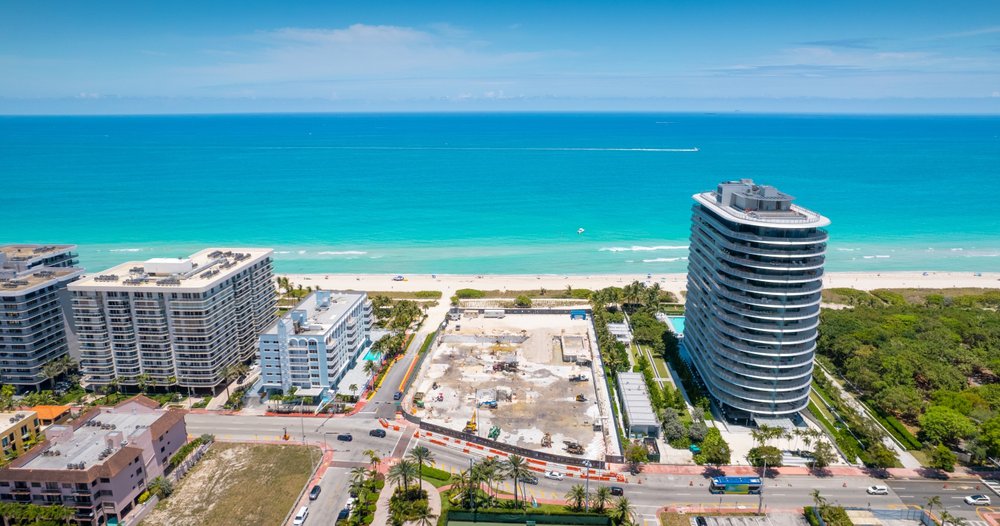
In the predawn hours of June 24, 2021, a large section of the 12-story Champlain Towers condominium building collapsed. Only three of the 101 residents inside the 40-plus year old building in Miami鈥檚 Surfside neighborhood survived. The remaining wing of the building was left uninhabitable.
In the aftermath of this tragic event, Florida鈥檚 aging condominiums have come under scrutiny. Nearly condominiums are over 40 years old. For decades, a loose regulatory environment has allowed the deferment of repairs and maintenance. In addition many of these condominiums are located on coasts, and as the frequency and intensity of storms increase and sea level rises, these older structures鈥揳nd their inhabitants鈥搈ay be at greater risk.
In May 2022, the Florida legislature enacted for condominiums in response to the Surfside collapse. Though clearly much needed, the law threatens housing affordability for owners in buildings that have deferred repairs and maintenance.
After the Champlain Towers collapse, the U.S. Department of Commerce鈥檚 National Institute of Standards and Technology (NIST) launched an investigation to determine what happened. The , which could take years, is intended to 鈥渄etermine the technical cause of the collapse and, if indicated, to recommend changes to building codes, standards and practices, or other appropriate actions to improve the structural safety of buildings.鈥�
Though NIST has yet to release any findings, an in-depth investigation by highlighted numerous factors that likely contributed to the collapse. These include poor structural design and a severe lack of maintenance. The columns in the portion of the building that remained standing (Champlain Towers North) were nearly twice the size of those in the section that fell. In addition, water intrusion in the Champlain Towers South pool deck area鈥搘here the collapse first occurred鈥� allowed corrosion of rebar in the reinforced concrete.
Long before the collapse, residents and the homeowners association reported growing problems with the building. Water frequently infiltrated the underground garage (located below the pool deck) despite attempts to repair and waterproof the area. Forebodingly, a 2018 engineering report on the structural integrity of the Champlain Towers South complex of major structural damage, including 鈥渁bundant鈥� cracking, and crumbling of support-bearing columns, beams, and walls. Yet by 2021, repairs had still not been made.
At the time of the collapse, requiring condominium association boards to make prompt structural repairs to defects. These boards, made up of homeowners, oversee the operations and maintenance of the building. Expenses are funded by a monthly assessment on each unit owner. But the desire to keep monthly assessments low has created an incentive for owners to continuously push repairs and maintenance off.
County governments have also provided little oversight. Only two of Florida鈥檚 67 counties, , had programs for condominium recertification. Champlain Towers, which is located in Miami-Dade County, was in the midst of their 40-year-recertification process at the time of the collapse. This recertification process, which required a structural and mechanical inspection of the building, was what had forced the association to finally move forward with repairs.
In April 2021, the condominium association approved a assessment. The cost per homeowner ranged from $80,190 for a one bedroom unit to $336,135 for the four-bedroom penthouse, which could be paid upfront or monthly over a 15-year period. Owners had until July 1, 2021 to select their payment option. The building fell on June 24.
In May 2022, the Florida legislature passed informally known as the Florida Condo Safety Act. This legislation puts in place state-level mandates for inspection and reinspection of condominiums. The law, which passed unanimously, impacts some operated by nearly 28,000 associations across the state. More than 2 million Floridians, roughly ten percent of the state鈥檚 22 million residents, live in condos that are 30 years old or older.
include:
Association members will be required to pay for any repairs identified through the new inspection process. This impact is likely to be both expensive and far reaching as only 5 to 10 percent of condominium associations have properly funded their reserves, with about 50 percent having
For example, owners at the 189 unit tower, Murano at Portofino in Miami Beach, are facing a , which amounts to an average cost of $160,000 per unit. in the $30,000 to $50,000 range at other properties are beginning to emerge. Still other owners may have to bear the cost of temporary displacement while repairs are made if the building is deemed to be unsafe. Such was the case for residents of the 5050 NW 7th Street building in Miami, where residents were forced to for over 18 months while extensive repairs were made to improve the safety of the building after an inspection.
Amid fear that the high cost of repairs could force owners to sell, Miami-Dade County recently launched a zero percent interest for owners facing special assessments. These loans are available to those with incomes up to 140 percent of the median income for Miami-Dade County, equivalent to $95,620 for a single-person household and $109,200 for a two-person household.
Historically, condominiums have been among the. Condo prices are typically lower than single family homes and attract many first time home buyers. In Florida, many owners are retirees on fixed incomes. But the need to repair these buildings, combined with inflation and rising insurance costs, could increase their costs beyond what they can afford, forcing current owners to sell, and preventing new buyers from being able to buy.
Few buyers are willing to buy units facing large special assessments, which could drive down sale prices for the units. Investors are taking advantage of the owners鈥� dilemma, buying up entire condominium units in desirable coastal locations in order to tear them down and build new luxury towers on the site.
Such is the case on the former Champlain Towers site, purchased for $120 million by the Dubai based luxury property developer . While those in waterfront buildings may be lucky enough to get a good, or even above market, price for their unit, owners attempting to sell their properties further inland may be out of luck. And even those who do sell will have to face finding housing in a very hot real estate market.
Aging condominiums are common across the U.S., especially in New York, New Jersey and Massachusetts, and California. As in Florida, there is and oversight related to building maintenance. As other states seek to ensure the safety of these buildings, concerns surrounding housing affordability will need to be considered alongside the urgent need to ensure the safety of this critical housing source.
Fellow, Future of Land and Housing