
Aaron Loewenberg
Senior Policy Analyst, Early & Elementary Education
The elections were a mixed bag for those hoping for a major federal push for greater ECE funding and access in the near future
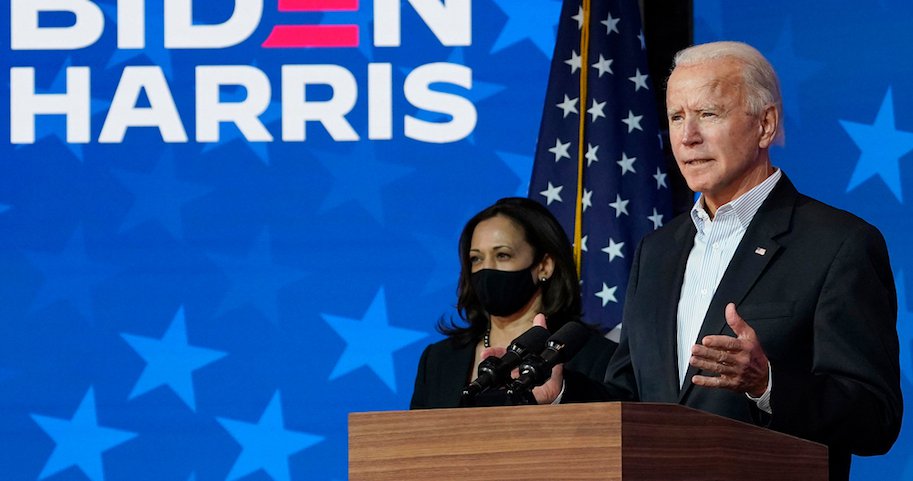
While several states are still counting their final votes and a handful of House contests , we now have a pretty clear idea of the overall outcome of the 2020 federal elections and their potential impact on federal early childhood education (ECE) policy. Advocates of expanding access to high-quality ECE won some major victories at the local and state level, as my colleague Abbie Lieberman recently pointed out. The elections at the federal level, however, were more of a mixed bag for those hoping for a major federal push for greater ECE funding and access in the near future.
In the presidential contest, voters turned out and decisively selected Joe Biden over President Trump. With some votes still being counted, Biden leads in the popular vote and is on track to secure the largest share of the popular vote of . In fact, Biden will likely secure the same number of electoral votes, 306, that Donald Trump earned in 2016 and later called
Democratic enthusiasm over the presidential results is being tempered by the congressional election outcomes, however. Despite expectations of adding a handful of seats to their House majority and taking over the Senate, the Democrats instead will be operating with a slim House majority while overall control of the Senate hinges on the outcome of two Georgia runoff elections on January 5, 2021 in which Republicans .
The split decision delivered by voters will sharply limit the odds of turning President-elect Biden鈥檚 expansive ECE agenda into reality. Ensuring universal pre-K access for three- and four-year-olds or passing to reduce the financial burden of child care, for instance, would both require congressional action. Even if Democrats manage to win both of the Senate races in Georgia, they鈥檒l be operating with a Senate split 50-50 between the two parties, meaning some Republican support will be essential to garnering . The difficulties of working with a divided Congress are already on display, with in the lame duck session and pass a much-needed COVID relief bill that could include financial support for child care providers. Despite the pressure from Biden and the urgent need for more COVID relief, the chances of a bipartisan bill passing soon .
The likelihood of a divided Congress to what President-elect Biden can accomplish on education policy through executive orders and regulatory actions that do not require the consent of Congress. A large portion of Biden鈥檚 regulatory agenda on education will be focused on higher education, such as student loan forgiveness for eligible borrowers, reversing Trump-era rules regarding the process for adjudicating sexual assault claims on college campuses, and reinstituting Obama-era rules around borrower defense to repayment.
But there are actions President-elect Biden is likely to take via executive order and regulatory action that will impact early and elementary education. Biden to reinstate that helps schools looking to pursue desegregation strategies, such as changing school feeder patterns or altering admission procedures for competitive schools and programs. Biden is also likely to reinstate designed to ensure students of color aren鈥檛 singled out for harsher punishment. The made the case that schools could be in violation of civil rights laws if they disciplined students of color at higher rates than their white peers.
In the short term, a good indication of the Biden administration鈥檚 priorities on education policy will come in the selection of personnel to lead various departments. There鈥檚 an old Washington saying that, meaning policy is heavily influenced by the individuals tapped for top positions within the executive branch. The education transition team recently announced by President-elect Biden .
Biden to appoint a Secretary of Education with teaching experience to draw a sharp contrast with Secretary Betsy DeVos. Linda Darling-Hammond, president of the California Board of Education and President and CEO of the Learning Policy Institute, is leading Biden鈥檚 education transition team but as the next Secretary of Education. Other possibilities for Secretary of Education AFT President Randi Weingarten, former NEA President Lily Eskelsen Garc铆a, Boston Public Schools Superintendent Brenda Cassellius, and Seattle Public Schools Superintendent Denise Juneau.
Since much of early education policy is run out of the Department of Health and Human Services (HHS), it鈥檚 worth keeping an eye on who鈥檚 nominated for HHS Secretary. Possibilities former FDA Commissioner David Kessler, Secretary of the North Carolina Department of Health and Human Services Mandy Cohen, and New Mexico Governor Michelle Lujan Grisham. Governor Grisham would be an especially exciting choice for early education advocates since she has repeatedly stressed the importance of expanded funding for early childhood education.
Stay tuned to EdCentral as we follow President-elect Biden鈥檚 cabinet appointments, their subsequent Senate confirmation hearings, and his first executive orders and regulatory actions impacting education policy.
Enjoy what you read? Subscribe to our newsletter to receive updates on what鈥檚 new in Education Policy!
Senior Policy Analyst, Early & Elementary Education


