
Unaccompanied Children: Facing Court Without a Lawyer
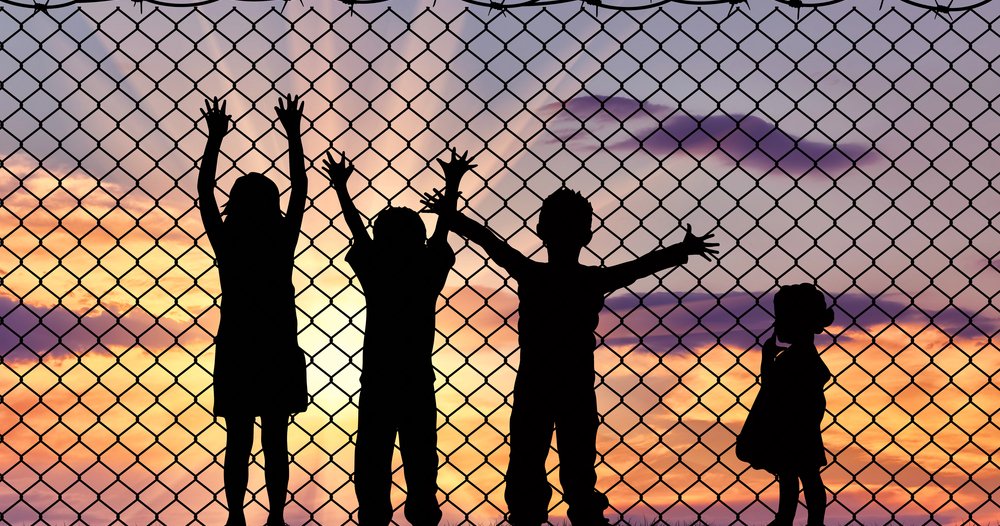
Undocumented immigration has been in and out of the headlines throughout 2016. Presidential candidates continue to campaign with , rhetoric on the topic. An abrupt increase in stoked tensions at the year鈥檚 start and, last month, the Supreme Court on President Obama鈥檚 .
This contentious political context makes it hard for policy leaders to wrestle through a careful response to the swell of unaccompanied children crossing the border in recent years. The majority of these children flee from Central America鈥檚 鈥淣orthern Triangle鈥� of Honduras, El Salvador, and Guatemala. Their numbers in 2014, when U.S. border control authorities recorded 69,000 new arrivals (up from 24,000 in 2012). This unprecedented volume overwhelmed the U.S. courts responsible for ruling whether the children have grounds for asylum or deportation. The U.S. Department of Justice (DOJ) has taken in response 鈥� including permitting children to appear in court without a lawyer. According to the DOJ, of more than 20,000 unaccompanied children faced proceedings without a lawyer since July 2014.
Last Friday, this practice drew the public denunciation of and legal-service providers who called on the DOJ to stop proceedings against minors who lack representation. In a co-signed letter to U.S. Attorney General Loretta Lynch, the groups denounced the method as 鈥渟acrific[ing] integrity and justice in the name of expediency.鈥�
It鈥檚 difficult to imagine how a child could represent herself adequately in court. Besides being young, unaccompanied minors often do not speak English and have little understanding of the court system. Nonetheless, earlier this year, a senior Justice Department official testified in federal court that three- and four-year-olds could learn the law well enough to represent themselves fairly. shocked national leaders from legal, psychological, and advocacy communities. Experts criticized the assertions as 鈥減reposterous,鈥� 鈥渙utrageous,鈥� and 鈥渉orrifying.鈥�
With a reference to the official鈥檚 comments, the new letter from advocates is the latest in a series of recent efforts to reform DOJ policy and practice.
In February, Democratic members of Congress the Fair Day in Court for Kids Act, which would require the DOJ to provide legal counsel for unaccompanied children in court. The bill 鈥� which is currently in House subcommittee 鈥� also requires legal orientation programs for the minors. Soon after the bill鈥檚 introduction, the American Federation of Teachers (AFT) to support its passage and convened a for legislators and other stakeholders. Kids In Need of Defense (KIND), the National Immigration Law Center (NILC), and First Focus also helped lead .
The event鈥檚 speakers presented the lack of legal representation as a staggering injustice against unaccompanied children, fostering a conversation about the broader humanitarian and legal context of the situation.
First, panelists repeatedly called on policymakers to reframe the debate as a refugee crisis, in order to emphasize the country鈥檚 moral obligation to care for these students. A report by the United Nations High Commissioner for Refugees (UNHCR) estimates that of unaccompanied children are eligible for asylum in the U.S., having suffered violence or faced threats in their home country that qualify them for international protection. Given the fact that most of these children are victims of persecution, the humane response should lead with caution 鈥� to avoid returning children to dangerous, life-threatening environments.
Second, these children’s lack of legal counsel worsens a variety of violations. For example, children often in time to attend or even though they would have a valid asylum claim. Moreover, although children are typically provided translators in their native language, that many children respond with passive, monosyllabic answers in ways that can unknowingly work against them 鈥� especially without a lawyer鈥檚 guidance. For instance, a judge may ask whether a child wants to leave the U.S. voluntarily or would prefer to be ordered to deportation. If a child responds in favor of either option, , in the future. The guidance of a lawyer is critical to navigating the court process and ensuring children at least have a genuine chance to make their case. Indeed, studies have found that deportation relief is with representation in court. But, because immigration proceedings are labeled as 鈥渃ivil,鈥� children currently to a lawyer.
On the panel, Dana Leigh Marks 鈥� an immigration judge in San Francisco and president of the National Association of Immigration Judges (NAIJ) 鈥� described hearings in her courtroom as 鈥渂asically death penalty cases鈥� with children at risk of returning to life-threatening situations. She voiced 鈥渨holehearted鈥� support for the Fair Day in Court for Kids Act, noting that having a lawyer 鈥渕akes the difference between a grant and a denial in many, many cases.鈥�
But even with these substantive humanitarian and legal considerations behind it, the Fair Day Act faces crippling political headwinds. Legal representation is not free, so the bill provides lawyers to children using taxpayer funds. Given Republican antipathy for federal spending and the party鈥檚 limited appetite for supporting undocumented immigrants, the bill鈥檚 prospects at bipartisan support seem dim at best.
Panelists advocated for reframing the issue in economic terms when reaching across the aisle. Nancy Navarro, a Montgomery County Council Representative in Maryland, challenged lawmakers to view newcomer children given the country鈥檚 aging population and low birth rates about white Americans. Marks emphasized a more humane, efficient system of law enforcement as cost-effective, less vulnerable to the resource-depleting process of appeals.
For better or worse, legal representation in court is not carte blanche for judges to admit all unaccompanied children who cross the border. Even with legal representation, some children will have legal grounds to stay 鈥� and others will not. But providing it is the absolute least a strong, confident, wealthy nation can do: all children need to have a fair chance at advocating for themselves. Without a lawyer to counsel them, such justice is not within reach.
鈥�
This post is part of 麻豆果冻传媒鈥檚 Dual Language Learners National Work Group. . To subscribe to the biweekly newsletter, click here, enter your contact information, and select 鈥淓ducation Policy.鈥�
听“
More 麻豆果冻传媒 the Author
Issues
Programs/Projects/Initiatives
Related

In 2026, States and Congress Will Need to Mitigate the Damage to PreK-12 Education

Celebrating the Education & Work Teams鈥� Impact at 麻豆果冻传媒

Ushering Bilingual Education for English Learners Through Uncertain Times