
The Wider Message of Robo ScarJo
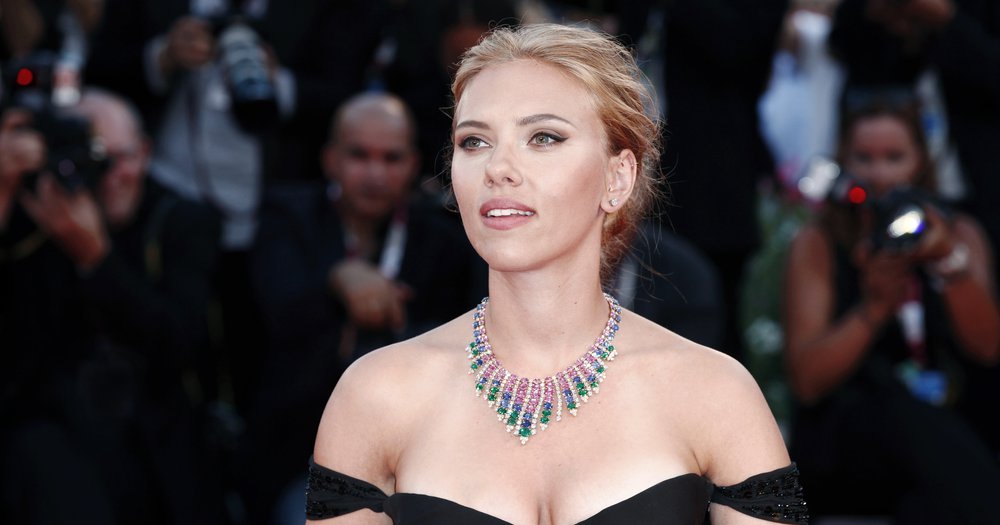
We live in the age of interactive celebrity. Both stars and fans buy into it: stars, because it hugely benefits and careers; fans, because interactivity gives both a sense of intimacy and cultural ownership of the stars they follow. Some kinds of interactivity are sanctioned, like official Twitter accounts. Others, like most fan fiction, are not.
Figuring out what to do about unauthorized celebrity imagery isn鈥檛 new. But with the democratization of robotics and 3-D printing, the question now has a new dimension. The week before last the story broke that a Hong Kong designer, Ricky Ma, made a robot that looks . Fans make featuring celebrities; they ; they create . Is making a robot any different?
There are a number of reasons we allow celebrities to protect some kind of right in their faces. The first is privacy. The commercial use of one鈥檚 face or name without permission can be thought of as a privacy harm, founded in autonomy, dignity, or personhood. Nobody wants to be misrepresented as endorsing products or viewpoints with which one vehemently disagrees. This concern goes to questions about personhood鈥攁bout how people construct and exist as individual identities.
Many states, however, frame things a little differently. They characterize the 鈥渞ight of publicity鈥� as a propertylike right that allows celebrities, not private individuals, to reap the benefits of their hard work establishing a career, or even as an incentive for celebrities to put themselves into the public eye. Kim Kardashian, this narrative goes, deserves a legally enforceable right in her image, because she has worked very hard to put herself into the public sphere. If anyone could use Kardashian鈥檚 image, in the absence of a right of publicity, we might, heaven forbid鈥攁nd perhaps counterintuitively鈥攕ee a little less of Kim Kardashian.
The problem with too strong a right of publicity is that it allows a celebrity to squelch public dialogue. Many states consequently recognize a newsworthiness exception to the right; newspapers can write news stories about KimYe without permission. From the perspective of a fan base, however, this and other narrow exceptions aren鈥檛 remotely broad enough.
Celebrities don鈥檛 create themselves; fans participate in creating celebrities鈥� value. Celebrities shouldn鈥檛 be rewarded for their fame at the expense of fans who help create it. This is the classic conundrum of the right of publicity: On the one hand, people probably deserve some legal protection in their identities. On the other, the stronger that protection, the bigger the impact on . There has been a recent slew of video game lawsuits on this issue: Should , , and be able to control the use of their faces in video games? Or should video game designers have creative leeway in making art that reflects and comments on our experience of the real world? So far, courts have to the commercial video game designer.
Robotic Scarlett Johansson could potentially change this conversation. Courts already employ a when analyzing the use of a particular person鈥檚 face in right of publicity cases. According to these courts, allowing use of a person鈥檚 face without permission is like forcing that person to work at a job, harming their dignity. The more photo-realist the face, the more dignity-harming the appropriation.
There鈥檚 a good argument that the real Scarlett Johansson鈥檚 personhood will be more affected by a robotic embodiment than by a . Evidence suggests that people respond to robots as apparent . Robots can feel like living agents to their human companions. Soldiers with military robots; owners of Sony Aibo robot dogs their mortality; and people their Pleo robotic dinosaurs. A robotic Johansson appears to be acting in certain ways out there in the world, not just endorsing something the actress didn鈥檛 want to endorse, or appearing in a context where she didn鈥檛 want to appear. The more realistic the robot doppelg盲nger, the more blurry the lines between felt fact and fiction, the more harmful the robot actor is to the real actress.
This argument could lead to giving stronger property rights to celebrities in their images, with respect to robots. This would shift U.S. law by placing less of an emphasis on hard work, and more of an emphasis on threats to personhood and dignity. Or it could lead to the conclusion that people shouldn鈥檛 make robots that look like other real people, at all. Human slavery is often held up as the quintessential illustration of , both inherently destructive of and fundamentally immoral. What about robotic slavery, wherein the Scarlett Johansson robot feels for all purposes like the human actor you cannot legally enslave?
This question may seem ridiculous. Robots are not human beings; you cannot enslave a robot. In fact, the origin of the word robot is the Czech term for forced labor, from a聽 about cyborg workers that ends in a robot uprising. Robots are famously meant to do labor that is dirty, dangerous, and dull. To restrict what humans can do to robots is to reduce the reasons we should have robots to begin with.
Yet Kate Darling at the MIT Media Lab that what humans do to robots tells us about humans themselves. Darling proposes that we may want to legally protect robots to some extent, because if we treat them in inhumane ways, we become inhumane. (Sinziana Gutiu has made a similar argument addressing .) This argument can only be stronger when a humanoid robot is crafted to look like a particular, recognizable, living person. If we place no restrictions on what can be done to robots, we may instead want to place restrictions on how closely they can resemble living human beings.
What about the creative rights of the person building the robot? When addressing free speech rights, the Supreme Court has tended to protect creativity and has been unsympathetic toward the idea that fiction can cause harm. But is a robot with somebody鈥檚 face unharmful fiction? The court allows lawmakers to , but not , reasoning that fictionalized pornography doesn鈥檛 actually harm a real child. Lower courts , however, on whether it is permissible to arrest somebody for photoshopping an image of a real child鈥檚 face onto adult pornography. No child would have in the making of the image. But see a reputational and dignitary harm to a real child associated with porn. Because of the innate responses we seem to have to robotic actors, such dignitary arguments take on even more force when we鈥檙e talking about a robot rather than a static image. Robots may thus provide the testing ground for the extent to which U.S. courts believe in protecting personhood.
The issues go beyond right of publicity. Robotic ScarJo raises all kinds of questions about gender, biases, and ethics in robot design. If current A.I. interfaces like Siri and Cortana are any indication, 鈥渞obotification鈥� is more likely to happen to women. (Although, yes, in some countries鈥攍ikely reflecting differing biases about gender roles.) It鈥檚 important to ask ourselves why.
What if instead of making the Scarlett Johansson robot without the actress鈥檚 permission, a robot manufacturer legally licensed her face and trotted out millions upon millions of ScarJos to serve as personal assistants? Is this ethical? Robot designers know we respond to anthropomorphic features, including . They study the ways, both for good and for bad, that robot design can affect or elicit human behavior. In one study, men were to a female robot. In another, users disclosed more or less , based on whether a robot was male or female. People have , and bring them into their interactions with new technologies. This is no doubt true of race, as well; most robots currently .
We should be having real discussions about the of such interfaces, from questioning embedded gender and racial biases, to when ScarJo bot asks you, in her husky voice, to buy her an upgrade. Scarlett Johansson the robot shows us that technological design is never neutral. It comes embedded with somebody鈥檚 values, and it鈥檚 worth asking whether those values are desirable.
These conversations are only just beginning. In many ways, robots are not different; they鈥檒l traverse the legal landscape, raising many of the . But in some instances, they force us to return to first principles, and to see different kinds of harms where there weren鈥檛 recognized harms before. Scarlett Johansson robot isn鈥檛 just creepy. She鈥檚 a harbinger of complicated legal and ethical change.
This story originally appeared on , a partnership of Arizona State University, 麻豆果冻传媒, and Slate.
More 麻豆果冻传媒 the Author
Related

Congress Should Protect Kids Online Without Eroding Privacy and Free Expression

Beyond Market Rates: How States and Cities Are Estimating the True Cost of Quality Care

How Russia鈥檚 Undersea Nuclear Buildup Is Reshaping the Arctic
