Lisa Guernsey
Senior Director, Birth to 12th Grade Policy; Co-Founder and Director, Learning Sciences Exchange
STEM Education Funding Cuts and Thousands of Canceled Research Grants are Cutting Off Opportunities for Young Scientists, K-12, and Community College Students
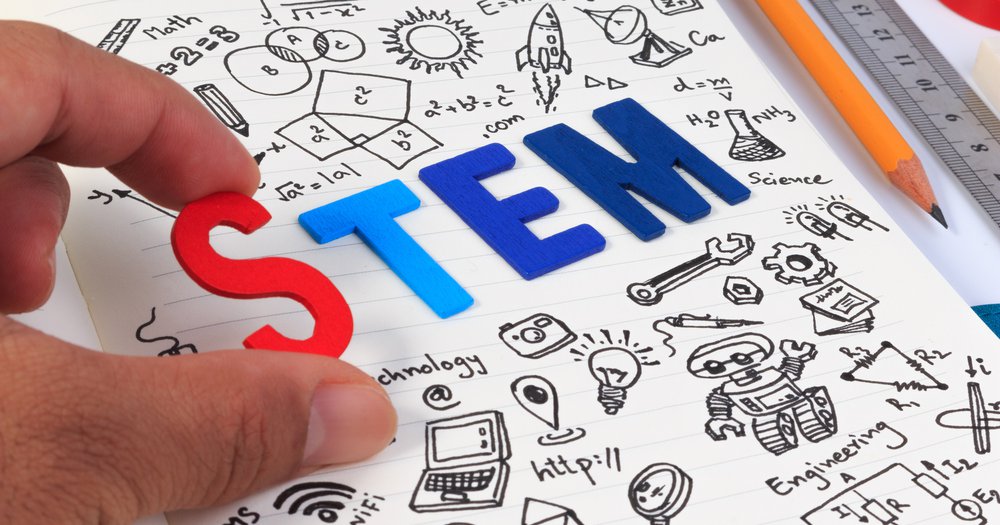
Josie Meyer is a young physicist in Colorado who studies how to improve teaching in quantum computing and physics. Given the United States鈥檚 need to gain a competitive edge in this emerging field, one might think that Meyer鈥檚 work would be safe from the Department of Government Efficiency鈥檚 chainsaw massacre at federal science agencies this spring.
But in May, Meyer was one of thousands of scientists who lost her funding. Her research focuses on making physics more inclusive and engaging for today鈥檚 students from diverse backgrounds, and she knows the Trump administration has ordered agencies to terminate similar programs. So she wasn鈥檛 entirely surprised by the cut, and even felt lucky to learn about it days before she was about to move halfway across the country to start a job that no longer exists.
Other cuts seem still more arbitrary, such as chemists she has heard of who are losing funding for using the word 鈥渢rans鈥� in describing molecules, even though that is standard terminology that predates the modern LGBTQ+ movement. 鈥淓veryone in science right now is living in fear that they are going to be next or they know someone who has already lost a position,鈥� Meyer said.
For the past decade, national experts have been pining for more programs that increase the number of students pursuing science, technology, engineering, and math (STEM). In 2020, the National Science Board released a declaring that 鈥渢he U.S. must be a STEM talent powerhouse鈥� over the next 10 years. America already ranks below many other developed countries in , and invests less in STEM education/education overall per student. The report accordingly called for programs that encourage more students to study in these fields and pursue STEM jobs, given that the current number of science and engineering graduates would not be anywhere near enough. In 2024, the National Science Board issued a plan on how to reach these鈥� via outreach to women as well as those from low-income families, racial minorities, and other underrepresented groups.
But this spring and summer, instead of making sure that students from all backgrounds see a way into these fields, the federal government has taken a u-turn. The blow being dealt to our pipeline of young people in STEM, as well as STEM workers seeking to upskill, could set the United States back for generations to come.
Since March, the administration has terminated more than 1,500 grants awarded by the National Institutes of Health totaling $7.8 billion, according to the independent . A $46 million-dollar chunk of those cuts are National Research Service Award Training Grants, intended for undergraduate students to gain skills to 鈥渁ssume leadership roles related to the Nation's biomedical and behavioral research agenda.鈥� Another $152 million in terminated NIH grants were for education projects.
The cuts also hit the National Science Foundation (NSF), which laid off nearly 50 percent of its workers and halted 839 grants totalling $888 million in its STEM education directorate that funds programs to encourage students to go into STEM fields. Trump's proposal for next year's NSF budget proposes . The Institute for Education Sciences terminated $881-million in research contracts mid-stream, several of which were focused on improving math education.
The vast majority of Americans don鈥檛 want to see cuts to science and engineering education. In a in April by the Association of Science and Technology Centers, 89 percent said that federal government investment in STEM education is 鈥渋mportant鈥� or 鈥渧ery important鈥� for future economic prosperity.
Yet stories like Josie Meyer鈥檚 are now dominating the fields of science. Another example is Kimberly Osborn, who received her PhD in counseling psychology at the University of Oklahoma this May. She is conducting post-doctoral research with Cheri Levinson, director of the EAT Lab at the University of Louisville in Kentucky, which focuses on eating disorders. Osborn, a low-income white woman who grew up in foster care in Oklahoma, had planned to apply for a two-year supplementary grant designed by the National Institutes of Health to help students from underrepresented groups continue their careers. But the program was halted this year.
Osborn is frustrated and angered by the cuts in funding, which are slowing the start of her career. She doesn鈥檛 have family to help her pay for the training that will propel her psychology research. After getting her GED, and with assistance from mentors and professors, she worked her way through college and her graduate program. 鈥淢ost of the people who have received these supplements have had to work even harder than others did,鈥� she said. Having the grants canceled 鈥渢ells me you don鈥檛 even care about people being from marginalized backgrounds, that you don鈥檛 care about the American dream.鈥�
Luis Sandoval-Araujo, another graduate student at the University of Louisville working under Levinson at the EAT Lab, had been relying on a similar grant. 鈥淚 had no idea it was this hard to become a clinical psychologist,鈥� said Sandoval-Araujo, whose parents did not finish college. He received the first part of the grant last year. The $26,000 meant that instead of taking on a teaching assistantship to pay the bills, he could conduct longitudinal data analysis and study machine learning, skills he was planning to use to analyze data on children with eating disorders. That grant is now gone.
The U.S. now faces a potential brain drain. Meyer, the Colorado quantum physicist, said she has seen some of her colleagues pursue research positions in Europe, where universities are offering stipends for new research projects and paying for travel to conferences as the U.S. cuts that kind of funding. 鈥淵ou can鈥檛 do good science under those conditions,鈥� Meyer said. 鈥淢ost of us at the post-doc level are on shoestring budgets with no clear sign if we鈥檒l be able to pay rent next month.鈥� In May, the European Union announced a to lure American scientists to the continent.
The attacks on STEM funding are affecting K-12 and community college students, too. For example, the administration halted work on a multi-year National Science Foundation (NSF) grant that paid development costs of a life sciences videogame aimed at middle school students, and terminated another study on how to improve science and math teaching in elementary grades. NSF is also , which harms students like Judy Marouf, a graduate of Northern Virginia Community College, who described her experiences at a recent . Her work in an NSF-funded gave her the tools to design and pitch a mobile app. 鈥淭his program gave me all I needed to succeed.鈥�
Instead of cutting STEM education funding, the Trump administration should recognize how much this funding aligns with its own priorities and national needs. In his , Trump charged his White House Office of Science and Technology Policy with ensuring 鈥渢hat scientific progress and technological innovation fuel economic growth and better the lives of all Americans.鈥� That means matching STEM education funding with efforts that are creating industries and jobs of the future rooted in emerging technologies.
The NSF is an optimal place for that alignment. Authorized by Congress, the NSF鈥檚 is promoting economic growth around emerging technologies that the administration values, including around AI, quantum, and biotechnology.
The administration should leverage federal STEM education funding to support talent development within these NSF Engines, harnessing federal science agencies for STEM education in ways that prior administrations never did and aligning precisely with what President Trump tasked his science advisor to advance. A smart strategy would be to prioritize these efforts.
But at the moment, these cuts damage our future competitiveness. In 2018, economist Raj Chetty and his colleagues coined a term for all the young people who never had the opportunity to activate their smarts to become scientists, inventors, doctors, and engineers: the Now, lost Einsteins are multiplying.
As Levinson of the University of Louisville lamented: 鈥淲e are going to lose these bright, brilliant people.鈥�
Lisa Guernsey is the senior director of Birth to 12th Grade Policy and the co-founder and director of the at 麻豆果冻传媒. Guernsey was previously a staff writer at the New York Times and the Chronicle of Higher Education. She is the author of Screen Time: How Electronic Media鈥擣rom Baby Videos to Educational Software鈥擜ffects Your Young Child (Basic Books, 2012) and co-author, with Michael H. Levine, of Tap, Click, Read: Growing Readers in a World of Screens (Jossey-Bass, 2015). She is on , and .
Shalin Jyotishi is the founder and managing director of the Future of Work and Innovation Economy initiative at 麻豆果冻传媒, where he focuses on the intersection of science, tech, workforce, and industrial policies and their implementation. He is also a Visiting Scholar in Science and Technology Policy at Arizona State University and an education and workforce contributor at Forbes. Find him on , , and .
Senior Director, Birth to 12th Grade Policy; Co-Founder and Director, Learning Sciences Exchange
Founder and Director, Future of Work and Innovation Economy Initiative