Struggling to Stay Nourished in a Banking Desert
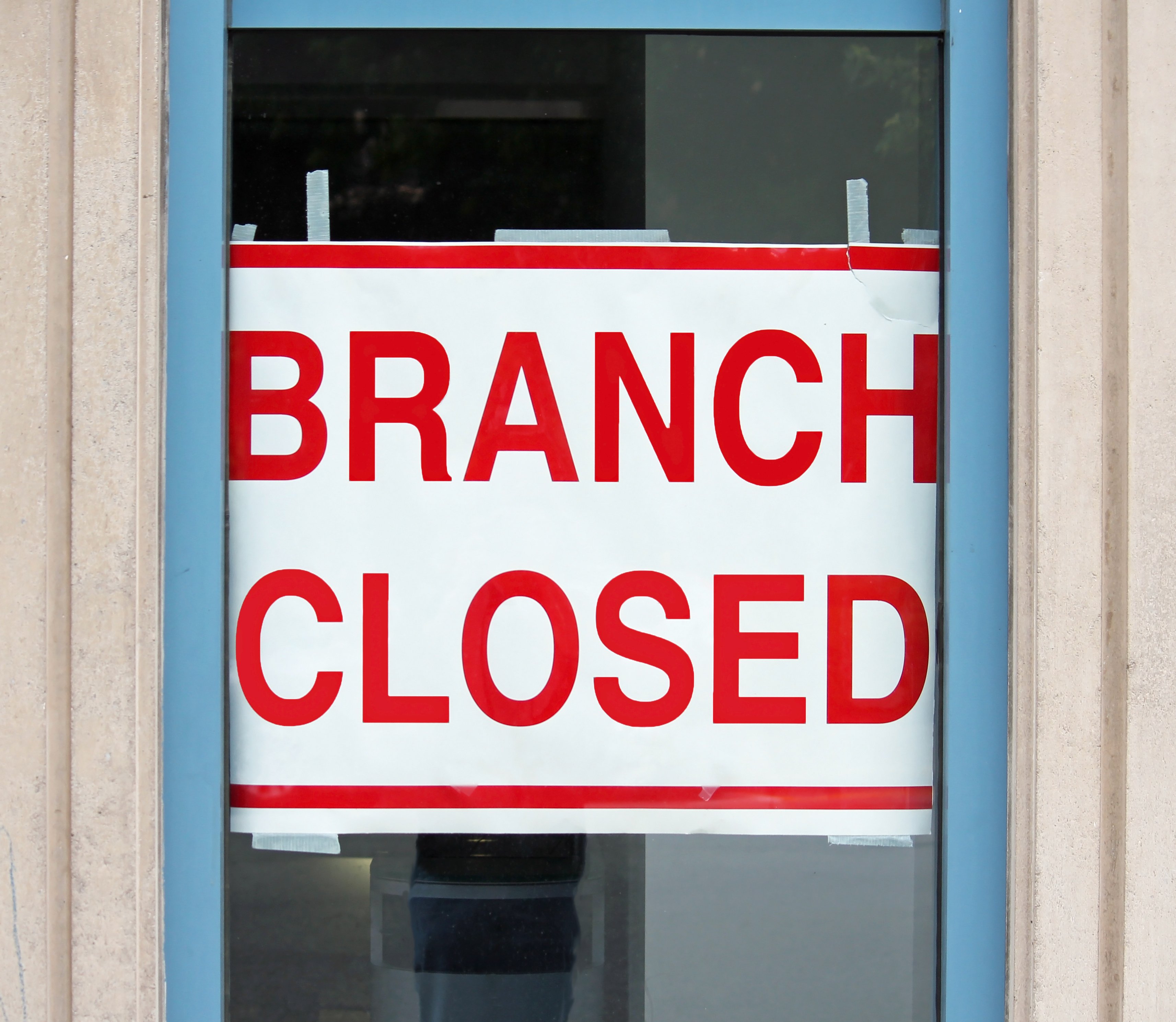
If you live in a neighborhood that is saturated with fast food restaurants and bodegas but does not have a grocery store, you are probably going to find it very difficult to stick to a healthy diet. It would likely be similarly hard to manage your finances and build wealth without a bank branch in your neighborhood. Unfortunately, that is exactly what an increasing percentage of U.S. households are being told to do: manage their finances and build wealth without access to a nearby mainstream bank branch.
Economists from the New York Fed recently the increase of 鈥渂anking deserts,鈥� or communities with little to no access to mainstream banking services, in their Liberty Street Economics . They merged the locations of FDIC-insured bank branches with U.S. Census Bureau data on households鈥� income and race to determine whether lower-income communities and communities of color have disproportionately borne the burden of post-recession bank branch closures. To be quite clear: The most important take away from the New York Fed鈥檚 investigation is that lower-income communities and communities of color have historically and disproportionately limited access to mainstream banking services. These trends have implications for households鈥� and communities鈥� opportunities to leverage financial products and services to their advantage.
This does not mean, however, that the evidence couldn鈥檛 be used to draw mixed conclusions. The New York Fed reports that lower-income communities and communities of color have been less affected than higher-income and majority white communities by bank branch closings that occurred in the shadow of the Great Recession. However, these communities had less to lose to begin with. Lower-income communities and communities of color have been experiencing a shuttering of bank branches for nearly two decades鈥� into 鈥渂anking deserts鈥� for quite some time.
in the 1990s allowed banks to pivot from primarily serving local communities to serving larger and more profitable geographic regions. Banks withdrew from local communities, closing their less-profitable branches that were often in lower-income communities and communities of color. High-cost began to occupy the communities once served by mainstream banking services, expanding at a rate of since the 1990s.
Lower-income communities and communities of color have historically and disproportionately limited access to mainstream banking services.
When alternative financial services like payday lenders and check cashing stores鈥攖he equivalent of fast food chains and convenience stores in this scenario鈥攕woop into neighborhoods left behind by mainstream banks, residents pay a steep price to meet their financial needs: The average borrower spends over聽 just on payday loans. Residents end up diverting money that could have otherwise been used to pay for irregular expenses or to build wealth, instead paying to use the basic financial products that they so desperately need to manage their financial lives. Because like convenience stores in food deserts that don鈥檛 sell nutritious food that promotes good physical health, alternative financial services don鈥檛 sell products that build long-term financial health.
Technology like and help close the geographic distance between households and brick-and-mortar bank branches, thereby increasing access to basic financial products. Yet technology alone cannot repair the negative impact that bank branch closures have had on mortgages and small business lending. Simply put, brick-and-mortar bank branches still matter for accessing credit to build wealth. Without a bank branch in their community, households have limited access to safer and more affordable products, like a savings account that could be used to pay for irregular expenses, or to invest in the future. And, as the New York Fed鈥檚 study indicates, residents lose access to 聽and mortgages when bank branches close, hindering the investment and entrepreneurship needed to drive local economic growth.
The consequences of these trends are what make the type of research undertaken by the New York Fed so important. We live in an era in which households are experiencing and , and these experiences are likely exacerbated in part by variations in聽鈥� resources and opportunities. In other words, some communities are deserts while others are oases鈥攁nd these banking habitats are divided along lines of income and race.
Mapping and comparing the locations of mainstream banking and alternative financial services can help us understand the quality of services to which communities have access, and perhaps the extent to which communities are being left behind. Over time, we can better understand the impact that changing financial services landscapes are having on communities, and which communities need greater investment and innovation. We can also better understand the regulatory reforms that are needed. With these understandings, we can invest in existing innovations like 鈥檚 micro-branch division, , and the (CDFIs) that are providing safe, affordable, and wealth-building financial products and services to lower-income communities and communities of color throughout the country. We can also imagine and invest in new innovations.
In the same way that convenient access to grocery stores that sell affordable and nutritious food helps us maintain a healthy diet, convenient access to safe and affordable financial products and services helps us establish and maintain good financial health. When this is not the case for lower-income communities and communities of color, economic growth suffers and households are left to struggle financially. Research should continue to locate communities around the country that are affected more than others, helping to build the evidence for where and how investments and innovations can be made to reverse these trends. In this way, we can invest in the communities and households whose financial health stands to benefit the most.
Dr. Terri Friedline is an , Faculty Director of Financial Inclusion at the , and a聽Research Fellow at 麻豆果冻传媒. Follow her on Twitter.
Dr. Mathieu Despard is an at the, and Faculty Associate at the聽Center on Assets, Education, and Inclusion (AEDI) and. Follow him on .
More 麻豆果冻传媒 the Authors

Mathieu Despard
Issues
Programs/Projects/Initiatives
Related

Dollars and Censure

The Not So Secret Reality for Millions of Americans

Can You Hear Them Now?