
Southeast is Fastest Growing Region for English Learners
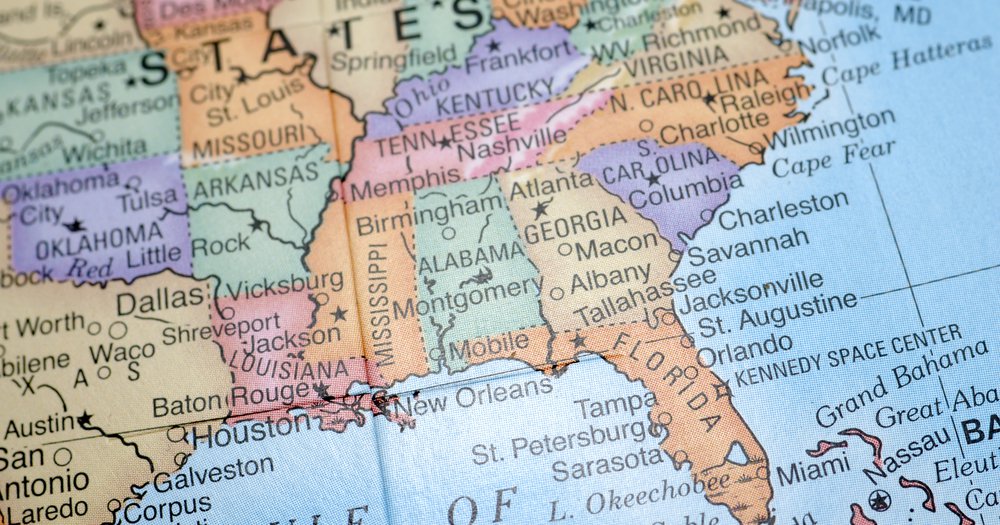
The number of English learner (EL) students in PreK-12 schools across the country is rising. But where populations are increasing most might surprise you. Trends don鈥檛 track with historic immigration destinations, like states along the southwestern border or those with major coastal cities, such as California, Florida, and New York. Instead, the most rapid rates of EL growth are聽concentrated in a new setting: the Southeast.
聽illustrates these trends using National Center for Education Statistics聽from 2004 to 2014. The top five states with the highest EL growth rates are:
-
South Carolina (236%)
-
Maryland (180%)
-
Mississippi (131%)
-
Arkansas (102%)
-
Kentucky (98%)
For the most part, the increase of ELs stems from a boom of聽聽moving to the South, drawn to jobs in construction, agriculture, and food processing industries and to low-cost housing. Beyond Spanish, a diversity of other languages and cultures are increasingly present聽beneath the Mason-Dixon Line. For example,听, schools are seeing an increase of residents speaking聽,听, Vietnamese, Tagalog, and other languages.聽聽from the Middle East and South Asia, many filling shortages in medical professions, have added to the growing linguistic diversity of the Southeast.
What do these migration trends mean for equity in English learner education?
Many schools on the frontline of Southeastern demographic shifts are experiencing a shared set of challenges. Among a variety of issues, like finding prepared teachers and engaging immigrant families, the design of effective聽instructional models聽is a key concern. For schools newly working with ELs, the 鈥減ull-out鈥� model鈥攚here students are physically removed from mainstream settings to receive ESL services鈥攊s a common approach. It鈥檚 one of the easiest to implement, but聽聽suggests it鈥檚 one of the least effective.
鈥淭hat鈥檚 the least favored model as far as what the outcomes look like, but one does what one can,鈥� EL expert Patricia Gandara told The Hechinger Report in an聽聽on Mississippi ELs. (To be clear, many historic multilingual communities are far from executing ESL models in utopian ways; however, they have the benefit of experimenting with methods over a longer arc of time.)
In contrast to pull-out ESL, several places across the country鈥攍ike聽Oregon听补苍诲听New York鈥攁re taking more 鈥渋ntegrated鈥� approaches to language learning and academics, which聽聽suggest yield stronger outcomes. 鈥淚ntegrated鈥� ESL can occur either through 鈥減ush-in鈥� models where an ESL specialist works in tandem with a mainstream teacher or through explicit trainings on聽embedding linguistic supports聽directly into content instruction.聽, many of which focus on recently-arriving middle and high school ELs, are another way to support聽diverse ELs鈥� unique needs. The NYC-based Internationals Network for Public Schools is a high-performer with this model, and recently launched new sites in聽听补苍诲听聽to serve secondary ELs.
Two-way dual immersion鈥攚here聽ELs of one language background and non-ELs are integrated to learn core content in two languages鈥攊s another model,听gaining popularity聽as the 鈥済old-standard鈥澛犅燼t the elementary level. Some parts of the Southeast are starting to embrace this strategy. Harrisonburg City School District, located in rural Virginia, represents聽a promising example聽of leadership in this area with dual immersion programs at four of its five elementary schools.聽听补苍诲听聽are two other Southern states moving ahead with dual immersion for all students.
Ultimately, as districts grapple with demographic shifts鈥攊n the Southeast or otherwise鈥攁聽聽of EL instructional solutions is critical, one that can factor in聽聽across different geographic areas. Districts will inevitably be at a different points in the conversation around EL equity and at different stages of experimentation on what works best for their unique populations with limited resources.
聽In addition to grappling with the nuts and bolts of instructional programming, there are clear implications related to how EL growth intersects with Southeastern politics and broader public opinion.聽It鈥檚 no secret that the region, on the whole, is distinctly conservative, a political posture historically at odds with expanding multilingual services.聽Four of the five highest-growth EL states鈥擲outh Carolina, Mississippi, Arkansas, and Kentucky鈥斅燿ecisively for Republican President Donald Trump.
It鈥檚 no secret that the region, on the whole, is distinctly conservative, a political posture historically at odds with expanding multilingual services.
Hardline, right-leaning politics against unauthorized immigration at the moment represent a serious challenge for EL equity. For instance, from a school board chairman in South Carolina are emblematic of resistance to serving ELs: 鈥淭here鈥檚 things we don鈥檛 want to spend money on…I don鈥檛 want to hire any more ESOL teachers,鈥� Chairman Joe Defeo said. 鈥淲hy are we paying [so much] extra a year when half of the kids we鈥檙e teaching are not even here legally?鈥� In , advocates noted how many schools refused to enroll students without documentation in recent years, in violation of federal laws under Plyer v. Doe protecting of all students to receive a public education regardless of immigration status. A Republican state representative coordinating with immigration enforcement to round up all ELs and (to illegally) check their legal status: 鈥淒o we really have to educate noncitizens?鈥� he asked.聽
These public questionings of civil rights law are disturbing. It鈥檚 how our politically polarized climate manifests at its extremes. However, there are also more moderate, conservative actors, and they play a critical role in broadening coalitions for ELs. Elevating the visibility of EL leadership in 鈥渞ed鈥� states can serve as a model for others in similar contexts. One recent, rare example of this is in Rep. Jana Della Rosa, a pro-life, pro-gun conservative Republican member of the Arkansas House of Representatives. She recently of state legislation to more fairly evaluate ELs鈥� performance using growth metrics for accountability. 鈥淲e educate every kid that comes in,鈥� she told me.
Overall, the trend of EL growth in the Southeastern region is an important one for the broader community of EL policy leaders, advocates, and thinkers to heed. While the lion鈥檚 share of ELs still continue to reside in historic hubs (i.e. California, Texas, Florida, Illinois, New York), EL families are increasingly settling in new locales. It is therefore vital to link these two spheres of long-standing and newly-emerging EL communities to cross-pollinate and share resources, institutional knowledge, and other insights. New EL leaders need a range of solutions that are viable in politically diverse contexts but do not compromise principles of evidence and equity.
See below for our new data visualization map.
More 麻豆果冻传媒 the Author
Issues
Programs/Projects/Initiatives
Related

In 2026, States and Congress Will Need to Mitigate the Damage to PreK-12 Education
Celebrating the Education & Work Teams鈥� Impact at 麻豆果冻传媒
Ushering Bilingual Education for English Learners Through Uncertain Times