Merle Weidt
Research Associate, Planetary Politics
Imagine getting up when the sun rises and going to sleep when it goes down because you do not have lamps. Envision being a young girl, forced to embark on perilous journeys spanning dozens of miles just to gather firewood, all because your family lacks access to electricity. This life is the stark reality for a staggering people globally. The growing systemic energy disparities plaguing societies has caught the attention of the United Nations, which has called for universal access to clean and affordable energy under the . While progress has been made toward this objective, low-income and emerging economies continue to grapple with the daunting challenge. As of 2019, people in Africa still lack access to electricity, underscoring the urgent need for change.
To reach universal access, international partnerships are necessary to create funding frameworks and develop the technologies needed to build clean energy resources. The upcoming centers around a , which provides an opportunity to create the needed partnerships to accelerate the achievement of universal access. Calling to 鈥渁ccelerate the energy transition in an orderly, just and equitable way,鈥� the United Arab Emirates presidency aims to curb the trajectory of climate change by embracing environmentally friendly innovations. Among these innovations, microgrids stand out as a beacon of promise. Envisioned as a cornerstone within the International Energy Agency鈥檚 scenario, microgrids are foreseen to be the linchpin of energy delivery to gaining power by 2030. To accelerate this just and equitable energy transition, international actors need to elevate the conversation around microgrids and incentivize investments in microgrid projects in low-income and emerging economies.
Microgrids, also called mini- or off-grids, are self-sufficient energy systems that supply a distinct geographic area with energy and can operate independently from a larger grid system. Microgrids' ability to run in island-mode鈥搃ndependently from the grid鈥搃ncreases their resilience to damage from natural disasters by shielding communities from power outages rooted in the centralized grid. In , microgrids reach 98 percent reliability in contrast to 47 percent for the national grid, demonstrating how independence increases reliability.
In addition, microgrids are designed towards communities鈥� resource availability, therefore adapting the share of renewable energies to hydro- or solar power availability. This individualized design leads to significantly reduced carbon emissions, as microgrids currently rely on renewable energy sources for of their energy.
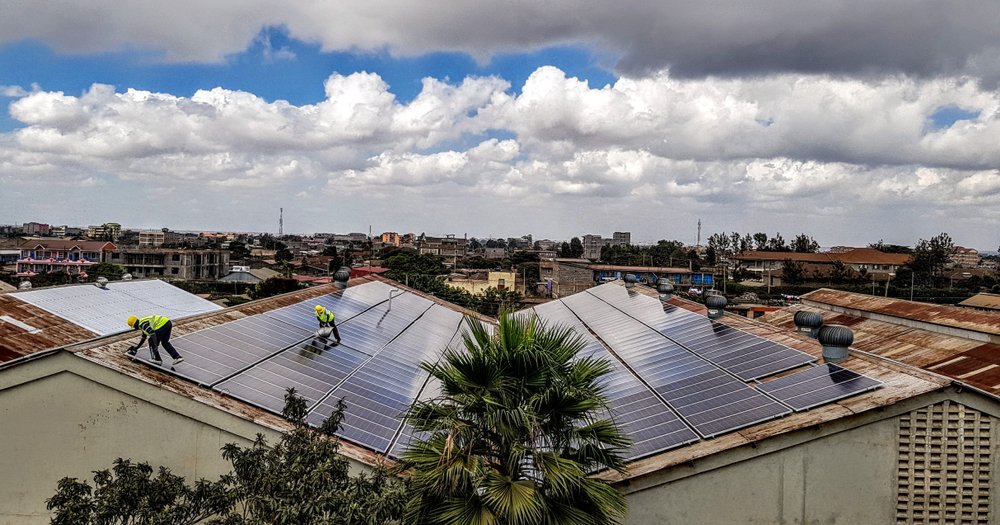
Microgrids possess a remarkable ability to withstand the ravages of natural disasters while simultaneously fostering community engagement and delivering clean energy. After Hurricane Maria devastated Puerto Rico鈥檚 power system, the people of built their own solar-powered microgrid, connecting five businesses to 120 solar panels. When Hurricane Fiona hit in 2022, the lights stayed on in 颁补蝉迟补帽别谤, while other regions were without power for weeks.
Despite its advantages, the large-scale deployment of microgrids has yet to be initiated. High costs and compliance issues have often been cited as challenges to their wider use. In low-income and emerging economies, additional infrastructure is often needed to support an electricity network, requiring a large upfront investment. On the bright side, technological advancements have significantly reduced the material costs including a price decrease of solar photovoltaic modules by more than . The dropped material costs have reduced overall project costs showing promise for future investments.
On a regulatory side, countries and regional governments often have different infrastructure and regulatory frameworks that hinder the deployment of projects similar to the Puerto Rican model. Still, as people recognize their advantages, the use of microgrids has increased promoting the standardization of regulations and leaving hope for reduced compliance risk in the future.
While the current trend is promising, the pace of microgrid deployment to achieve universal access by 2030 can be significantly accelerated through international collaborations. Although the technology and construction components currently reside in developed economies, successful microgrid projects such as the new in Rutenderi, Rwanda show the potential for collaboration. The community in Rutenderi helped to design and integrate the new grid, while , an international development organization, and , an investment platform, provided technical and financial support.
With its aim to accelerate a just energy transition, COP28鈥檚 platform should be used to elevate the conversation about universal access through microgrids and agree on multi-stakeholder financing frameworks. Increased microgrid deployment proved to increase technologies abilities, while reducing its costs. Now we need to continue the conversation about universal electricity access and find incentives to use existing technologies for the clean energy transition our planet needs.
Research Associate, Planetary Politics