Sarah Jackson
Principal at SJackson LLC
This is the second in a new blog series鈥攔eported in partnership with 鈥� that will explore California鈥檚 new investments in professional development for adults working with the state鈥檚 growing population of dual language learners (DLLs). Click here to read the first blog in the series.
Mattie Mendez, executive director for Community Action Partnership of Madera County, runs Head Start Centers for children from migrant families in Madera and Fresno counties. Almost all of the children who come to these Head Start centers are learning two languages鈥攖heir native Spanish (though some speak native dialects like Mixteco) and English.
Mendez had growing concerns that her programs were not doing enough to support children鈥檚 language development or to help families do so at home. Research shows that and that a in children鈥檚 home language in the early years can help them develop English proficiency. But Mendez was concerned that despite being native Spanish speakers, many of the children at her centers were at risk of losing their home language as they grew because teachers were not set up to support them.
This year, thanks to from the State of California, Mendez鈥檚 teachers joined others from across California in new training designed by California State University Channel Islands (CSUCI) to support young DLLs. The training helps teachers integrate children鈥檚 home language into classroom practice even when the teachers themselves don鈥檛 speak that language.
The online courses are provided at no cost to participants . The course is one of six projects funded through a one-time $5 million allocation in the 2018 California state budget for early educators of children, birth to age 5, to participate in professional development focused on DLLs. Participants also receive undergraduate college credit and a $600 stipend. Teachers and caregivers from around the state are taking part.
Carola Oliva-Olson, a professor and expert in bilingual children鈥檚 language development at CSUCI, developed the coursework and partnered with Mendez to get Central Valley teachers involved.
鈥淭he state recognized that this is 60 percent of the young children in California,鈥� she said. 鈥淓very teacher needs to be prepared to know how to make learning accessible and to make sure that every child has full and effective participation in the classroom.鈥�
The coursework emphasizes Personalized Oral Language Learning, an instructional strategy developed by Dr. Linda Espinosa, author of 鈥�.鈥� The method encourages the use of anchor texts, repetitive reading, and interactive conversations designed to extend language and children鈥檚 understanding.
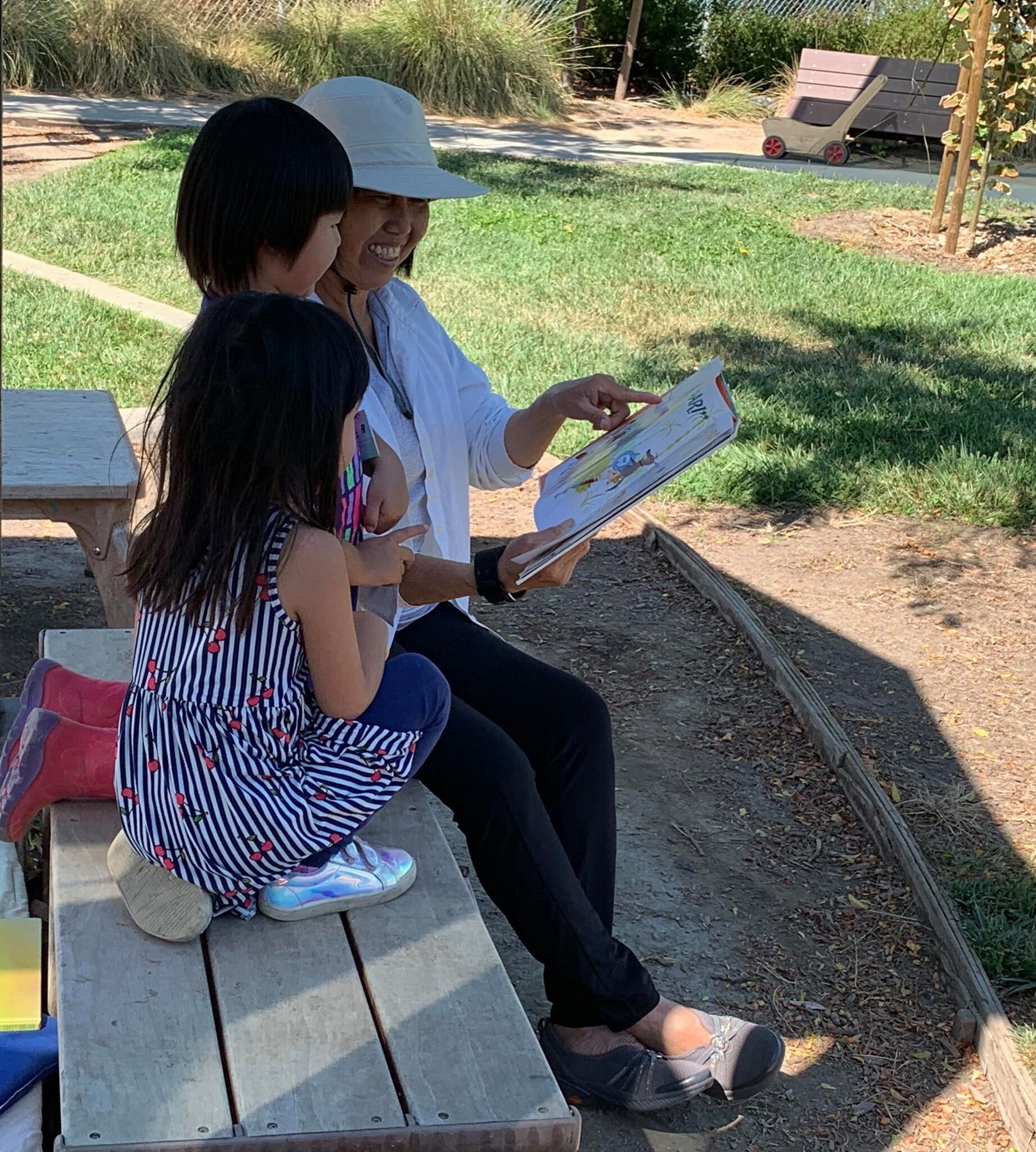
Teachers are taught strategies to ensure that children鈥檚 home language is integrated into the classroom. For example, teachers can engage with families, embrace cultures, and traditions of all the children in a classroom, and use children鈥檚 home language in songs, pictures, and books. They can also add specific activities in lesson plans that support early literacy and mathematics as well as other school-readiness goals using children鈥檚 home language in addition to English.
Veronica Cerda, who has been teaching preschool in Oxnard for six years, took CSUCI鈥檚 pilot training because she wasn鈥檛 comfortable supporting families in different languages, she said. The training helped her understand that she didn鈥檛 need to know everything herself.
Cerda and her colleagues worked with one Hindi-speaking mom to make a book about her culture that the children could read. The mom is also helping to translate classroom documents into Hindi and to help the teachers learn words鈥�诲奴诲丑补 (milk) for example鈥攖hat they can use with her child in the classroom. Cerda and her colleagues now have materials in three languages鈥擡nglish, Spanish, and Hindi鈥攐n bulletin boards and in handouts they create for students and parents.
The demand for these courses is growing, said Oliva-Olson, who is getting calls from all over the state.
Educare California Silicon Valley was looking for a new approach to engage families by valuing their home language, said Thena Gee, a mentor and coach there. This is part of an agency-wide effort to do a better job of serving the Center鈥檚 large and growing population of children, birth to age 5, who are learning two languages.
Gee and Drew Giles, Educare California at Silicon Valley鈥檚 Program Director, said that research shows that nurturing children鈥檚 language development at home and in the classroom is a vital part of high-quality programs in early care and education. It鈥檚 also critical to children鈥檚 success throughout their school career.
To ensure this is happening, they now take steps like translating forms and making sure administrative practices are welcoming, as well as rethinking policies that guide instruction and families鈥� experiences. They are also reforming classroom and administrative policies to emphasize the importance of dual language learning. For example, they are developing a comprehensive 鈥減lanned language approach鈥� for the center, a document that will formalize policies like the school readiness goals for DLLs , the language model, assessment procedures, and classroom strategies.
This past fall, Educare California at Silicon Valley hosted trainings for teachers and caregivers throughout the community on Saturday mornings. Participants received credit for two courses through CSUCI as well as stipends. Nearby San Mateo County is also developing a parallel series of interactive workshops for families.
鈥淲e see our focus on supporting dual language learners as a matter of equity,鈥� said Giles.
Oliva-Olson, who was recently appointed to California鈥檚 new , emphasized that the work is not just building new knowledge about how to train teachers to work with DLLs, but helping teachers build new tools in their agencies. 鈥淥ur goal is to build new infrastructure across the state that will enhance dual language supports.鈥�
Principal at SJackson LLC