
Elise Franchino
Program Manager, National Commission on Learning Ecosystems
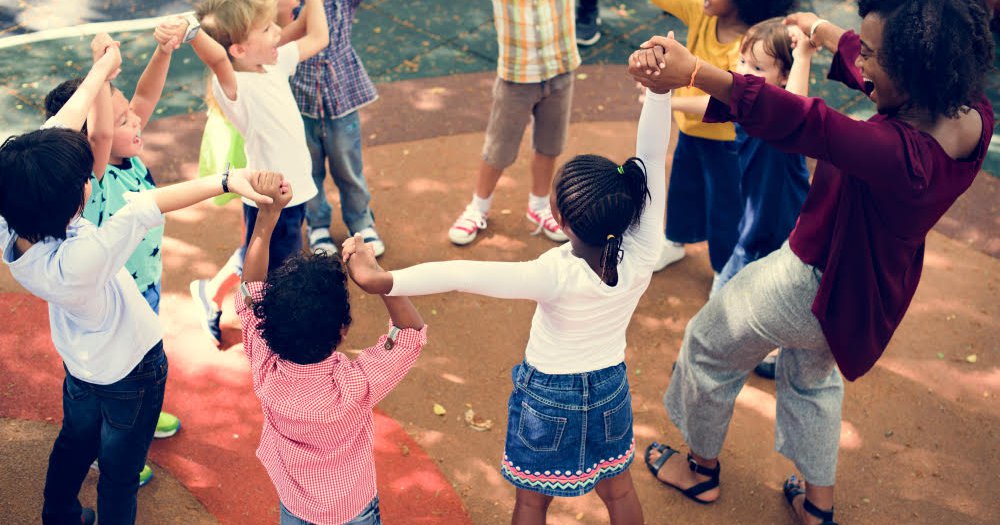
As we continue our work on school discipline, one popular tool worthy of examination for its increasing emphasis on equity is the behavioral framework known as Positive Behavioral Interventions and Supports, or PBIS/PBS for short. The framework, used in over in the United States, has gained traction over the past two decades due to its combination of , data-analysis, and pro-social behavior supports, which can be applied across education settings and contexts without adherence to a specific program, model, or curriculum.
PBIS has received both acclaim and criticism, the reasons for which became obvious in my own experience implementing the framework as a kindergarten teacher. At its best, PBIS can create a warm , , and. At its worst, it鈥檚 exclusionary, , and even .
So how can districts, schools, and educators use PBIS to promote equity and help all children thrive?
PBIS was developed by at the University of Oregon in the 1980鈥檚 and 1990鈥檚, who sought to extend the science of individualized behavior support to a school-wide design by improving relationships between adults and students through consistent positive interactions. The reauthorization of the Individuals with Disabilities Education Act of 1997 codified federal support of the framework by the , which receives funding from the US Department of Education鈥檚 Office of Special Education Programs and the Office of Elementary and Secondary Education. PBIS is currently included among the alternative discipline strategies mandated by and DC.
PBIS implementation differs by school, but its require a leadership team, staff buy-in, staff capacity, ongoing data collection and analysis, and use of a . All students receive explicit teaching, modeling, and practice of behavior expectations and consistent positive reinforcement in Tier 1. Students who present more challenging behaviors receive targeted interventions in Tier 2 that may include small group instruction, tools for self-management, and daily check-ins with staff. If data shows that students are not responding to the first two tiers of practice, the intensity of their needs are met with more comprehensive supports in Tier 3, such as individualized behavior support plans and wraparound services.
I spoke to Jessica Swain-Bradway, Executive Director of the, who explained how PBIS can answer the call for more equitable behavior practices. 鈥淚 joke that this isn鈥檛 your Grandma鈥檚 PBS because it鈥檚 not,鈥� said Swain-Bradway. 鈥淲e know that there are a lot of errors in thinking about positive behavior support. In light of what鈥檚 going on in our country, people think that it鈥檚 racist. People miss the point that all systems and all practices could be implemented through implicit bias, and many of them are implemented in biased ways to privilege our white kids and to disproportionately harm our Black and Brown kids,鈥� she explained. 鈥淚f we use PBS to establish the status quo, that鈥檚 what we get.鈥�
To counter these implicit racial biases within programs and practices, the Center on PBIS removal of punitive policies such as , suspension, and expulsion, which cause disproportionate to Black and Brown students. The Center also prescribes increasing cultural responsiveness in and , identifying biases in behavior expectations and the educators who uphold them, and disaggregating data to correct patterns of bias as they arise.
Increasing student and family voice and choice is essential to ensure equitable implementation of PBIS as well. Students and families should guide the decisions around the types of positive reinforcement they desire so that schools can create menus of choice. According to Swain-Bradway, 鈥淭he science of reinforcement says that the most effective way to do reinforcement systems is to have a bunch of different types of reinforcers to appeal to all types of different kiddos.鈥�
The reinforcement systems are not meant to be a burdensome or expensive token economy, a frustration from my own experience taking regular trips to the dollar store to refill my prize box with my own money. Instead, most reinforcement should be free. In addition to praise, a thumbs up, and a hug or pat on the back, teachers can use choice to allow students to select an activity, a song to play during transitions, or a book for the teacher to read aloud to the class. Given the importance of providing a variety of reinforcement, accruing tokens to earn toys in a prize box can still be effective, but as Swain-Bradway described, 鈥渢he goal is to make the reinforcement more like the reinforcements that are natural in relationships, which is attention.鈥�
Importantly, reinforcement should not be exclusionary. 鈥淲hen we have community rewards, all kids get what some kids earn,鈥� said Swain-Bradway. That may mean providing additional opportunities for students with Tier 2 or Tier 3 behavioral needs to earn the prize that their classmates receive. A non-exclusionary example from my school involved students working together to earn class-wide tokens that earned an extra recess or movie day. Conversely, a non-example from my experience excluded students with severely disruptive behaviors from attending the kindergarten dance, which in hindsight did not align with PBIS .
When consequences are needed, they should be , , and avoid or public shaming, like antiquated stop light clip charts, which can cause psychological harm. For example, after an incident involving one kindergarten student hitting another, the teacher might pull both students aside to speak with them and decide, with their input, on an appropriate consequence. She could encourage reparation of the students鈥� relationship through an apology, and provide alternative actions they might take if a similar situation were to arise in the future. According to Swain-Bradway, 鈥淚 ask people to keep in mind two big things when it comes to how they discipline kids, and they鈥檙e both science-driven. One is, did that consequence teach or reteach the expected behavior? And the second question is, did it help or harm the relationship?鈥�
While much of the daily implementation of PBIS depends on adult behaviors, educators cannot be effective without in place. Teachers need resources, class sizes, training, and wraparound services that promote their mental health and wellbeing, as well as those of the students and families they serve. Equitable implementation of PBIS requires a truly system-wide approach. 鈥淧BS should be how we organize our school district,鈥� said Swain-Bradway. 鈥淭here鈥檚 no magic. Creating an environment that鈥檚 rich in protective factors for kids and gets rid of contraindicated practices, gets rid of practices that harm kids, shames kids, isolates kids, you have to show up and do it every day and it has to be from top to bottom.鈥�
Enjoy what you read? Subscribe to our newsletter to receive updates on what鈥檚 new in Education Policy!
Program Manager, National Commission on Learning Ecosystems


