Spotlight on Newburgh: How State Reform for English Learners is Taking Root in New York
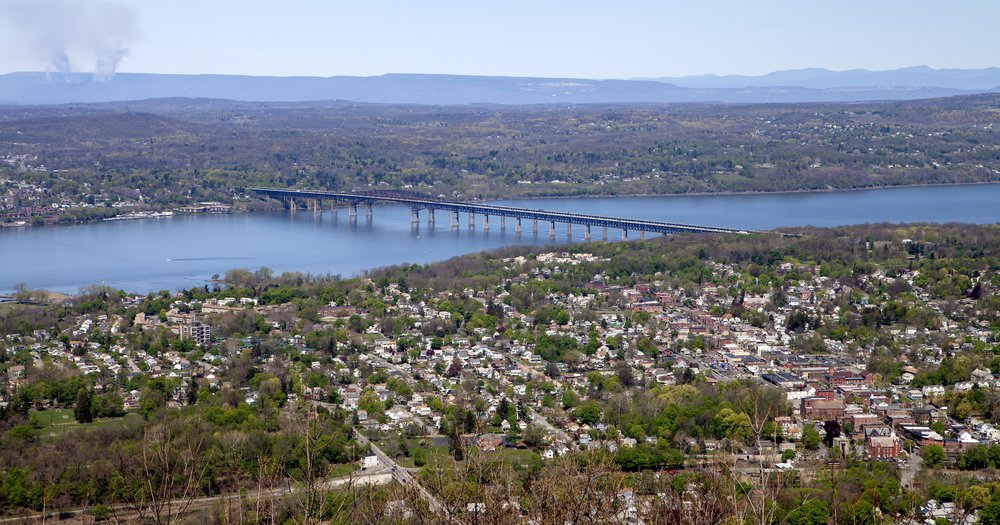
Sixty miles north of New York City and ninety miles south of Albany, the city of Newburgh sits just east of the crossing of Interstates 87 and 84. The Hudson River flows along its eastern edge. In recent years, the city has seen , predominantly from Central America: nearly half of all residents 鈥� 48 percent 鈥� now identify as Latino, which grew by 35 percent from 2000 to 2010. In the local school system, English language learners (ELLs) comprise 15 percent of the district鈥檚 population.听
These changes are not unique to Newburgh. Across New York State, other communities are adjusting to significant demographic shifts. While New York City has long been a hub for international diversity, the number of newcomers to upstate destinations, such as Buffalo, Rochester, Syracuse, and Utica, has spiked in the past few decades. Now, around 30 percent of families across New York State speak a language other than English at home, resulting in a quarter-million English language learners (ELLs) in the state鈥檚 K-12 schools. They speak nearly 200 different languages.
As I detail in a recent report, From Blueprint to Building: Lifting the Torch for Multilingual Students in New York State,听New York has recently led a bullish redesign of policies and practices to better support the education of its growing, diversifying听ELL population.听Passed in 2014 under the umbrella of the state鈥檚 Blueprint for ELL Success strategy, new rules comprehensively revamp ELL policies across the board. There are many key changes, including new requirements for data reporting, educators’ professional development, family engagement, assessment procedures, and more. But the cornerstone of the reforms is also the component that most directly impacts students and educators: how individual ELLs are taught in the classroom.
With 2015鈥�16 as the first school year of full implementation, promising changes are already unfolding in districts like Newburgh.
CO-TEACHING: INTEGRATING LANGUAGE AND CONTENT
At Meadow Hill Global Explorations School in Newburgh, English as a New Language (ENL) specialist teacher Marie Schor sits with a group of five, third-grade ELLs at the small, peanut-shaped table in her partner teacher鈥檚 mainstream classroom.
Schor鈥檚 ELLs are finalizing stories they wrote. Each focuses on a feline protagonist, inspired by T.S. Eliot鈥檚 Old Possum鈥檚 Book of Practical Cats. All students in鈥� the class have been working on their story drafts. But Schor, in consultation with her mainstream co-teacher, decided that these particular students would benefit from more targeted language support at this stage in writing.
One student reads his draft, dragging his finger under the sentences in his composition notebook to keep his place. Under Schor鈥檚 facilitation, the other students listen and provide verbal feedback using鈥� a rubric. Schor offers recommendations as well, such as, 鈥渆xpand character dialogue鈥� in one section or 鈥渃hange this verb.鈥� On previous days, Schor has used word banks, sentence starters, guided peer talk (鈥渕ingles鈥�), and graphic organizers鈥� with labeled boxes, bubbles, and other shapes (鈥渢hinking maps鈥�) to break the writing process into manageable chunks.
This is an example of what New York鈥檚 newly required integrated ELL services look like in action. The new state rules spell out a baseline of how ELLs should receive English language development services and for how many weekly minutes, requiring that students at higher English levels receive supports that are embedded into core, academic instruction.听This integrated approach occurs primarily through co-teaching models where a mainstream teacher works in tandem with an ELL specialist, like Schor, for portions of the school day.听鈥‥LLs at the lowest levels of English continue to receive varying amounts of traditional 鈥減ull-out鈥� or 鈥渟tandalone鈥� language services.
Schor said she is 鈥渧ery enthusiastic鈥� about the hybrid approach of standalone and integrated services for ELLs, even as the implementation of the co-teaching model has varied with individual mainstream teachers. She says, 鈥淚 pushed into eight classes of eight teachers with eight different teaching styles and attitudes that ran the gamut from basically, 鈥榃ho is this lady, and why is she pushing into my class?鈥�… to 鈥楲et鈥檚 learn together and create amazing lessons!鈥欌��
The aim of this inclusive, integrated ENL model听is for students to learn language more
authentically, in the context of learning content.听While traditional standalone models may give ELLs opportunities to work on specific English language skills, they can miss out on grade-level academic instructional time.听It can also segregate them from critical language interactions with their native English-speaking peers.听Both these components, access to core curriculum and peer interaction, are critical to ensure ELLs progress in their mastery of academic content and language beyond conversational proficiency in English, especially as they reach higher levels of English.
Despite these strengths, the state鈥檚 new integrated model does not come cheap. Many districts have been forced to use their own funds with little extra dollars from the state to implement the model with fidelity. In Newburgh, ELL administrator Chastity Beato said she lobbied her school board to finance the hire of fourteen new ENL positions in the last two years.
Moreover, co-teaching鈥� is often complex听to implement at the school level. Administrators must grapple with several key components, such as building in planning time for teachers and 鈥渃lustering鈥� ELLs strategically in mainstream classrooms. At the teacher level, co-teaching is a social act between two professional adults, and ENL teachers can feel relegated to a subordinate role. Diane Fenner, an ELL expert, compared the working relationship 鈥渁n arranged marriage鈥� where 鈥渢he professional pairing clicks and other times it does not.鈥�
DUAL IMMERSION: MAXIMIZING LINGUISTIC ASSETS
Integrated ENL is only part of the district鈥檚 strategy, a mirror of the state鈥檚 broader . District ELL administrator Beato said leaders have expanded multilingual instruction to six of nine elementary school sites in recent years. They prioritized dual immersion models, ones that integrate monolingual English speakers with native Spanish-speakers and provide core instruction in both English and Spanish. As research has suggested, the dual immersion model has potential to close academic achievement gaps for ELLs in English. The model differs from transitional bilingual models that typically serve only ELLs and can risk segregating ELLs inappropriately (For more on differences between ELL instructional models, ).
In 2014, Newburgh launched two new dual immersion sites in light of the state鈥檚 Blueprint and regulations.听The new state rules set a district-wide threshold for offering bilingual education in ELL home languages.听Previously, the state required a bilingual education program wherever there were twenty or more ELLs at the same grade level and from the same native language background in an individual school. That mandate itself was unusual; only six other states require bilingual instruction in any form. Now, New York goes even further: if there are twenty or more such ELLs district-wide, the district must offer them a bilingual education program, either transitional or dual immersion.
鈥淲e want to make very clear that bilingual education is our default program here in the state of New York,鈥� 听said New York鈥檚 Deputy Commissioner for P-12 Instruction, Ange虂lica Infante-Green.
At Newburgh’s, first grade Spanish and English dual immersion teachers instruct in classes across the hall from each other. 鈥�驴Cu谩les animales tienen dientes filosos? (Which animals have sharp teeth?)鈥� teacher Yinette Mercado asks students. 鈥�Carnivoros (carnivores)!鈥� they shout. On the English side, similar conversations occur about animal features: 鈥淲hat do polar bears need to survive in the Arctic?鈥� teacher Evelyn Daniels asks students. One answers, 鈥渢hey need blubber and fur.鈥� This class spends the day in English with Daniels while the other class uses Spanish with Mercado. The next day, they switch teachers and languages.
Mercado and Daniels use the state鈥檚 EngageNY open math and language arts curricula to help design lessons. Daniels said EngageNY 鈥済ives a good foundation鈥� and sets uniformity in unit themes so that she and Mercado 鈥渁re on the same page.鈥� However, she said the curricula is 鈥渧ery basic, so we add in and take it to the next level.鈥� Mercado said she valued the state鈥檚 translation of open math curricula into Spanish and would benefit from an open Spanish language arts curriculum as well.
Nationally, the lack of quality, non-English curricula is often a major challenge for expanding bilingual models. New York鈥檚 work in this area underscores the potential of open educational resources (OER)听to support multilingual instruction. Because the EngageNY curricula carry an open copyright license, the state is able to translate these materials into other languages, and republish them online for others across the country to use.
South of town at Vails Gate School, Magali Vazquez teaches kindergarteners about recycling in Spanish. The school shifted her class from a transitional bilingual model (serving only ELLs) to a dual immersion model (serving ELLs and non-ELLs) in 2014. Principal Ebony Green lauded the move to dual immersion, in part, because 鈥渟tudents spend more time integrated…it鈥檚 more inclusive.鈥� Vasquez said she prefers how the dual immersion model gives equal importance to the home language.
THE ROAD AHEAD
Superintendent Roberto Padilla attributes Newburgh鈥檚 reforms for ELLs to the combination of state regulations, the district鈥檚 鈥淰ision 2020鈥� strategic plan, and energy from Beato, who he appointed to the newly-created, district-level ELL post in 2014. Padilla acknowledged that 鈥渨e can鈥檛 do it all at once,鈥� but he said the state鈥檚 reforms are 鈥渉eadway… that was long overdue.鈥�
It is not easy work to shift an entire state system for ELLs in a new direction. The new reforms are in their infancy, and meaningful change statewide will be incremental. In part, this stems from the fact that U.S. education remains a largely decentralized system, and it is up to local educators and leaders 鈥╰o apply state policies in ways that are most effective鈥� in their specific contexts. But Newburgh鈥檚 example is an important reminder: states can push districts in new directions and give them the political cover to justify disruptions to the status quo at the local level.听In Newburgh, local leaders are adapting and innovating within the parameters of state-mandated change, creating more equitable opportunities for their multilingual learners.
On January 18, 麻豆果冻传媒 NYC will hold a panel discussion, “Lifting the Torch for Multilingual Students,” to highlight both the bright spots and emerging challenges in New York State’s ELL reforms.听Click here to register to attend or view online.
Portions of this post were originally published in a recent 麻豆果冻传媒 report,听.听This post is part of 麻豆果冻传媒鈥檚 Dual Language Learners National Work Group. . To subscribe to the biweekly newsletter, , enter your contact information, and select “DLL National Work Group Newsletter.”
More 麻豆果冻传媒 the Author
Issues
Programs/Projects/Initiatives
Related

In 2026, States and Congress Will Need to Mitigate the Damage to PreK-12 Education
Celebrating the Education & Work Teams鈥� Impact at 麻豆果冻传媒
Ushering Bilingual Education for English Learners Through Uncertain Times