Jazmyne Owens
Senior Policy Advisor, PreK-12
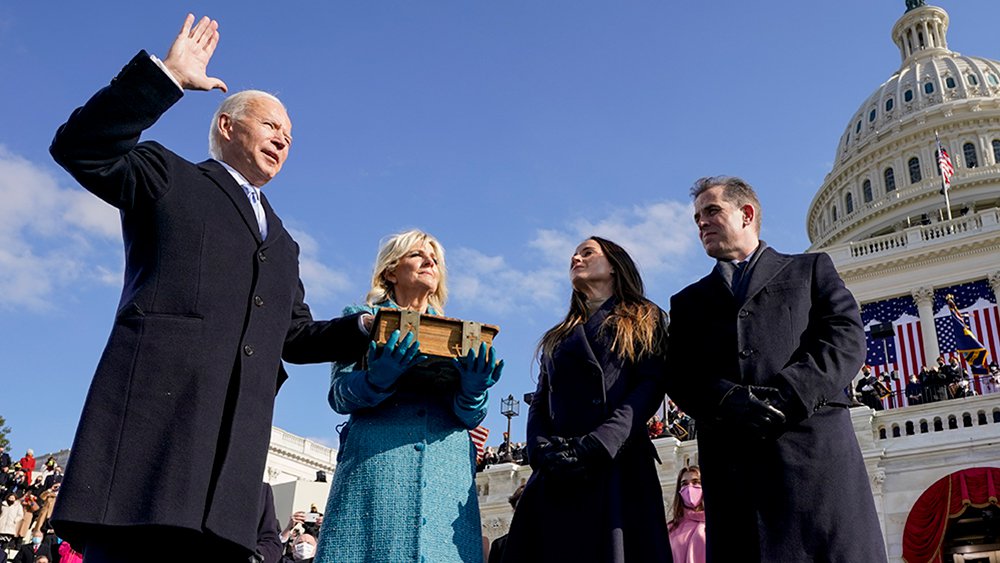
The weeks leading up to the inauguration of Joseph R. Biden and Kamala D. Harris to the Offices of President and Vice President of the United States were particularly significant. Not just because of the COVID-19 pandemic that continues to rage, but also because of the historic Senate runoff in Georgia, and the siege of the Capitol by violent domestic terrorists, and consequent second impeachment. All of which is set within the context of extremely polarized politics, a shifting political landscape, and uncertainty about the future.
This is especially consequential for the K-12 education space, considering the deep impacts that the pandemic has had on students, teachers, and families. The continued debate about how to safely reopen schools and how to provide high quality educational opportunities in remote and hybrid learning spaces will all be substantially impacted by the changes happening at the federal level.
The January runoff race in Georgia brought to the U.S. Senate. Kamala Harris nominated former , to her seat, bringing a slim Democratic majority to the Senate for at least the next two years. A Democratic Senate releases a grip of power from now-minority leader Mitch McConnell, who created a backlog of COVID relief and other legislation and oversaw what was being reported as the . While , it still holds a Democratic majority, and that is going to be extremely important for the new Biden-Harris administration to push their agenda through.
The Biden-Harris administration stands at stark contrast with the Trump administration on a number of important issues, but especially in . President Biden himself has made among his top priorities The day after inauguration he signed an directing the Secretaries of Education and Health and Human Services to collaborate on guidance for both in person, virtual, and hybrid learning. The nomination of for Education Secretary fulfills the Biden campaign promise that the Secretary would be a public school teacher. As a , Cardona is more likely than his predecessor to support greater research and resources for dual language learners.
At the end of December, Congress passed a combined COVID-19 stimulus relief and omnibus spending bill.The included , but was most known for providing $600 direct payments to adults and children, as well as $300 unemployment benefits through March. The provisions in the package included $82 billion for education funding, with $54.3 billion for K-12 schools. Generally delivered through the Title I formula, this is approximately four times what Congress appropriated under the CARES Act (detailed breakdown of comparison to CARES funding by Edunomics lab ). The education funding also included an additional $4 billion for governors to spend at their own discretion, with $2.75 billion of those funds set aside for private K-12 schools. The legislation also included a Maintenance of Effort (MOE) provision that requires elementary and secondary education .
In addition to specific education funding, the Consolidated Appropriations Act, 2021 also provided (plus an Emergency Broadband benefit for families and unemployed workers), , and .
A few weeks into the new year, and ahead of inauguration, President Biden released his COVID relief proposal, the . The package would appropriate an additional $1.9 trillion including $130 billion in K-12 education funding. Within this, funds will also be set aside for a COVID-19 Education Equity Challenge Grant, which would 鈥渟upport state, local and tribal governments in partnering with teachers, parents, and other stakeholders to advance equity- and evidence-based policies to respond to COVID-related educational challenges and give all students the support they need to succeed.鈥� The grant is in addition to $350 billion in aid to state, local, and territorial governments.
President Biden鈥檚 plan also includes $50 billion for COVID-19 testing in schools, long term care facilities, and prisons, $25 billion for the Emergency Child Care Stabilization Fund, $15 billion for the Child Care and Development Block Grant, a one-year boost to the , $5 million to the 鈥渉ardest-hit鈥� governor's fund, $4 million for federal behavioral-health services, $3 million for the Special Supplemental Nutrition Program for Women, Infants, and Children (WIC), and $1 million for the Temporary Assistance to Needy Families (TANF) program.
The Biden administration and 117th Congress have their work cut out for them in the coming year. In the short term, the public can expect to see draft legislative language for the Biden proposal as committee and administration staff positions are filled and cabinet positions are confirmed. Minority Leader McConnell will continue to , especially as Congressional leadership determines the best legislative vehicle for COVID relief. But throughout the changing landscape, advocates and other stakeholders must continue to ensure that K-12 students needs are prioritized by policymakers.
Enjoy what you read? Subscribe to our newsletter to receive updates on what鈥檚 new in Education Policy!
Senior Policy Advisor, PreK-12