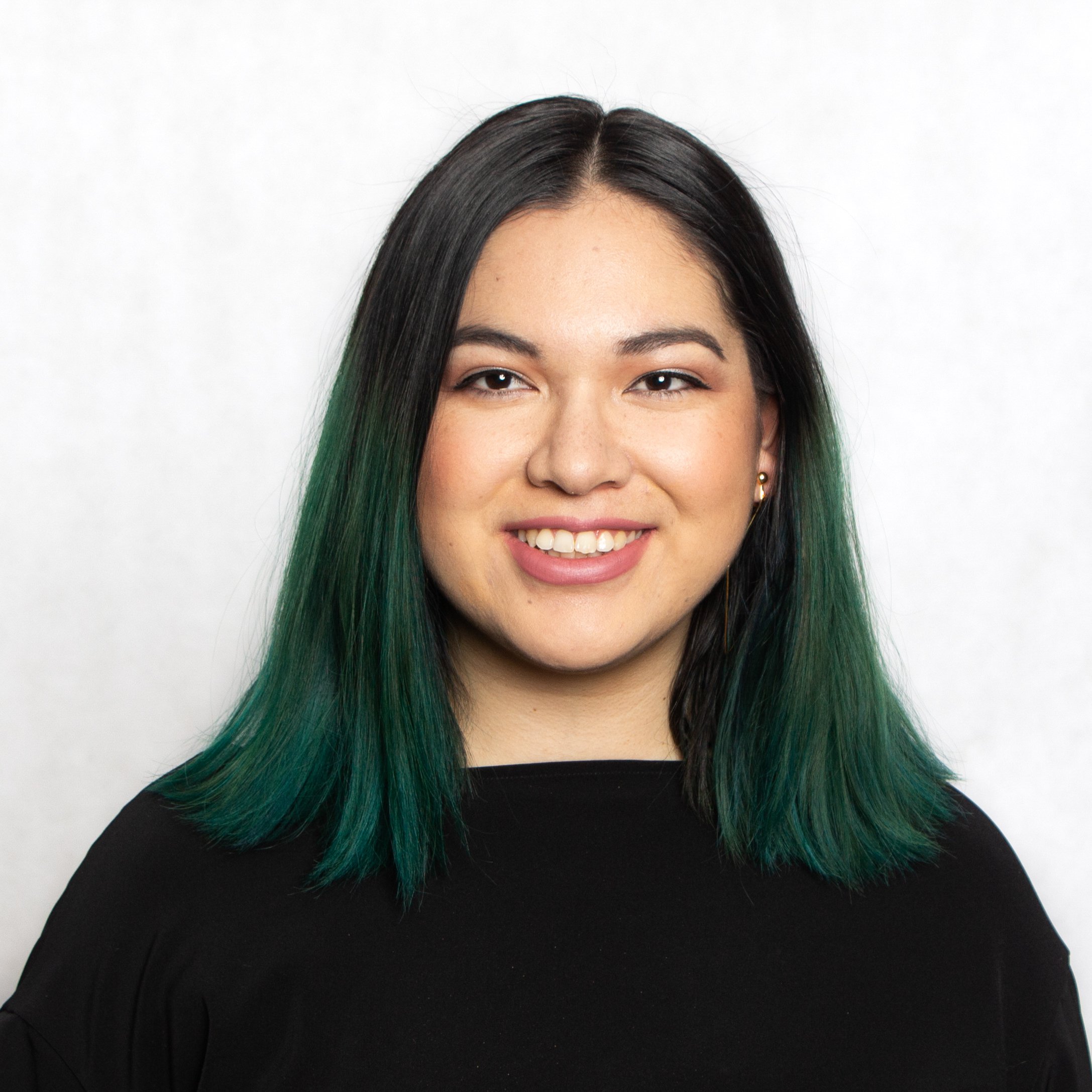
Roselyn Miller Champion
Grant Analyst, City of Portland

As their fellowship comes to an end, the Millennial Public Policy Fellows are using their final DM posts to reflect on their 11-month journey through D.C.鈥檚 think tank and public policy landscape.聽
Unless you鈥檙e Star Wars: The Empire Strikes Back, sequels are never better than the original so let鈥檚 call this post a quick capstone to my first post on the DM, where I engaged in semi-petty banter with an Uber driver with great taste in music. In case you鈥檙e curious, my uber rating has predictably gone done a bit. But more importantly, after a year of researching and writing on gender, work, and social policy in Washington, D.C., here are the answers to every single one of the questions I blurted out in my first blog post:
Why do women of color always have to prove to others they care about their lives and their families?
It鈥檚 true! Brown and Black women have historically been marginalized by legislators that assume their needs based on racist stereotypes rather than asking or empowering diverse leaders. Hispanic and Black children disproportionately the foster system for poverty-based neglect鈥� a practice which punishes families for being poor rather than working with them to create a stronger safety net. And, evolving technology and prediction models and accelerate discriminatory policies against low-income people. To top it all off, work requirements on medicaid could incentivize millions to from much needed healthcare services. This culturally long-held belief that women of color are somehow less trustworthy than white women has real consequences. Regardless of income and education, Black women an infant mortality rate twice that of white women because of a long history of racist policies, current systemic stressors, and a sparse public benefits system dependent on the workplace.
How can a mother participate in her kid鈥檚 education when all the assignments and meetings are in a foreign tongue?
We need to advance education training and curriculum so schools are set up for the increasingly diverse student body they work with. Although this question was more about administration and education structures, cultural and racial understanding should be integrated throughout the entire education system. If you鈥檙e interested in this, follow fellow millennial fellow Jenny Mu帽iz鈥� work on culturally responsive teaching.
What if she (a mom) spends half her day underpaid and the other half unpaid–doing work at home or for other鈥檚 homes, constantly worrying about feeding her kid?
Have you heard the term 鈥淗ousehold Mom-ager鈥�? The role of caretaking, cleaning, and logistical often falls on women, and if you鈥檙e a domestic worker for a living you can expect to do this work all day and all night with little pay, benefits, and . In regards to food, SNAP benefits already work, but the current administration could make these requirements tougher.
What if a dad can鈥檛 be involved because he鈥檚 working two jobs under the table, and the rent keeps unreasonably going up?
We talk about wage gaps and a lot in the world of social policy, but a more common condition families face is . High rents people to the suburbs, where there are fewer social service offices, and transportation into the city without a car can take longer than the time it takes a businessman to fly from DC to New York and back. There are also cultural and work barriers to a father鈥檚 engagement in family work as well, with many men wanting to with caretaking more, but due to social pressure and workplace structures are unable to.
What if the kid has no parents and is just trying to survive on their own, holding on to the hope that education might help them establish wealth and security?
Unaccompanied minors have sought asylum or refuge in America for years, but recent zero tolerance policies have led to the forced of families, creating roughly 2,300 new unaccompanied minors since early May 2018. Even if these children were not deported and found a home in the child welfare system, they will be on their own after 18 with no hope of reunification. In the foster system, 70% of kids say they to one day attend college, but upon exiting only 6% will enroll in post-secondary education and of those 6% only half will graduate.
Even with all factors equal, race plays a large role in our labor market. Regardless of wealth and educational attainment, Black men do not as much as white men in adulthood.
How come when a white family is poor or uneducated, it鈥檚 always someone else鈥檚 fault: America, the economy, immigrants taking jobs, but when any minority family is poor it鈥檚 because they don鈥檛 care?
This blog post couldn鈥檛 even partially begin to answer this question. Or, to be clear, another person could never tell you how you should answer this question. I鈥檓 still thinking about this daily, examining where my own knowledge limitations are, analyzing how I treat others in practice versus theory, and wondering what racist systems I鈥檓 complicit in simply from being a citizen of the United States. I hope to have more opportunities to learn about this as I continue here at the Better Life Lab, and I鈥檝e learned to ask more specific and targeted questions. Introspection and communication are key to beginning to make a difference culturally in our country, if we all looked inwards and asked ourselves what our role is in creating these disparities and what can we actively do to change it, then we are practicing radical love and human kindness for each other.
Life is not a zero sum game. Our social obligation to our neighbor is not an attack on individual freedom.
So my real final question is, in a modern, wealthy, and theoretically ethical nation, what do we owe each other, and whose lives matter?
Grant Analyst, City of Portland