My best friend and I often say we鈥檙e lost in 鈥渢he abyss.鈥� The abyss is such a versatile place. For instance, when you spend too many hours mindlessly clicking on the internet, you鈥檙e lost in the online abyss. When you aren鈥檛 able to sleep because you鈥檙e anxious about job applications, you鈥檙e in the career abyss. And when you feel that existential dread creep into your head that maybe you won鈥檛 ever find love, you鈥檝e entered the relationship abyss. Lately, it seems like my friends and I have been spending more and more time in the love and relationships abyss. Blame it on Valentine鈥檚 Day. Blame it on the complexities of finding love in the digital age. Whatever the reason, I wanted to find the answer to the question, 鈥渨hy does it feel so difficult to make meaningful connections in today鈥檚 digital world?鈥�
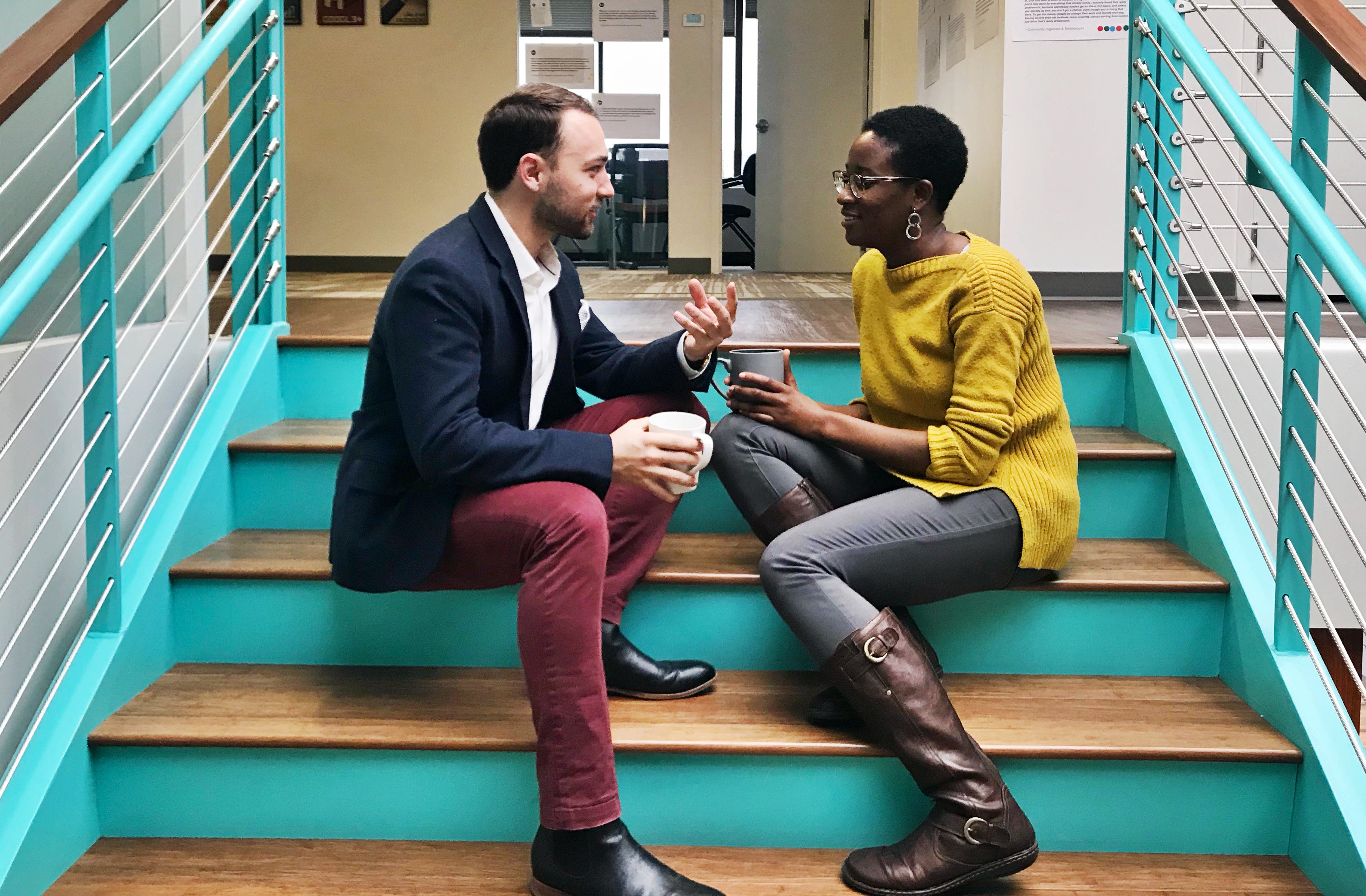
To help me answer this question and pull me out of this particular abyss, I spoke to a colleague whose association with the digital world is rather unconventional. Emefa Addo Agawu is a young millennial in her mid twenties. Unlike who have at least one social media account, she has made the conscious decision to stay off social media in an effort to foster more meaningful connections in her personal life. We sat down recently to talk about love and social media. Our conversation has been edited and condensed for clarity.聽
DILLON ROSEEN: When and why did you first decide to take your life “offline”?
EMEFA ADDO AGAWU: I started experimenting with getting off of social media my senior year of college. Leaving Facebook the first time was nominally about making space to work on my senior thesis, but it was also about escaping from feeling like I had to maintain a coherent public face at a time when I felt anything but coherent. That is, of course, on top of all the things everybody says about spending an hour on Facebook and feeling objectively worse about yourself in the face of everyone鈥檚 heavily curated life, thoughts, and emotions.
After graduating, I tried a mix of things to improve my relationship with Facebook, but I was still using a massive amount of energy to improve my relationship with Facebook, and even though I was making progress, it became clear to me I could use that energy better elsewhere. So, I left.
Frankly, one of the big deterrents to leaving Facebook was that the dating apps I used required it for authorization. Let me tell you, I loved using dating apps in late college, though I literally never once went on a date through one until well after I graduated. They were an enormous source of entertainment and curiosity for me and my friends鈥攁lmost anthropological. I see now that they were also a kind of soft intro to the idea of casual dating, which was very different from the style of dating I saw in college. I literally don鈥檛 know why it didn鈥檛 occur to me earlier to create a new (shell) Facebook account to authorize my dating apps, which is what I have since done.
S Melody Frierson
How have your motivations to stay offline changed since then? What have you learned?
I’m not sure there鈥檚 a way to answer this without sounding like a preachy asshole, but I’ll try. Quite simply, I left Facebook because I suspected it would help me use my time better. My motivation to stay off is that I am certain it has made me use my time better. The difference makes me see that I could do even better. I have no incentive to introduce a challenge back into that.聽 聽
How has your decision to stay offline opened your eyes to the realities of love in the digital age?
I honestly can’t say I have any good insights into romantic love in the digital age. Not since my high school boyfriend have I thought I was even close to being in romantic love with someone. I do think a lot about intimacy in the digital age鈥攂oth platonically and romantically. How do we experience intimacy with new people, and is that different from past periods?
Mainly, I’m struck by how design choices humans make can privilege, discourage, or otherwise meddle with certain kinds of communication that are crucial for intimacy. Take the screenshot. Any time we want to communicate anything brave or vulnerable, you must know on some level that there’s a decent chance your words (your typed, beating heart!) will be snapped and shared with that person’s three closest friends. What do you do with the foundational knowledge that your communications may not be solely between the two people talking? This is especially true with people you don’t yet have trusting relationship with, say, on a dating app. What kinds of conversations would that privilege or discourage? I don鈥檛 think we really know how to think about the effect of this, though on some level we must be aware of it.
I do think the biggest challenge to intimacy is being so aware of oneself, because when you’re so aware of yourself, you just have less energy available to be present and to receive information about this other person with whom you might have (any kind of) a relationship. I suspect that anyone who is social media fluent develops a kind of self-awareness that I just don’t think previous generations had, or had to have, or knew how to have. This has a lot of fabulous consequences, one of which is that lots of people our age are developing really compelling and clear writing voices. That’s amazing. But it does also make it really darn hard to get out of your own way (or even to recognize that you are in your own way) which is a problem for intimacy.
Do you think our generation is any different than past generations when it comes to love and intimacy?
Sure. The world is so different today than it was when our parents grew up, but I try to remember that some things that feel unique to this moment might be logistically unique, but not emotionally so. I remember explaining 鈥済hosting鈥� to my mom. She listened carefully, then laughed and said, 鈥淭hat鈥檚 not new! We did that at boarding school. We used to just hide in the cupboard whenever he came around!鈥� Of course, it is a little different. You鈥檙e not ignoring texts, you鈥檙e crouching in spiderwebs and risking a splinter to avoid some dude you鈥檙e too cowardly to reject directly. But isn鈥檛 that an emotional precedent for a phenomenon that feels so particular to millennials? I think you get to really useful and interesting places if you ask, without prejudice, 鈥渨hat鈥檚 new here?鈥� about these kinds of things.
The real difference there might be that ghosting today is often a solo act (you just…stop responding), where my mom would have had to get her roommates on board to pretend she鈥檇 gone to study hall or whatever when he came knocking, and they would all have had a good giggle about it once he rounded the corner. Or, maybe thinking that she was being cowardly and perhaps a little bit cruel, they would have scolded her and told her to tell him straight up that she wasn鈥檛 interested. I鈥檓 not sure. But maybe that becomes more a story about isolation and community involvement in dating, rather than another slightly condescending article about how we millennials are so callous that we ghost people all the time. I鈥檓 not convinced we鈥檙e any more or less vulnerable, conflict-averse, or hungry for love and affirmation than any other generation.
S Melody Frierson
Relatedly, though the word 鈥渕illennial鈥� captures being young in this very particular moment, what鈥檚 usually more emotionally relevant to me than being 24 鈥渋n this age鈥� is just being 24! Cheryl Strayed has a great line about young people. She says, 鈥渁bout eight of the ten things you have decided about yourself will, over time, prove to be false.鈥� Yup! Got me. I鈥檓 skeptical to label something a 鈥渕illennial thing,鈥� but I think how exhausting that process is鈥攁ltering your personal narrative鈥攎ight actually be a millennial thing. We鈥檝e grown up in an age where the default is to tell and retell a constant, coherent, personal and professional story of yourself鈥攆or college applications, for job applications, on social media and anywhere else鈥攔ight at an age where you鈥檙e supposed to be madly rewriting without an eye for coherence, but for what really moves you. In that context, letting go of false things is really, really hard. Especially if they鈥檙e part of a good story. I really think it鈥檚 more than the聽I don鈥檛 know what I鈥檓 doing with my life!聽panic of your 20s, which older and wiser folks assure me is completely normal. For a generation of storytellers, that blank space can be so painful. It really might be new. It鈥檚:聽I don鈥檛 have a story to tell.
More 麻豆果冻传媒 the Author
Issues
Programs/Projects/Initiatives
Related
The Millennial Money Myth
Online, Vulnerable Groups Only Become More Vulnerable

One Year Later: Reflecting on the Millennial Public Policy Fellowship