
International Women’s Day Celebrates 101 Years

In case you haven鈥檛 heard yet, today is the 101st celebration of . It is an appropriate time to contemplate both the progress that has been made toward gender equity as well as the work still yet to be done. Here in the United States, there have been significant improvements in the treatment of women, but there continues to be a wage disparity, we have yet to pass the Equal Rights Amendment that was proposed in 1923, and the United States is one of only six countries–including the Sudan, Somalia and Iran–that has not ratified the Convention to Eliminate Discrimination Against Women (CEDAW). You can listen to an interesting podcast on CEDAW as part of the World Bank’s Think Equal Campaign .
Yet, thanks to the likes of Gloria Steinem and other female activists, the situation is much less dire in the U.S. when compared to many parts of the developing world–where female genital mutilation (FGM) remains a common practice, women continue to bear the burden of domestic work despite the slow but steady climb in their participation in the formal economy, and women鈥檚 access to everything from health care to political participation to bank loans is quite limited.
In last week鈥檚 , Charles Kenny discussed the status of the (MDGs), and noted particularly that the gender gap in access to education, MDG 3, is closing. This is incredibly encouraging news, no question. There are a couple of points worth noting in relation to the MDGs and the impact of various initiatives on women and girls.
The MDGs include:
- Ending Hunger and Poverty
- Universal Education
- Gender Equality
- Child Health
- Maternal Health
- Combating HIV/AIDS
- Environmental Sustainability
- Global Partnership
As many have argued, nearly all of the MDGs contribute to gender parity, and at the same time, addressing gender parity leads to a spillover effect on many if not all MDGs. For instance, in a compelling for the Guardian鈥檚 Poverty Matters blog in October 2011, Elizabeth Arend argued that in order to tackle hunger and poverty, the World Bank should revise its agricultural initiatives to recognize the role that women play in small-scale farming as well as the farm-to-table process of preparing food for their families. Based on the research, maternal health and child health are correlated with better education, as is prevalence of HIV/AIDS.
Second, the World Bank鈥檚 literature on gender equality in education (MDG 3), highlights the Female Stipend Program (FSP) in Bangladesh which has been lauded as a success. Indeed, what happened in Bangladesh when FSP was implemented at the national level was an increase in female secondary school enrolment, so much so that the amount of money given to each girl for meeting the educational conditions of the program had be be lowered to accommodate such a drastic increase in the number of girls in school. Further, by 2008, while access to secondary education had been steadily increasing for both boys and girls, the ratio of girls to boys enrolled had actually reversed: there were more girls than boys in school. In light of this, the World Bank redesigned the program to target all poor rural children rather than just poor rural girls.
Examples like Bangladesh indicate that gender parity in access to education is improving. According to World Bank data, as of 2009 slightly less than 48% of girls were enrolled in secondary education compared to about 43.5% of boys. This suggests that while access to education for girls has improved, access to secondary education for both boys and girls remains limited. Further, the increase in female secondary enrolment is clearly due to the FSP initiative. One of the goals of FSP was to address overpopulation, and particularly child marriage and pregnancy, vis a vis education. Bangladesh has seen a significant drop in maternal mortality rates and child mortality rates, which could possibly be related to FSP. However, Bangladesh still has a tendency toward son preference, which is evidenced by the number of boys to girls as well as the mortality rates of boys versus girls. Also as of 2007, 66% of girls in Bangladesh were married by age 18.
In light of all of this, it seems that progress has certainly been made in the way of gender parity, but it is clear that girls are still undervalued and require specific interventions to meet their particular needs. The World Bank frames their policies on gender initiatives around the idea of human development–an all-encompassing concept. International Women鈥檚 Day allows us to take the time to reflect on the complex nature of gender equality and recognize that there is still much to be done. Here are a few interesting pieces that have highlighted women today:
from the Christian Science Monitor
from the Interdependent
an infographic from USAID
by Foreign Policy
, 麻豆果冻传媒 Foundation’s , and myself
Read up, and Happy International Women鈥檚 Day!
This is the final blog in a 3-part series on gender and development.
More 麻豆果冻传媒 the Author
Issues
Programs/Projects/Initiatives
Topics
Related
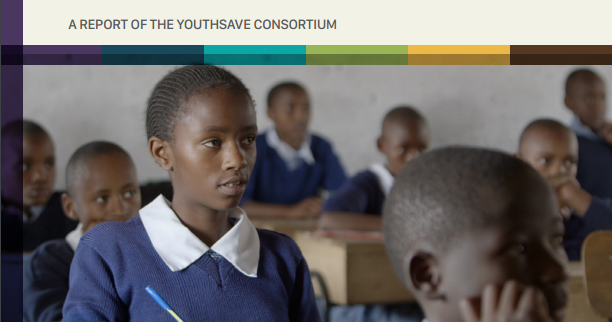
85,000 Low-income Youth Open Savings Accounts through YouthSave
A Conversation on the Weekly Wonk: Should We Bank On It?
Global Anti-Poverty Targets Tepid