
The Importance of Recognizing a Third Gender on State IDs
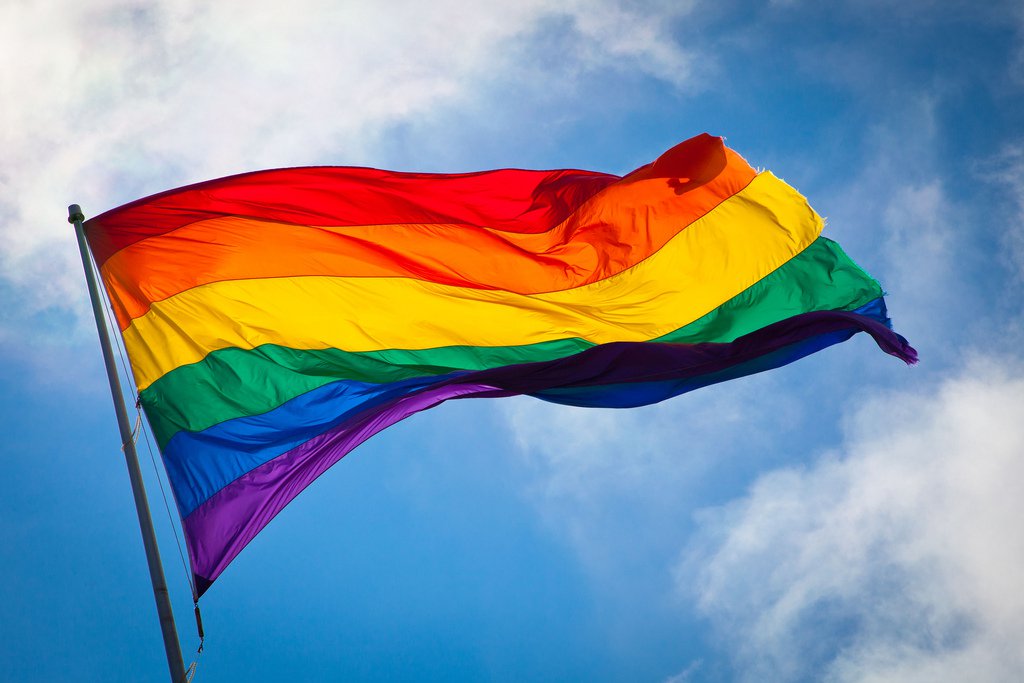
On Monday, Washington, D.C., joined Oregon to become the first jurisdictions in the United States to recognize a third gender on state-issued identification cards and drivers鈥� licenses, with both offering 鈥淔鈥� 聽for female, 鈥淢鈥� for male, and 鈥淴鈥� for non-binary or non-specified gender. The California legislature is , so it may not be far behind in recognizing a third gender.
This isn鈥檛 the first time the District鈥檚 DMV has made such a boldly progressive move. In fact, it has a history of partnering with nonprofits to improve constituent services. It鈥檚 previously worked with poverty-alleviation organization Bread for the City to increase language access and with the National Center of Transgender Equality (NCTE) and community health center Whitman-Walker Health (WWH) to expand gender options. (Full disclosure: I volunteer with the Whitman-Walker Health Name and Gender Change Clinic.) In the mid-2000s, NCTE advocated to create the DMV鈥檚 former policy, which permitted a resident to change gender from male to female or female to male with a gender designation form completed by a third party, such as a physician or a counselor. The new policy, which the DMV was considering internally before being approached by NCTE and WWH last year, will allow residents to sign a self-attestation form and choose among F, M, and X. This latest policy change, which took effect on Monday, allows residents to self-identify and obtain proper gender identification鈥攚ithout needing legal assistance and a court order.
You may be wondering: Why is it necessary to recognize a third gender, or for clinics to help people change their classification? As state and local advocates explain, reasons of health, safety, and wellness make proper official identification a priority. The move also validates the identities of transgender people, who are victim to harassment and violence at higher rates than those those whose gender identity or expression matches the gender they were assigned at birth.
In a conducted by NCTE in 2015 of more than 28,000 transgender individuals, 32 percent of respondents reported being verbally harassed, denied benefits or service, asked to leave, or assaulted when they showed an ID with a name or gender that didn鈥檛 match, and didn鈥檛 have their preferred gender on identification documents.
What鈥檚 more, even compared to lesbian, gay, and bisexual people, transgender individuals are (and transgender women of color, in particular, are at risk). In , 21 transgender people were killed鈥攎any for reasons related to their gender鈥攁nd 22 people were killed the next year. This horrifying trend has only continued鈥攁lready in , 13 transgender people have been murdered.
Beyond bolstering safety, laws and policies that allow individuals to self-identify their gender also make it easier for transgender people to find . One in three transgender people have turned to sex work for survival, 15 percent are unemployed, and 27 percent of those who are employed have been fired, denied a promotion, or not hired for a job they applied for in the past because of their gender identity or expression. : 30 percent of transgender people have experienced homelessness, and 40 percent have attempted suicide.
Yet we can also look locally at the narratives beneath the numbers to see the importance of these third-gender initiatives. In Oregon, for instance, Jamie Shupe (they/their), a retired Army mechanic, led the charge that ultimately expanded classifications for state IDs. After being shut down on their first trip to the DMV, Jaime went to the courts, where a judge granted Jamie鈥檚 request to change their gender to non-binary in June of 2016鈥攖he first ruling of its kind in the United States. Basic Rights Oregon and Lambda Legal were key in advising the Oregon DMV and in support of the new policy that was on June 15.
A year after their first success, Jamie is breaking barriers again and plans to be first in line to get a new Oregon license鈥攎arked X for non-specified鈥攐n July 3.
Jamie, who was born in D.C., has also worked with WWH to change the gender marker for their D.C. birth certificate. 鈥淚 view my sex through the lenses of race and intersex. And I could never get my head around the fact that we have and accept the existence of mixed-race kids, but we deny there鈥檚 anything between the rigid boundaries of male and female,鈥� Jamie told me. 鈥淚ntersex people of course physically prove that there is. That鈥檚 basically what I am in terms of sex: the equivalent of a mixed-race person. And I realized that becoming non-binary would not only be the perfect vehicle to capture those elements of me in an authentic manner, but also help to destroy the harmful gender binary, which I view as causing all the problems to begin with.鈥�
Jamie shares that the change in D.C. has 鈥渧ery significant personal meaning for me because I basically had to flee to the West Coast to safely be who I really am.鈥� They were able to change the birth certificate to 鈥渦nknown鈥濃�攚hich isn鈥檛 ideal, but it鈥檚 a step in the right direction.
While there鈥檚 a long way to go to secure equal rights for transgender people, D.C. and Oregon are making progress with the third-gender option on IDs. Jamie was positive when asked about their experience with the courts and DMV. 鈥淭he unsung heroes in this case 鈥� are the brilliant legal minds who drafted the documents and made the arguments, the people who tirelessly worked or volunteered in the advocacy organizations who rallied and fought for the cause鈥攁nd the people in government who didn鈥檛 buckle or balk at the size of the task at hand.鈥�
More 麻豆果冻传媒 the Author
Related
Hiding the Bottom Line: Three Bills That Would Weaken Financial Aid Transparency

Building a Climate Mobility Movement

A Blueprint for Student-Led Civic Engagement
