
Germany’s Coalition Crisis?
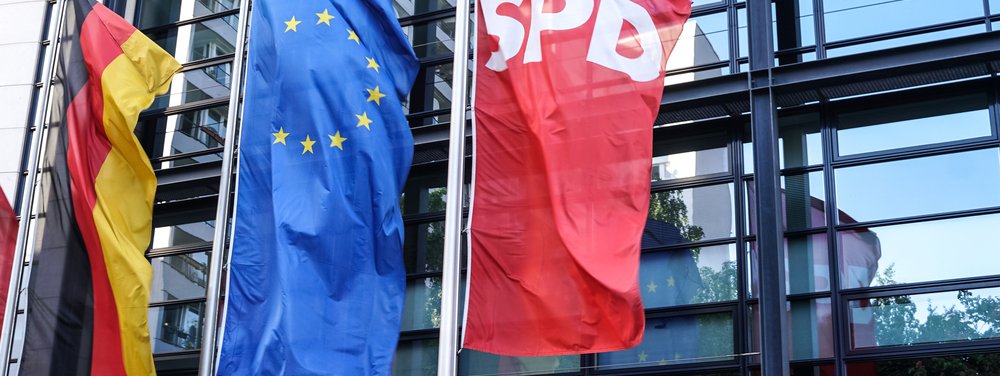
Two months ago, the victory of Angela Merkel鈥檚 Christian Democratic Union (CDU) in Germany鈥檚 federal elections seemed to balance the surprising third-place finish of the far-right Alternative for Germany (AfD). Over the last 12 years, Merkel鈥攐r 鈥淢utti鈥� (Mommy), as she鈥檚 affectionately known鈥攈as successfully navigated a political era that鈥檚 otherwise sunk many a politician: She saw her country through an international economic crisis, and during the Ukraine crisis and beyond, she鈥檚 been one of the few political leaders savvy enough to grapple with Russian President Vladimir Putin and the region鈥檚 ever-tenuous political situation.
But now, a twist: For the since the Federal Republic鈥檚 formation, in 1949, post-election coalition talks are not only taking more than a few weeks to conclude鈥攖hey鈥檙e also failing outright, at least so far. Late last month, the pro-business Free Democratic Party (FDP) walked out of coalition negotiations, a turn that鈥檚 brought Merkel back to the drawing board. Internationally, the negotiation breakdown has been called a , a sign that not even Germany can be counted on in today鈥檚 heady political season. But while this is certainly a unique moment in Germany鈥檚 modern political history, it鈥檚 not necessarily a symptom of collapse.
To get a better pulse on Berlin鈥檚 current political situation, I spoke with Jeffrey Anderson, a professor and the director of the BMW Center for German and European Studies at Georgetown University, about the coalition talks. A lightly edited transcript of our conversation is below.
What seems to be happening currently in American politics is that issues are now so divisive that politicians would rather refuse to compromise than seem weak on those issues. Is something similar happening in Germany?
My sense is no. That鈥檚 not to say that the discussions between and among parties in Germany are not hard-fought, or that politicians aren鈥檛 willing to go to the brink in attempts to secure policies favorable to their constituencies. That鈥檚 to say that鈥檚 normal politics. If there鈥檚 a group or a political strain in Germany that might be compared to the current situation in the United States鈥攚here the Tea Party and other elements have shown themselves to be uninterested in compromise鈥攖hat would be the AfD. But its members are in the minority. They鈥檙e in the opposition, one way or another, and so no one鈥檚 really negotiating with them. They鈥檙e obviously staking out lots of extreme positions and talking about not compromising, but, frankly, no one鈥檚 asking them at this point. The discussions are taking place elsewhere on the political spectrum.
With the FDP, the real breaking point, it seems, was immigration policy. In your view, this wasn鈥檛 so much a refusal to compromise as it was politics as normal?
If you think about it, there are only two real options coming out of the September elections for a viable coalition. The FDP found itself in the driver鈥檚 seat, and its leadership was concerned about getting swallowed up like it did the last time it was in coalition with the CDU. So its leaders were driving a hard bargain, and at the end of the day, the party leader, Christian Lindner, didn鈥檛 get what he wanted, so he withdrew. He might have expected that move to elicit more compromises on the part of the other two parties, but it didn鈥檛. So, in some ways, he had to content himself with that symbolic act, and Merkel has turned her attention elsewhere. But these were legitimate issues about which there are differences of opinion鈥攂etween and among parties. It was always a stretch to imagine a viable coalition coming out of the so-called 鈥淛amaica鈥� negotiation, and in the end, it didn鈥檛 work. At the same time, I don鈥檛 think that anyone is drawing conclusions about the fate of German politics, and the inability to compromise, from this set of negotiations.
I take it you鈥檙e not exactly of the opinion that this means German democracy is in crisis?
Not at all. These are difficult times, and in some ways Germany鈥檚 reputation for stability and predictability, which also have been synonymous with Merkel鈥檚 reign as chancellor, has created a rather uncompromising鈥攊f I can use that term鈥攂enchmark for comparison. We鈥檙e now finding ourselves in a situation where there鈥檚 a very real prospect of an inability to come to terms with the fact that new elections may well be called or that a minority government may emanate from this process, all of which is unprecedented in recent German politics. It鈥檚 certainly unusual.
There鈥檚 been no shortage of German commentators arguing that the sky is falling, that German democracy is on its knees, but I certainly don鈥檛 see it that way, and many others don鈥檛, either. For sure, these are difficult times: immigration, Europe, tax law鈥攑arties are arguing over things about which they have real differences of opinion. But it鈥檚 not the kind of politics we鈥檙e seeing here, in the United States; these are different kinds of issues with different consequences.
Is it possible to be in a grand coalition, or any other kind of coalition in the German political system, and not become absorbed into one indistinguishable party?
It鈥檚 very difficult for that not to happen. The very essence of a grand coalition is a coming together of what are usually considered to be the two major choices for voters: the center left and the center right. So there鈥檚 a tendency for there to be this great blending of responsibility and a great washing out of policy differences鈥攁 lowest-common-denominator approach to politics that ends up leaving a lot of important issues off to the side because they鈥檙e too difficult for the major parties to agree on. That tends to fuel a sense of dissatisfaction and alienation in the electorate, and it gives opportunities for fringe parties and extremist parties to cause trouble. It鈥檚 no accident that at the end of each of the last three grand coalitions, stretching back to the 1960s, that the extremist parties have benefitted from the election. They鈥檝e come out stronger at the end of each of those grand coalitions, and that happened this time around, too, with 20 percent of the vote going to either AfD on the right or the Linke party on the left.
In terms of the failure to form a Jamaica coalition: Was that an impossible task to begin with, or more of a failure on the parts of party leaders?
That鈥檚 a tough question to answer. The odds were always long. There were significant differences across multiple issues, particularly between the two smaller parties鈥攖he two potential junior coalition partners, the FDP and the Greens. It鈥檚 in some ways surprising that they came as close as they did, but immigration was a sticking point. It also was Europe that ended up being a sticking point. Ironically, Lindner was accused of being a kind of opportunist and a completely unprincipled modern leader, who was only looking out for his own aggrandisement in the end. During the campaign, that was a common criticism. And yet, in a way, he acted on principle. I think that he was thinking about the long-term health of his party, and he didn鈥檛 want to join a grand coalition in which he could be accused of having abandoned key party tenants.
Because there鈥檚 currently some chaos in the political system, how much do you think that this coalition-building wrangling could benefit the AfD?
The AfD has found itself in a major internal struggle since the election. There鈥檚 been a string of defeats inflicted on the moderate wing of the party, starting with the expulsion鈥攐r, actually, the decision to leave the party on the part of Frauke Petry, the former party leader. The AfD is now moving very much in the direction of its hardline wing, which means no compromises with anyone, no interest in contributing to legislative solutions, but simply a party of opposition and protest within the Bundestag. It鈥檚 not clear whether that鈥檚 a winning strategy in the long run. The nearly 13 percent of the vote the AfD got鈥攁 lot of that was protest votes from voters who were unhappy with either the Social Democrats or the CSU or the CDU and who were looking to send a message. But if that party keeps moving out to the fringes, it will become much harder for the party to attract those disgruntled voters from the previous center-left and center-right parties. I wouldn鈥檛 be overly concerned about the AfD鈥檚 profiting from the current stalemate.
Martin Schulz [the leader of the Social Democratic Party] is now under a lot of pressure to go back on his word. Would his political reputation suffer more than it already has if he were to soften the bold statements he made against certain coalitions on Election Day?
He鈥檚 under a lot of pressure鈥攆rom both sides. On the one hand, the base, for the most part, appears to be sending a message: Don鈥檛 go into another grand coalition. It鈥檒l be fatal to the party鈥檚 prospects. We need a period to reorient and renovate ourselves. But the establishment parts of the party鈥攖he parts that have served in government in the past鈥攁re arguing that it鈥檚 essentially Schultz鈥檚 duty and the Social Democrats鈥� duty to save the country from this period of stalemate and stasis; that the interests of the country are at stake and that it must go back into a grand coalition, though on its own terms. It will be interesting to see how this plays out.
The SPD has a three-day conference that starts on Thursday; Schulz is obviously scheduled to speak. People will be looking very closely at how he portrays the situation, and if he decides to take a strong position, one way or another. One thing is for sure: If the Social Democrats do decide to go back into a grand coalition, it will only be if they can do so on their own terms. They鈥檙e going to push a very hard line on Europe, in particular, and on immigration policy, which would require Merkel to move her party substantially to the left. So this could fall apart, not because the Social Democrats decide to stay out, but because the CDU can鈥檛 bring itself to come to the terms the SPD would put forward. There are long odds here, too, I have to say.
I鈥檒l add that the most likely outcome is also the one that would, in some ways, be the biggest departure for postwar German politics: a minority government. It could be Merkel, but it could also be somebody else, if Merkel steps down from the CDU leadership, having failed in two successive rounds to preside over a successful coalition negotiation, and if she turns the party over to someone else, who would become chancellor of a minority government. This person would still need the support of the Social Democrats or a combination of the Social Democrats and the Greens, or perhaps the FDP, to actually vote her as chancellor. After that, the government would, on a rolling basis, basically stitch together majorities on anything it鈥檇 want to put through Parliament. It鈥檚 not a formula that augurs well for stability, in the sense that it鈥檚 not likely to be a long-lasting arrangement, but no party鈥攅xcept perhaps the AfD鈥攚ants a new election.
So, all said, how concerned should we be?
We should be concerned in the sense that, for the last several years, Germany has been an essential partner for other European countries as well as for the United States. A lot of that鈥檚 changed with the election of Donald Trump; that close relationship between the United States and Germany has weakened. What鈥檚 more, Germany has a government, but it鈥檚 not a government that鈥檚 really capable of leading right now. It鈥檚 a caretaker government until the coalition situation is resolved. For as long as that endures, Germany is less influential, internally and externally.
But we鈥檙e also just so far away from anything like Weimar, or any of those other historical analogies that鈥檝e been thrown around. The German economy is doing extremely well; Germany is still a stable democracy; it鈥檚 functioning according to its laws鈥攊t just finds itself, now, in a rather unusual deadlock situation, and political actors are working hard to resolve that. I think that as long as we can say that, we should be more interested and curious than worried.
More 麻豆果冻传媒 the Authors
Related

Children Belong in School Learning, Not Left to Languish in ICE Detention

A National Review of Early Childhood Cost Models: Findings on Children with Disabilities and Developmental Delays

Gender Equity in High-Quality Youth Apprenticeship: A Deeper Dive into the PAYA Data
