
Ewaoluwa Obatuase
Policy Analyst, Higher Education Policy
In November 2021, I wrote a blog post that drew attention to the professional licensure barrier that undocumented students in Maryland face. Although the state has worked to create access to affordable higher education for these students through efforts like , there were (and still are) that prevented these students from persisting through college and utilizing their degree. For example, even if an undocumented student met the educational requirements for professional licensure in Maryland, they previously could not apply for a license due to their status. However, this past 2023 legislative session, Maryland lawmakers worked to change that.
The bill moved relatively quickly over the course of two years, however the lawmaking process it underwent is demonstrative of how an idea can be put into a bill, undergo numerous changes鈥� for better or for worse鈥攊n order for it to pass. Now that , Maryland can learn from other states as it considers how to implement this legislation and further expand occupational pathways for its undocumented residents.
Rarely does a blog post help lead to legislative action, but the professional licensure limitation I wrote about and interest from Maryland state legislators to draft a bill that would reform professional licensing requirements. In the past, Maryland, like many other states, barred undocumented immigrants from obtaining any form of professional license. Professional licensure (also referred to as occupational licensing) is a government-approved certification needed for individuals to enter different occupations such as nursing, teaching, medicine, and law. The prevented undocumented students with tax identification numbers (ITIN) from obtaining a professional license, despite meeting the educational qualifications, because they do not have social security numbers.
After the blog post drew attention to the issue, lawmakers drafted a bill during the 2022 legislative session. The was expansive in scope and prohibited any state licensing board from denying a professional license to an individual on the condition of their immigration status. However, disagreements between lawmakers delayed the bill from moving forward unless it was amended.聽
The compromise was to narrow the scope considerably and for the bill to only apply to health occupational licensing boards, despite witness testimonies emphasizing the importance of the law applying to all Maryland licensing boards. One even shared, 鈥淢y intention was always to become a policymaker or even a lawyer one day. It wasn鈥檛 until then I realized that due to my status, I wouldn鈥檛 be eligible for a professional license if I were to become a lawyer鈥 know far too many people I鈥檝e interacted with that have felt the struggle of changing their career paths due to this restriction.鈥� This student鈥檚 story underscores how this issue is important, but shows that applying it to only health professional licenses is not enough. Despite the compromise, the bill did not pass due to remaining political differences.
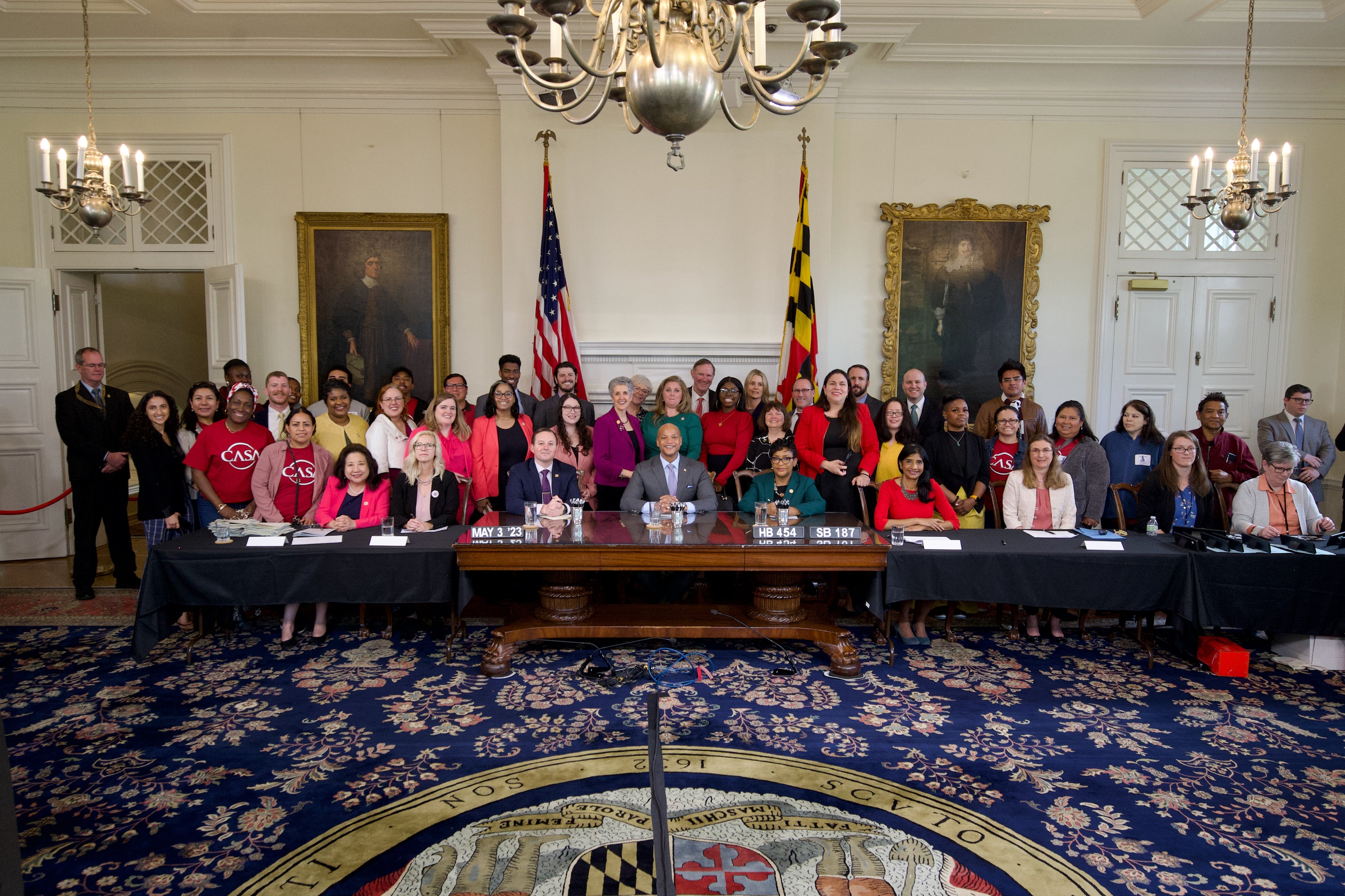
Lawmakers reintroduced session, but this time around, like with the compromised version, the bill only applied to health professional licensing boards. With Maryland under a new and more favorable administration, lawmakers were more confident that introducing this issue with a focus on health professional licenses would lead to the passage of the bill while opening the door for expansion to other professional licenses in the future. The bill made strides through both chambers and in May 2023, Governor Wes Moore signed the bill into law.
While this new law is an important first step for increasing access to valuable career pathways for undocumented students, the narrow scope of the law puts immigrants in other fields such as law, at risk of obtaining a credential that they cannot use to practice within their field. Further, some immigrant students will continue to defer their dreams because they know their status will impact their desired career field.聽
Maryland will also be left at a significant disadvantage and remains at risk of losing out on qualified individuals who can strengthen and diversify its workforce, as well as provide for more communities in need. Many immigrants are forced to work due to their status, or complications with changing their status. If the law were expanded to other professional fields, barriers would be removed that disproportionately keep these workers from earning higher incomes. According to the , undocumented immigrants in Maryland paid an estimated $374 million in federal taxes, and $242 million in state and local taxes in 2018鈥攔evenues that would certainly increase if the law was to be expanded to other professional licenses that lead to high-quality, well-paying careers.聽聽
Maryland can learn from other states as it continues to look at ways in which it can make its licensing laws more immigrant friendly. In recent years, and both put laws in place that allow undocumented immigrants to obtain any professional license regardless of their immigration status. If Maryland can expand this law to include other professional licenses, it will be joining that have comprehensive access to professional licensure.聽
While Maryland should be applauded for enacting this bill, this is just the first step of the journey to better supporting the integration and upward mobility of its immigrant populations.
Policy Analyst, Higher Education Policy