Julia Craven
Senior Writer and Editor, Better Life Lab
As with all racist injustices facing the most vulnerable populations, it does not have to be this way.

Every year, living in rental households receive an eviction filing, according to new data released in the fall of 2023. This makes Black children and their mothers the demographic most at risk of experiencing an eviction in the United States. Children under age 5 are at highest risk. Many of these children live in households where a Black woman鈥檚 name is the only one on the lease. Black women renters who have a child living in their home , the highest of any race and gender group. Now that more precise data exists showing who is most likely to face the threat of eviction, this research scan explores the severe disruption that an eviction can cause to a family鈥檚 stability, which can lead to a cascade of adverse effects on a Black family鈥檚 health and well-being鈥攕uch as low birth weights, an increased risk of common childhood diseases, poor cognitive development, and heightened food insecurity, along with broader socioeconomic implications. This overview also scans the policy landscape and real-world solutions, including creative uses of pandemic-related federal American Rescue Plan Act funds, to show comprehensive social, legal, and legislative reforms that ensure housing security and social equality for two of our nation鈥檚 most vulnerable demographics.

While 2.7 million households receive an eviction filing annually, when all the people living in those homes are accounted for, the number of individuals threatened with eviction jumps to 7.6 million, and the number of those evicted via court order jumps to 3.9 million鈥攁 breathtaking leap highlighting how many people are potentially crushed under the weight of America鈥檚 housing crisis.
The key word, however, is 鈥渉ouseholds.鈥� Before from Princeton University鈥檚 Eviction Lab was released this fall, only household figures were calculated since court filings for formal evictions only list the names of those on the lease. This resulted in an incomplete picture of who is most impacted by evictions in the U.S. Now, using data from the Census Bureau, the Eviction Lab has shown that 鈥攕pecifically Black children and their mothers. The Eviction Lab worked with the Census Bureau to probabilistically link the names and addresses on eviction filings with respondents to the 2006-2015 American Community Survey. Using this information, the Lab took a remarkably uninformative document鈥攖he formal court filing鈥攁nd crafted a more fully fleshed-out profile of who receives eviction filings.
More than half of households that receive an eviction filing have a child living within the home, and nearly 33 percent of the population threatened with a filing is under the age of 15. Further, more than 10 percent of children under the age of five live in rental households threatened with an eviction each year, and 5.7 percent are evicted. Black children are especially at risk: the study found that live in rental households that receive an eviction filing. For Black children under the age of five, 12.4 percent experience an eviction every year.
鈥淥ver 50 percent of eviction filings in this country are against a Black family,鈥� said Carl Gershenson, the director of the Eviction Lab and one of the co-authors of the report, in a sit-down interview with 麻豆果冻传媒鈥檚 Better Life Lab and the Future of Land and Housing teams.
Black renters comprise 18.6 percent of America鈥檚 renter population, yet they make up 51.1 percent of those affected by an eviction filing and 43.4 percent of those evicted nationally. Within this demographic, Black women with children are the most vulnerable, comprising and 12 percent of those evicted via court order鈥攖he highest of any other group.

Contrary to common assumptions, yearly income doesn鈥檛 explain the vast difference in eviction risk for Black households and white households. The eviction risk for Black households earning more than $80,000 is still higher than it is for a white household earning under $20,000 a year. This disparity aligns with other disparate outcomes for Black Americans that鈥攕uch as maternal mortality, debt burden, and experiencing police violence.
鈥淲e have in our data families earning over $100,000 a year鈥擝lack families鈥攚ho are still evicted. That just does not happen in white neighborhoods,鈥� said Gershenson. 鈥淭hat鈥檚 almost impossible to observe in a white neighborhood and happens with some regularity in Black neighborhoods.鈥�
While income doesn鈥檛 offer an answer to this disparity, anti-Black racism certainly does. America鈥檚 eviction crisis and how it harms Black families is a direct result of centuries of racist policies that successfully undermined our communities.
Before Eviction Lab鈥檚 data was released, I reported on eviction diversion programs in my work at the Better Life Lab鈥攎ainly how they affect Black women's and children's health. When it comes to the myriad of health risks that uniquely affect Black folks, especially women and children, eviction falls under the radar because it is routinely viewed as a housing problem, even though . Below is an overview of the stakes for Black mothers and children who suffer under the racist thumb of America鈥檚 eviction crisis, the health consequences of experiencing such a disruptive life event during childhood, and potential, non-exhaustive solutions based on widely available data and research.
This compilation reveals America鈥檚 eviction crisis as a public health emergency that must be addressed using a health equity lens.
Economic disenfranchisement. is the cause of most eviction filings and court-ordered evictions. For Black moms, this creates a compounded financial burden: Not only are Black mothers more likely to be evicted, but 68 percent of them are their household鈥檚 . This earning obligation coincides with being on of the racial wealth and pay gaps. Full-time working Black women earn 67 cents to the dollar as compared to their white, non-Hispanic male counterparts. This limits the amount of money available for rent and affects any chance of building longer-term financial safety nets鈥攕uch as an emergency fund to weather job losses. According to :
Black households have just 15 percent of the wealth of white households, and this has not changed much over time. For Black women, the gap is also stark. For instance, single Black women household heads with a college degree have 38 percent less wealth ($5,000) than single white women without one ($8,000). Among married women who are the head of the household, Black women with a bachelor鈥檚 degree have 79 percent less wealth ($45,000) than white women with no degree ($117,200) and 83 percent less wealth than those with one ($260,000). Marital status and education do not close the gap.
Racist policies. Racist policies historically target and disenfranchise Black families. An investigation by WNYC found that high eviction rate patterns follow the path of the Great Migration. 鈥淭he great northern migration is a major way station on the road to today's eviction crisis鈥攁nd the interrelated racial wealth gap,鈥� journalist Brooke Gladstone. 鈥淭he net worth of the typical Black household is just 15 percent of the typical white one, and the gap is growing.鈥�
As Black Americans fled the Jim Crow policies that dominated the South, rampant racism stayed tight on their trail. Nationwide, Black folks were barred by local officials from participating in President Franklin Delano Roosevelt鈥檚 New Deal programs. Agricultural and domestic workers , a guideline that disproportionately targeted Black Americans. The same officials lobbied to ensure these occupations were 鈥攁 measure enacted under the 1933 National Industrial Recovery Act that 鈥攎eaning Black Americans, by and large, did not receive the new minimum wages set under the New Deal. Other industries, such as restaurants, . When the Federal Housing Administration was established in 1934 to boost homeownership, 鈥攁 policy known as redlining鈥攚hich thwarted Black homeownership. Further, Black Americans were denied the educational opportunities and low-cost loans afforded to their white counterparts under the G.I. Bill.
This medley of racism prevented Black Americans from accessing one of the surest ways to build and maintain wealth: owning a home.
Racist policies specifically targeting Black women and children. American social systems have always preyed on Black mothers鈥攑articularly at the intersection of housing and other programs designed to provide socioeconomic relief. A prime example of this is 鈥渕an-in-the-house鈥� policies, which prevented mothers from receiving welfare if they were thought to be living with, or having an intimate relationship with, a single man capable of working for pay and supporting a family. (In a sick twist of American irony, the discriminations outlined in the previous section are what prevented many Black Americans from being able to support a family on a single, or even dual, household income.)
鈥淢an-in-the-house鈥� policies were a paternalistic way of framing social programming. The thinking was that married or otherwise coupled women shouldn鈥檛 work because men should earn enough money to support their families. So, since the underlying crux was that women shouldn鈥檛 work, qualifying single women would receive benefits so they could stay at home with their children. To enforce this rule, caseworkers would pop up at homes in the middle of the night, a practice that . If a man was thought to be living in the house鈥攁 definition that fluctuated with each caseworker鈥攖he woman鈥檚 benefits were threatened. The caseworker would often deduce this based on something as ridiculous as a hat hanging in a closet or a pair of socks.
鈥淢an-in-the-house鈥� policies were struck down by the Supreme Court in 1968, but they set the stage for the punitive measures currently used to regulate housing. According to from sociologist Rahim Kurwa, housing voucher regulations鈥攍ike the prohibition of unauthorized residents鈥攁re an extension of this policy. According to the Department of Housing and Urban Development (HUD), misrepresenting family composition, which can entail having an 鈥渦nauthorized resident鈥� living in the home, is, at best, considered an omission by the resident and, at the most extreme, is . Any distinction between intentional and unintentional misreporting of family composition is the responsibility of the relevant public housing agency. (Such a policy not only imposes on the personal lives of people living in public housing but also aligns the housing and criminal justice systems, argues Kurwa.)
Complaints about unauthorized residents can possibly lead to eviction via 鈥渋mmediate termination鈥� from a voucher program. 鈥淭he subjects of these complaints are often Black women,鈥� writes Kurwa, 鈥渁nd the resulting evictions compound patterns of racial segregation.鈥�
Health consequences. Evictions upend a family鈥檚 sense of stability and predictability鈥攖wo factors necessary for children to thrive鈥攁nd stable housing is critical to healthy childhood development. can lead to low birth weights, premature births, poor cognitive development, , and . When we consider the Eviction Lab鈥檚 data that evictions disproportionately affect young Black children, a demographic that is already more likely to experience adverse health outcomes as infants and as they age into adults, the long-term health effects of eviction on Black Americans become more salient.
鈥淓viction often leads to residential instability, moving into poor quality housing, overcrowding, and homelessness, all of which [are] associated with negative health among adults and children," 鈥檚 School of Public Health.
There鈥檚 a clear connection between adversity in childhood and increased risk for a range of adverse health consequences during adulthood. The 鈥� from the time of conception to two years old鈥攊s a period of significant development for the brain, body, and immune system. Any stress or instability during this time can affect the baby and their future.
Maternal stress can lead to . Kids who are exposed to high levels of psychological stress, including 鈥�,鈥� have a higher risk of contracting common childhood diseases. When these children age into adulthood, they鈥檙e met with of developing diabetes, heart disease, various cancers, depression, substance abuse disorders, and other mental health conditions鈥攁dverse health outcomes that Black people are more likely to experience anyway. Children who have been evicted are also than children who have never experienced an eviction.
The 鈥�鈥� of poverty. Then, there鈥檚 the aftermath of an eviction. Families attempting to find their footing and secure housing post-eviction can , according to sociologists Rachel Kimbro and Matthew Desmond, the founder and principal investigator of the Eviction Lab. Mothers employed at the time of eviction are more likely to be laid off or fired due to juggling multiple stressors and, understandably, choosing to focus on securing housing instead of their daily work duties.
Being evicted is a driver of poverty and multiple circumstances that foster poor health.
Interactions with punitive social systems. An eviction can open the door for child protective services to remove children from their parents鈥� care, for instance, as well as potentially lead to harmful interactions with armed law enforcement. Across the country, various city marshals, sheriff鈥檚 offices, and other armed law enforcement officers handle removing people from their homes. It鈥檚 well-documented what exist for Black families when they interact with police forces, :
Child care deserts. More than half of Americans live in a child care desert, which the defines as 鈥渁ny census tract with more than 50 children under age five that contains either no child care providers or so few options that there are more than three times as many children as licensed child care slots.鈥� Black women are and have a tougher time accessing affordable options.
The exorbitant cost of child care. A from the Women鈥檚 Bureau of the Department of Labor found that child care costs between eight and 19.3 percent of the median family鈥檚 income per child鈥攕hares that are 鈥渦ntenable鈥� for many families. For Black mothers, this compounds with the racial wealth and pay gaps, meaning it鈥檚 even less likely that they can afford to outsource child care, a reality that becomes more brutal when we consider that Black women are more likely to be their family鈥檚 breadwinner.
During 麻豆果冻传媒鈥檚 sitdown with Gershenson, I noted that higher eviction rates for families with young children track with how expensive child care is for the same demographic. Though child care is costly for children of all ages, it is priciest for children between zero and five since younger children, particularly infants, need more care.
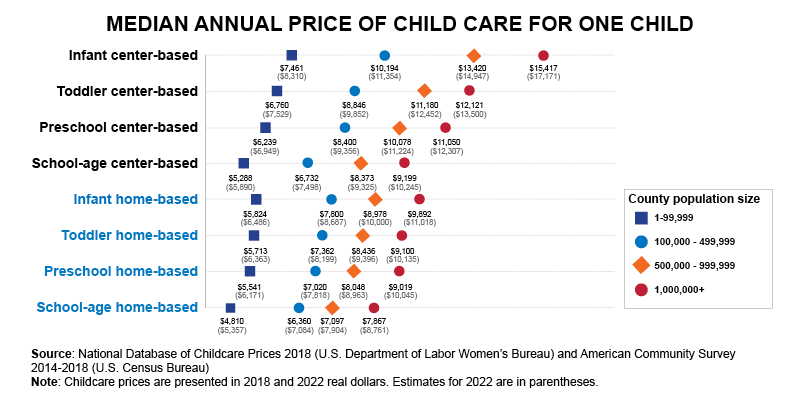
The prices in the graphic above, sourced from the Women鈥檚 Bureau report, are the cost for one child. When accessible and affordable child care isn鈥檛 available, finding and keeping employment is more challenging, which can lead to the cycle of poverty, instability, and stress persisting.
Diversion programs. (EDP) requires landlords to participate in a 30-day mediation with tenants who owe less than $3,000 in back rent before pursuing a formal eviction. It began as a city pilot initiative and was into a national exemplar of eviction prevention, with of cases reaching a settlement or an agreement to continue negotiations beyond the mandated 30 days. The program has been incredibly beneficial to Black women raising children in Philadelphia, where, according to, 74 percent of evictions involved a Black tenant, 70 percent involved a woman, and 50 percent involved a parent or caretaker.
Philly鈥檚 EDP program is bolstered by being coupled with rental assistance. Between May 2020 and January 2023, Philadelphia鈥檚 Emergency Rental Assistance Program distributed almost $300 million in federal, state, and local emergency COVID-19 relief funds to more than 46,500 households, according to .
This program was in former Philadelphia city council member Helen Gym鈥檚 mind for quite some time before she sat down to write the legislation. She never forgot how evictions influenced her experiences as a teacher decades prior. 鈥淚'd have fourth, fifth, and sixth graders who would be there one day and not be there the next,鈥� Gym said in an interview with me this summer. 鈥淎nd it wasn't like I got a notice鈥擨 was often told by another 10-year-old in the class that the family had been evicted and that student would no longer be showing up in school.鈥�
Robust rental assistance programs. During the pandemic, emergency rental assistance programs distributed . Most of these programs are now due to a lack of funding, and evictions are back to pre-pandemic levels in many places across the country. The relationship between rental assistance and eviction diversion is critical鈥攁nd Philadelphia鈥檚 coupling of the two is a prime example of how it changes the dynamics in landlord-tenant mediations. Bluntly, the possibility of a landlord getting back rent paid compels them to participate in the diversion program. Most importantly, it allows a tenant to stay housed.
鈥淲e still see a dramatic reduction in evictions even without rental assistance, but [the diversion program] works its best [with assistance],鈥� Philadelphia Councilmember Jamie Gauthier told me. 鈥淲e're able to get the best outcomes. We were able to resolve almost all mediations and disagreements between landlords and tenants when we [had] access to plentiful rental assistance.鈥�
鈥淒uring the pandemic, we were able to reduce evictions in Philadelphia through EDP by 75 percent鈥攁nd [federal] funds were a huge, huge piece of that,鈥� she added.
Rental assistance programs aren鈥檛 perfect and require an infusion of money and care to continue functioning. Some local housing agencies sent , for instance, which resulted in some landlords not getting paid promptly or at all鈥攁 bureaucratic disaster that makes them less likely to be patient with tenants during the application phase for the funds. On a larger scale, , which put millions of tenants' housing in limbo.
Immediate sealing of eviction records. According to the , 鈥淓viction records keep individuals and families locked in a cycle of poverty; force people to live in unsafe housing; and cause homelessness and a host of other collateral consequences.鈥� The 鈥淪carlet E,鈥� as it鈥檚 called, can follow renters for years after an eviction case goes to court鈥�. Automatic sealing or expungement protections are active in as of fall 2023. Some jurisdictions seal records for all types of eviction records, while others will only lock records in particular circumstances. Arizona, for instance, will only seal eviction records in cases filed for back rent or noncompliance with a lease.
However, automatically sealing all eviction cases upon filing would protect the most vulnerable tenants by reducing their chances of experiencing housing instability in the future by preventing the 鈥淪carlet E鈥� from being attached to their records in the first place.
Universal right to counsel for all tenants facing eviction. Legal representation is only guaranteed for defendants in criminal cases, not civil cases like eviction proceedings. Only 1 percent of tenants have legal representation in an eviction case compared to . (Often, the landlord鈥檚 attorney shows up in their place, allowing the landlord to avoid the stress of getting to and from court.)
Right-to-counsel laws have tangible benefits for those facing eviction. According to the National Low Income Housing Coalition, tenants with legal representation are to stay in their homes, avoid the 鈥淪carlet E鈥� stigma, and receive extended time to vacate the property if the court rules against them.
Kansas City allocated funds from the American Rescue Plan to implement a right-to-counsel ordinance鈥攁 decision that slashed evictions by 鈥攆ollowing a campaign launched by civil rights-oriented organizations, including KC Tenants, Stand Up KC, Missouri Workers Center, Heartland Center for Jobs and Freedom, and others. Kansas City is now allocating city funds to run the program because it鈥檚 been so successful. Only have these right-to-counsel laws.
In Washington, D.C., six nonprofits, 19 private law firms, and the D.C. Access to Justice Commission have been working together to offer free legal representation to tenants during eviction proceedings 2023. (In late 2023, The District of Columbia has yet to codify the right-to-counsel.)
Guaranteed income for low-income Americans. Unlike a universal basic income, guaranteed income takes an equitable approach by . The goal of a guaranteed income is to create an 鈥溾�� that prevents people from living in poverty and addresses historical and systemic barriers that cause economic hardship. According to Ms. Magazine, this measure could be :
By prioritizing Black women, guaranteed income has the potential to make a difference for those struggling the most, and alleviate some of the racialized disadvantages low-income people of color face. In 2021, when parents received monthly payments through the expanded child tax credit (CTC), by around , with the CTC reaching more than 61 million children.
But in January, after the , low-income Black and Latino families were hit hard: The childhood poverty rate rose from 12 percent in December to 17 percent in January鈥攁nd soared to over 23 percent for Latino children and .
Guaranteed basic income could bode well for reducing evictions since such a program would enable people to better afford housing.
Universal care infrastructure. Building a universal care structure is one part of a broader network of care reforms that would aid in preventing children and their families from being evicted in the first place. This includes but isn鈥檛 limited to culturally-competent ; ; and .
The need is urgent, and the benefits are immense. The U.S. invests in child care compared to its peer nations, which leaves families with a bill that is too high for most. The Women鈥檚 Bureau report found that child care costs in every county in the United States exceed the affordability threshold of seven percent of family median income. Infant care costs more than in-state college tuition in more than 25 states. Parents are paying as much or more than their rent or mortgage for this level of child care because it takes a lot of people to provide adequate child care. Depending on state regulations, one teacher can take care of as many as 30 kindergarteners. Still, teacher-student ratios are much lower for younger children, with one teacher only being able to care for four, five, or six infants or toddlers at a time. Despite the demands on their labor and the skill set required, many child care providers and teachers make poverty wages.
Although the federal government does provide states with funds to help very low-income families pay for child care, the program is woefully underfunded. Publicly funded child care subsidies must be retooled to reach the eight million children who qualify for them. Right now, the money , a mere 25 percent of qualifying kids.
An affordable, high-quality, universal child care infrastructure with a well-paid, well-trained care workforce is urgently needed for families with young children. The money to kick start this effort exists: for instance, many states and localities haven鈥檛 allocated or spent all of from the American Rescue Plan鈥攎oney that must be allocated by the end of 2024* and spent by 2026.
While this isn鈥檛 enough funding to build and sustain a universal care infrastructure, it is a starting point to show what鈥檚 possible.
The eviction crisis in America has far-reaching repercussions, especially for Black women and their families. The intersection of racist policy, eviction, and inadequate access to child care has helped craft a dire reality for the health and well-being of Black communities. Solutions to this problem exist, but they require both immediate and long-term attention. Programs like Philadelphia鈥檚 Eviction Diversion Program, universal right-to-counsel laws, guaranteed income, good jobs with living wages and reasonable hours, and family-supportive policies would significantly reduce the number of annual evictions and thwart the subsequent harmful effects. Building a robust and universal care infrastructure will also play a pivotal role in preventing many evictions from occurring in the first place. It's time for policymakers to reevaluate and realign their priorities, ensuring everyone, particularly the most marginalized, has access to safe, affordable, stable housing.
*A previous version of this post stated that ARPA funds needed to be allocated by the end of 2023. They must be obligated by December 31, 2024.
Senior Writer and Editor, Better Life Lab