Brigid Schulte
Director, Better Life Lab

Patricia Moran still opens Creative Learning Center, a family home child care center in San Jose, California, at 6am every morning, and stays open until 6pm in the evening. She鈥檇 initially considered closing after California ordered people to shelter in place; she鈥檚 licensed to care for 14 children, and most of the parents who were able to began working from home and, fearing infection, kept their children home, too.
Then, two parents came and asked her for help. One worked in a grocery store, and another in a nursing home. Both were single mothers and essential workers, and neither qualified for the emergency paid leave laws Congress passed. They couldn鈥檛 quit their jobs to care for their children鈥�11-month-old twins and an 18-month-old toddler鈥攁nd collect unemployment. They had no other options.
So Moran stayed open to care for just three children, for the same reason she first got into child care 22 years ago: She loves the children and wants to help parents in her community.
鈥淭his is my life,鈥� she said. 鈥淭his is what I love to do.鈥�
Moran is one of the rare child care providers staying open amidst the COVID-19 crisis; in a , nearly half of providers reported they had closed down as a result of the pandemic. But open or not, child care programs have been all but absent from congressional bailouts and major relief efforts鈥攁nd Moran doesn't know whether her small business will be able to survive.
Like many child care providers, Moran serves families who pay out of their own pockets as well as low-income families who qualify for public subsidies. The state of California is still covering the cost of the children who receive subsidies, whether they鈥檙e physically present or not. However, the private-pay families keeping their children home aren鈥檛 paying her anything鈥攁nd there鈥檚 nothing in the center鈥檚 contracts compelling payment from parents who want to keep their slots, but aren鈥檛 sending their children in for care.
鈥淭his is something completely new. It鈥檚 a disaster,鈥� said Moran.
She applied for but didn鈥檛 receive one of the Paycheck Protection Program loans Congress created to help small businesses stay afloat: 鈥淭he answer was, 鈥業鈥檓 sorry, but the funds are completely gone.鈥欌�� Already, she鈥檚 had to lay off one assistant and cut hours for another. They鈥檙e parents, too, and she worries about how they鈥檒l pay their bills or cover health costs. Like many providers who operate on razor-thin margins, Moran can鈥檛 afford to provide health care to her assistants鈥攐ne of whom has been in quarantine since her husband went into the hospital with COVID-19. Moran herself is relying on her husband鈥檚 construction job to help pay the bills, and she鈥檚 begun to dig into her personal savings.
鈥淚鈥檓 just taking it day by day,鈥� she said.
Moran knows that family home providers like her, who stay open flexible hours (often late at night or on the weekends), are crucial to families who work unpredictable or alternative schedules鈥攍ike many hourly, retail, and low-wage workers do. Still, staying open while so many other child care providers shut their doors wasn鈥檛 an easy decision. Moran is 60, and her grown sons are concerned about her health. She鈥檚 stopped taking injections for her painful rheumatoid arthritis because they suppress her immune system, stocking up on vitamins instead.
The pandemic has also ramped up the demands of running a family home center. Moran often finds herself on a desperate hunt for cleaning supplies and staples such as milk. She鈥檚 started working overtime and on weekends to deep clean, and she鈥檚 also taking extra precautions: Parents are no longer allowed into the family home center; instead, they sign in on the porch just outside the backdoor. Children and staff get a temperature check every morning, and Moran and her assistant wear gloves at all times. She bought masks covered with flowers and silly clown faces so she wouldn鈥檛 scare the children.
Social distancing with toddlers is, of course, virtually impossible. "How are you going to say, 鈥楧on鈥檛 give me a hug?鈥欌�� Moran said. 鈥淭hey鈥檙e so sweet, and it鈥檚 our job鈥攈olding infants, hands-on preschool activities. But it puts us at risk, and we鈥檙e scared.鈥�
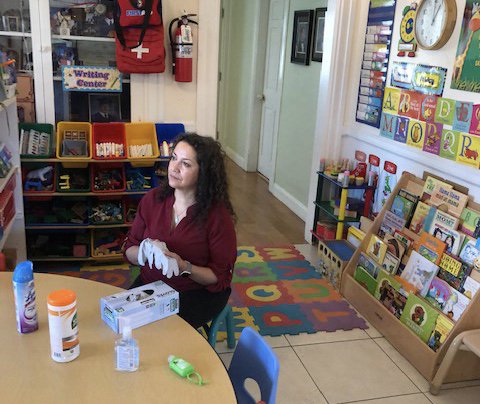
What bothers Moran is that no one seems to notice鈥攏ot only that child care providers are risking their lives to stay open, but that so many may go under. 鈥淚 feel like we鈥檙e invisible,鈥� she said. 鈥淓veryone talks about essential jobs, essential workers. But I don鈥檛 see them saying child care providers are essential workers. We are not in the picture, and that鈥檚 not correct. We are risking our lives.鈥�
Even in the best of times, keeping the doors open is a struggle for Moran. The United States, unlike other competitive economies, has caring for family to be a private responsibility and a labor of love. As a result, the child care system is egregiously underfunded鈥攍eaving providers like Moran limping along, barely able to make ends meet. According to the National Center on Early Childhood Quality Assurance, in the United States closed between 2005 and 2017, and surveyed by the National Association for the Education of Young Children said they wouldn鈥檛 survive if they closed for two weeks without support. Child care workers earn, on average, (Moran estimates that she typically makes about $5 an hour). More than half qualify for public benefits such as food assistance or Medicaid, and most have no benefits like health care鈥攄angerous at any time, but especially during a public health crisis.
In spite of this, parents in the United States than in the 鈥攖he cost of one year of infant care outstrips the cost of in-state college tuition in most states.
The pandemic has strained this dysfunctional and fragmented system to a breaking point. While there are limited public funds to help very poor families pay for the cost of child care, the subsidy covers only one in six eligible children. Congress earmarked $3.5 billion for child care in a recent bailout package, but that doesn't come close to the $50 billion some advocates and Democratic lawmakers have asked for, as well as the cost a recent analysis by the National Women鈥檚 Law Center (NWLC) and partners determined is needed to sustain the child care system during the pandemic. (House Democrats just passed another coronavirus relief package that includes $7 billion for child care, but the Republican-controlled Senate has already deemed it )
Now, as states begin to reopen, there鈥檚 one critical question no one seems to have an answer for: How will people get back to work when so many child care centers and family homes may never reopen? According to a conducted last month, a vast majority of both Republicans and Democrats support providing financial assistance to the beleaguered child care industry. There鈥檚 increasing public support for policymakers to invest in a robust, affordable, high-functioning system鈥攐ne that鈥檚 available to all families that need it鈥攁nd to recognize early care and learning as an irreplaceable public good.
鈥淧olicymakers have an opportunity to reimagine what our system actually looks like, so providers have a living wage, educators can make ends meet, and parents aren鈥檛 struggling with an unaffordable cost of care as we come out of this crisis,鈥� said Catherine White, NWLC director of child care and early learning, on a . 鈥淚f we don鈥檛, we are going to stymie our economic recovery, and women are going to be left behind.鈥�
Moran has just started to care for two more children, which helps a little. And she's been actively working with her union of family home providers to see if, together, their voices will be heard by policymakers.
鈥淭his virus has been a real wake-up call for how bad it is for us,鈥� she said. 鈥淚f the providers close down, who鈥檚 going to take care of the children? People need to realize that we are an essential part of our economic recovery.鈥�
Director, Better Life Lab