Laura Bornfreund
Senior Fellow, Early & Elementary Education

This blog post is the second in a series on Promoting Impactful Teaching and Learning in Kindergarten. You can find the first post, "Teaching in the Ways Kindergartners Learn Best," here.
鈥淜indergarten is a really pivotal year for deep reading brain construction,鈥� as Ryan Lee-James, Director of the , said in the October webinar, 鈥淎 Pivotal Year: Kindergarten鈥檚 Important Role in Students鈥� Education.鈥� In too many school districts, the focus on literacy means required 90-120 minute time blocks that consist of long periods of whole group instruction, repetitive activities to build constrained skills (ex: letter and sound recognition), and worksheets鈥� often isolated from other content areas, such as math, science, and social studies. These approaches run counter to how young children learn best and the approaches discussed in the first post in this blog series: hands-on, exploring their interests and ideas, opportunities to apply their learning through play, and relationships and discussions with adults and peers.
What Lee-James meant by 鈥渄eep reading鈥� is that learning to read is more than decoding, fluency, and simple comprehension; it鈥檚 also learning to think critically and consider other perspectives. Lee-James also reminded listeners that children yearn for connection. To go beyond basic reading and literacy skills, children need opportunities to connect with peers and build oral language and vocabulary, executive function skills, and background knowledge.
In the November webinar on playful learning approaches in kindergarten, Nell Duke of the Center for Early Literacy at Stand for Children talked about the multitude of areas that are important for children鈥檚 literacy development, including other content areas. Both science and social studies content, she said, can be 鈥渜uite predictive of a kid's long-term reading and comprehension success.鈥� Duke highlighted the importance of instructional density, which means addressing multiple areas of literacy at once and using interdisciplinary instruction that develops language, literacy, science, and math skills all through the same learning opportunity. Natalie Walrond, director of the Center to Improve Social and Emotional Learning and School Safety at WestEd, made a similar point in our February 14 webinar on conditions for learning. 鈥淟earning is contextual, and learning is integrated, 鈥� Walrond said.
Are kindergartners experiencing integrated (or interdisciplinary) instruction to deepen learning across content areas?
Instead of deepening and enriching the learning in other content areas, they often get crowded out. According to the teachers in the early grades deliver science learning opportunities on average about 18 minutes daily. In our webinar on March 7, Cindy Hoisington, STEM expert at Education Development Center, discussed why this might be. 鈥淭here's a huge emphasis on literacy in kindergarten and getting children ready to read. We all agree that that needs to be a priority. However, standardized assessments in elementary that exclude science create extreme pressure on teachers, schools, and districts to teach to the test. And this creates a huge imbalance in priorities.鈥�
In my conversations with many teachers, they rarely have time for daily science or social studies. During the webinar, Hoisington added that many 鈥渃hildren only do science once a week, sometimes for 30 minutes, and science has to split time with social studies, also an undeserved content area, making it hard for teachers to make connections and build on children's learning from one experience to the next.鈥� She explained how increasing siloed curricula and classroom schedules make it nearly impossible for teachers to integrate content areas in ways that enable them to leverage children鈥檚 science knowledge in math and literacy learning.
On the same webinar, , explained that early math skills are actually the best predictor of later school success, even compared to early reading skills. 鈥淓arly math predicts later reading skills as well as early literacy skills, and it's probably not just because people know their numbers and shapes, but it's the different way of thinking, reasoning, and logic.鈥� Clements emphasized that this depends on 鈥渉igh-quality math, not boring math.鈥�
What does high-quality (not boring) math and science teaching and learning look like?
Jessica Tilli, a math curriculum specialist for the School District of Philadelphia, who also participated in the webinar, offered a picture of what she hopes kindergarten classrooms look like: 鈥渃hildren experience opportunities to develop curiosity, wonder, sense-making, flexibility, and perseverance. I want to see them doing and talking about mathematics. I want to see those same behaviors in our teachers. We want teachers who are curious and flexible in their thinking. We want them to have a deep understanding of the content they teach. Because the math we teach in the earliest grades is not simple, despite what people think. We need teachers to understand and appreciate the complexities of math in the earliest grades.鈥�
Lauren Solarski, a teacher educator at Loyola University, talked about the importance of math talk and discussing a math problem and the multiple ways it can be solved. 鈥淚t's not worksheets, not memorizing algorithms. It's even more than just numerals. I think we get very stuck on numbers in kindergarten.鈥�
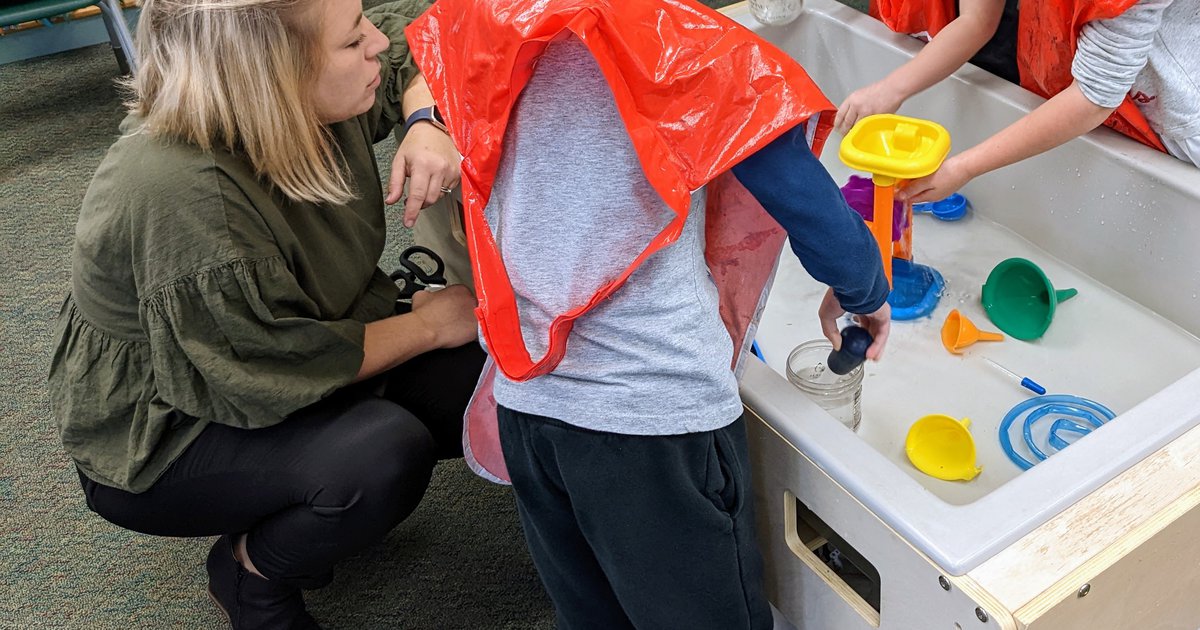
Hoisington spoke similarly about science. She said, 鈥渃hildren learn science best by actively engaging in the practices of science. Kindergarten children鈥檚 natural curiosity about the world around them and everything in it primes them for science learning.鈥� Hoisington noted that science and literacy are better together with children engaging in science talk and thinking with each other. But, Hoisington cautioned listeners that hands-on, and minds-on, science begins with and depends on opportunities for exploratory play, and we know that play has decreased and playful materials have often been removed from classrooms.
When it comes to math and science instruction, though, many children are missing out on the ideal. Clements lamented, 鈥渢he trouble is鈥� most kindergarten classrooms teach children what they already know. We have to move beyond that. We have to start doing challenging mathematics in kindergarten, and that does not mean first grade. No, no, no, it means interesting math where kids are curious and enjoy it, and are engaged in it.鈥� He added, 鈥渨e want children to be active and inventive, creating their own strategies for solving math problems and talking about math. And, we want content that's challenging but achievable. That's what , not just achievable, not just at your level, but challenging to lift you up to new levels of thinking.鈥�
Authentic science and math teaching requires viewing all children as capable of doing, thinking, and learning science and math. Panelists repeated this sentiment. Chih-Ing Lim, co-director of , discussed resources for tackling the biases that hold students back in STEM.
Of the shifts required for high-quality math and science learning, Hoisington said a big one is viewing the teacher as a co-explorer, facilitator, or reflection leader, rather than as a kind of 鈥渟age on the stage.鈥� This 鈥渞eally goes up against a perspective deeply embedded in elementary school culture and remarkably persistent.鈥�
You鈥檒l find research and resources on early science and math teaching and learning here. And visit our Transforming Kindergarten collection page for more on this series, webinars, and other K-3rd policy content.
Enjoy what you read? Subscribe to our newsletter to receive updates on what鈥檚 new in Education Policy!
Senior Fellow, Early & Elementary Education