Austin Adams
Communications Manager, Open Technology Institute

How can schools attract students to public interest technology? This question is one that鈥檚 being posed to PIT-focused faculty across the Public Interest Technology University Network. Conversations around the issue have a common theme: Students are very interested in public interest tech, but only after they hear about it. Before that, however, they typically don鈥檛 know that PIT exists, or can鈥檛 see how it aligns with the majors and career choices they are interested in pursuing.
Rev. Dr. Kathleen M. Cumiskey of City University of New York鈥檚 (CUNY) College of Staten Island (CSI) is using her 2020 Network Challenge grant to develop a solution to this problem. The best part: It leverages CSI鈥檚 relationships with the community. Today, the grant is helping CSI recruit a diverse group of local high school students for an intentional learning community centered around PIT.
Run through CSI鈥檚 St. George extension campus, which is housed in a low-income, ethnically diverse North Shore neighborhood, the focuses on 鈥渃reating real, tangible workforce development slash college and career pipelines from area high schools and underserved communities right into CSI,鈥� says Cumiskey.
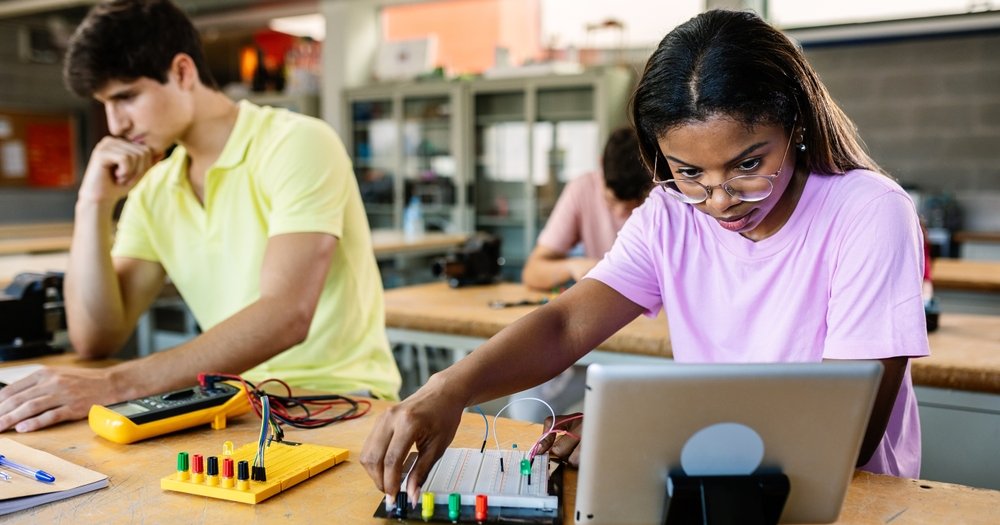
Working with feeder high schools on Staten Island, CSI selected 24 high school seniors for the program. The students were accepted to CSI, given an online orientation, and entered their freshman year of college enrolled in a slate of general education classes infused with a focus on PIT.
Courses include familiar fare for first year college students鈥擡nglish composition, psychology, civics, philosophy, media literacy, and intro computer science. However, CSI students were also introduced to PIT, with professors creating new modules to bring PIT into each class. In civics, for example, students applied PIT principles analyzing the ethical implications of technology to the industrial revolution, examining how society and labor were impacted by new technologies and rapid changes in production.
鈥淥ne of the things that is truly unique about our program鈥� is that we鈥檙e not starting with students who have any interest in computer science or engineering or math,鈥� says Cumiskey. While most students are interested in the humanities and the arts, the program encourages them to consider their career goals through the lens of PIT, she says.
鈥淚 have a lot of creators, I have a lot of innovators, I have a lot of students with the entrepreneurial spirit,鈥� Cumiskey says. Students are starting online businesses, building social media presences, and doing online activism, but don鈥檛 yet see themselves as technologists. 鈥淭hey have a focus on social justice, have an activist orientation, and don鈥檛 realize they鈥檙e doing PIT,鈥� she adds.
Through PIT-focused education, Cumiskey hopes the program enhances whatever traditional career path a student might take, in addition to creating new interests and opportunities for those who are less sure of their future. And since the program also values the spirit of entrepreneurship, it鈥檚 helping reframe the idea of a self-directed, self-made person as someone who cares about social change, rather than simply developing products that make money.
鈥淚f you think about activism and citizen journalism, even though there is a collectivist spirit when something goes viral or there鈥檚 a hashtag, usually it takes one brave person to create that content, or to generate that position, or to have that presence of mind, to be able to see things in a certain way. A lot of times I talk to my students about cultivating yourself as an instrument for change,鈥� she says.
To date, 17 of the original 24 students completed the first year of CSI鈥檚 PIT program鈥攁bove the school鈥檚 average retention rate, and a figure faculty are proud of given the unique challenges low-income students face鈥攅specially during COVID-19 and a completely remote start to college. During their second year, students will have access to new courses in digital media and public policy, can pursue internship opportunities, and will learn about user interface and user experience. CSI is also connecting PIT students to peers at fellow Network member Howard University via a mentorship program and student club. That collaboration arose through PIT-UN.
The club and peer mentorship will focus on PIT, with a specific focus on racial equity and social injustice. Cumiskey compares the program to a lab space, where people can discuss and study examples of incidents where they experienced technology in a biased way, as well as new ideas on how we can use technology to educate people, fix broken systems, and create radical change.
As CSI recruits its second cohort of students and prepares current students for another year, a final goal sits on the horizon for some in the program: a major in Public Interest Technology. Current PIT students at CSI will be able to matriculate as Public Interest Technology majors in their final year, at which point the major will then be available to the student body at large.
Cumiskey says that COVID-19 forced the program to adapt and work hard to develop a strong peer support network. Many students struggled with instability before the pandemic, including food and housing insecurity, and only saw these issues intensify as 2020 progressed. In addition to wraparound support for students navigating the difficulties of higher education and creating a strong feeling of community, Cumiskey also points out that providing each student with a laptop free of charge was 鈥渜uite transformative.鈥� At a time when many areas of life were increasingly unstable and difficult, students were at least able to feel secure in having the technology they needed to access online learning and be successful in the program, she says.
Asked to reflect on the success of PIT at CSI and give advice to other schools looking to create a pipeline for PIT students, Cumiskey says that cultivating strong relationships with feeder high schools was one critical step that allowed CSI to find a good pool of students for the program鈥檚 first year.
Cumiskey also acknowledges that explaining what PIT is to students can be difficult. Her advice to others selling students on studying PIT?
鈥淒on鈥檛 be afraid to kind of, be a little bit鈥︹�� she laughs. 鈥淒on鈥檛 be afraid to be a little bit heavy handed in helping to convince students this is what they might be interested in.鈥� Students are often unsure of what they want to do, says Cumiskey, and if you can connect PIT to things they鈥檙e already invested in or involved in, it may be the nudge they need to commit to a career path they鈥檒l really enjoy.
鈥淭he students that I think are just kind of hanging out, and not really into it? I鈥檒l just start talking to them about something, and suddenly, ba-boom, they鈥檙e just so into it. That鈥檚 been really rewarding this year.鈥�
Communications Manager, Open Technology Institute