Bringing More Diversity to the National Security Arena
The midterm elections, on top of so much else, have underscored Americans鈥� desire for a shift away from how Washington politics has long been run鈥攁nd by whom it鈥檚 long been run. More specifically, Americans have made it clear that the country鈥檚 national leadership ought to reflect the myriad voices and lived experiences of its citizens. The midterm elections have ushered in the most diverse Congress in history, with a record number of women, LGBTQ citizens, veterans, Native Americans, and people of color winning their races. Take the fact that the 116th Congress will soon have two Muslim women and two Native American women serving in its halls for the first time. This Congress will also be , with greater Millennial representation from women like Alexandria Ocasio-Cortez, the popular 29-year-old Congresswoman-elect of New York.
And yet, as the country considers the opportunities opened up by this more diverse political leadership, it鈥檚 important that it also ask: What might this mean for America鈥檚 national security establishment? The incoming Congress looks more like the America it serves, but our similarly tasked U.S. national security establishment continues to struggle to look and do the same.
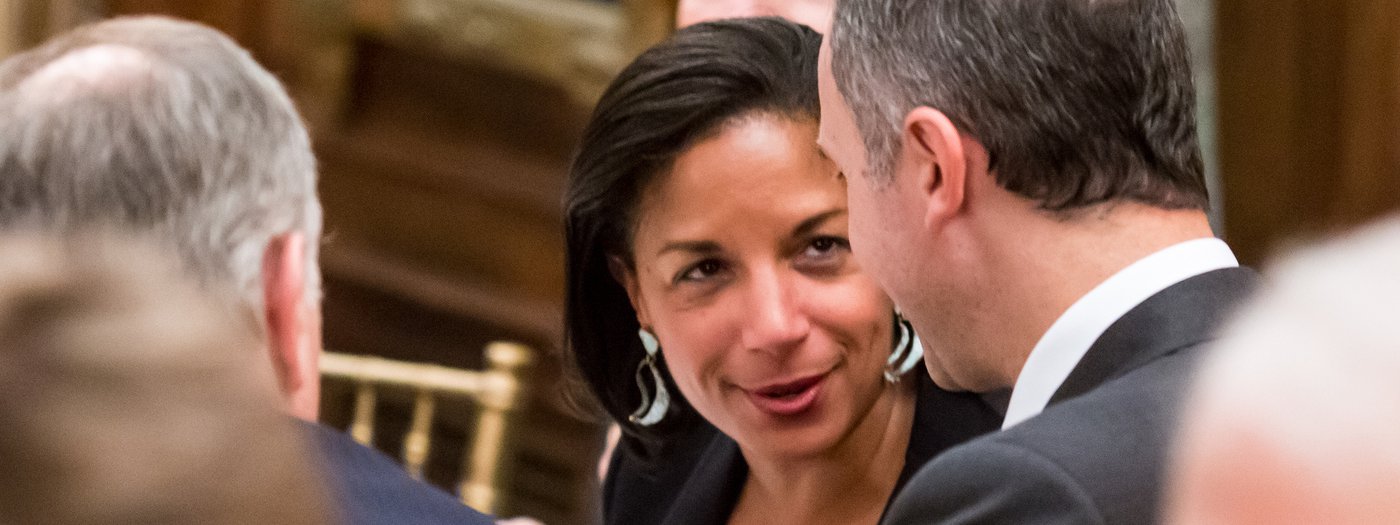
Skeptics might be thinking: Why does this matter? During a May 2016 commencement address, former National Security Advisor Susan Rice described the field as 鈥�.鈥� Crucially, a monolithic community鈥攊n thought, experience, and background鈥攈as consequences. For one thing, it limits the United States鈥� ability to understand and respond to global challenges. A diverse community is better equipped to develop policies to counter global threats of the 21st century by and bringing to bear the innovation inherent in diversity.
In addition, not addressing the majority-white ranks of America鈥檚 national security establishment could hurt America鈥檚 credibility as a global leader: It鈥檚 well known that the United States takes great pride in being a multicultural nation, but when our national security ranks don鈥檛 reflect that diversity, it weakens the very ideals and values that we, as a country, have long been touting to other parts of the world. According to the , minorities represented only 22 percent of the overall officer corps in the military鈥攆ar less than the 40 percent of the enlisted force. The act also recognizes that many racial and ethnic groups remain stuck in low- and mid-career positions in the State Department. It points out that though black Americans represent 15 percent of the total State Department workforce, they represent only 6 percent of the Foreign Service.
Regrettably, there鈥檚 been no real improvement in the diversity of the higher ranks of the national security establishment in recent years. And, meanwhile, America鈥檚 leadership continues to be confronted with emerging national security threats that affect us at home: trade wars, global conflicts, violent extremism, climate change. The inclusion of diverse voices in conversations around these issues鈥攐ften centered on far-away lands and people 鈥渘ot like us鈥濃�攊s important for understanding the impact of our decisions on others, and for harnessing the collective experiences of our citizens. For instance, Muhammad Fraser-Rahim, the executive director of Quilliam International, a counter-extremism think tank, provided an to The Hill earlier this year on how the black American Muslim community, due to 鈥渁 decades-long tradition of inclusiveness, moderation and coexistence with those who are non-Muslim 鈥� [has] a wealth of information and problem-solving experience that has the potential to create effective, operational strategies for long-term successes in counter-terror [in] [Western] [societies].鈥�
More diversity gives young people a kind of permission鈥攁n ability to believe that they, too, have a part to play in national security.
There鈥檚 also something to be said about the place of role models鈥攖hat future generations of Americans with minority backgrounds entering the national security arena have people like them to look up to. At the moment, there are no equivalents to, say, a Susan Rice or a General Colin Powell in the current administration. There鈥檚 value in young Americans being able to see, literally, more examples of individuals from diverse backgrounds working and succeeding in this line of work鈥攁t the highest levels. It gives young people a kind of permission鈥攁n ability to believe that they, too, have a part to play in national security. In a similar vein, having more diverse voices in our national security ranks may ward off the ability of adversaries to sow discord by exploiting divisive narratives around the United States鈥� lack of representation. Recall when roughly were used to exploit racial tensions in the lead-up to the 2016 U.S. presidential elections. Such threats, again, highlight the importance of having individuals with the right skills and sensibilities address these sorts of threats in the future.
So, how do we move things forward?
First, U.S. agencies could more rigorously implement the National Security Diversity and Inclusion Workforce Act of 2017, which seeks to codify former President Barack Obama鈥檚 2016 Presidential Memorandum Promoting Diversity and Inclusion in the National Security Workforce. It demands high-level leadership and accountability to integrate strategic inclusion as a national security imperative in policy development and workforce management, among other measures.
Second, U.S. agencies and think tanks could coordinate outreach at women- or minority-serving institutions, or partner with organizations like Women of Color Advancing Peace and Security and the Women鈥檚 Foreign Policy Network to develop networking and mentorship opportunities.
Third, within the bounds of the law, U.S. agencies and national security organizations could consider implementing the NFL鈥檚 鈥溾�� when interviewing candidates. The rule requires interviewing at least one person of color for every top staff position opening. The Democratic Senate and House Caucuses have encouraged Democratic members of Congress to adopt these policies in their offices, with the Senate Democrats having formally included the Rooney Rule in caucus rules in. (Of course, none of this should come at the expense of retaining and supporting mid-level staffers.)
There are a number of talented national security and foreign policy experts across diverse communities. We encourage the newly elected members of Congress, the executive branch, non-governmental organizations, and other organizations in or feeding U.S. national security to hire, consult, and otherwise engage diverse national security and foreign policy experts. As Colin Powell in 2002: 鈥淥ur diversity is not a source of weakness; it is a source of strength, it is a source of our success.鈥� Let鈥檚 celebrate emerging, diverse national security experts, foreign policy professionals, and entrepreneurs doing great work in their respective spheres. Let鈥檚 learn about them, promote their work, and listen when they bring new and different perspectives.
As America navigates its role as a global leader in the decades ahead, it is important to highlight the accomplishments of the next generation of black American national security and foreign policy leaders. Meet 35 of these leaders.
More 麻豆果冻传媒 the Author
Issues
Programs/Projects/Initiatives
Related

Men and Care: Key Findings and Recommendations from the Better Life Lab

Care Innovation Hub

To Appeal to 鈥淢iddle America,鈥� Creatives and Studios Should Focus on Authentic Work, Family, and Care Stories