More Meaningful Assessment for Dual Language Learners

In education policy, school assessment policies play a role a bit like salt plays in health and cuisine. Tests lurk in the background of every conversation, always there, always implicitly of the body politic. On the one hand, too much testing ruins the main instructional 鈥渄ish.鈥� But if there鈥檚 not enough, things get so bland that聽educational quality suffers.
This is why assessments are controversial, even though they鈥檙e . This is especially true where dual language learners (DLLs) are concerned. We have limited, and often confusing, . And because DLLs鈥� multilingualism leads them through unique developmental pathways, it can be difficult to design tests 鈥� and testing policies 鈥� that reliably and accurately capture what DLLs know and can do.
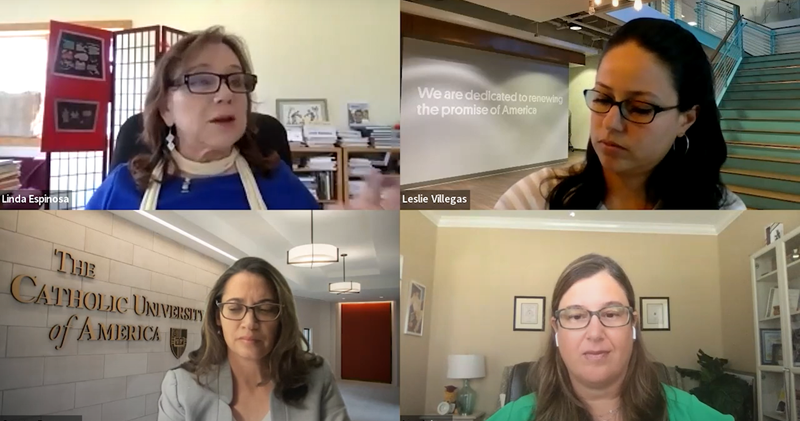
A commissioned by the Heising-Simons and McKnight Foundations speak directly to this challenge (Disclosure: these two foundations also support 麻豆果冻传媒鈥檚 Dual Language Learners National Work Group). The briefs synthesize current challenges and promising approaches to supporting DLLs generally, including the area of assessment. Importantly, each brief offers recommendations tailored to different audiences, including teachers, administrators, policy makers, policy 鈥渢hinkers,鈥� and multilingual families. The ideas stem from by Dr. Linda Espinosa presented at the National Research Summit of Early Care and Education of Dual Language Learners in 2014.
Espinosa calls for early educators to assess DLLs in both English and their home language(s). Teachers will severely underestimate the abilities of DLLs if they only allow these children to demonstrate skills and knowledge in their least-proficient language. Further complication arises from the fact that many DLLs 鈥� abruptly immersed in English-only early education settings 鈥� will undergo a nonverbal or observational period. At this stage, a child may not verbalize or produce any language, but they are still actively listening and learning new sounds and features of English. If educators are unaware of this phenomenon, they may inaccurately gauge a DLL鈥檚 abilities using English-only assessment. So, documenting home language skills at the outset can help distinguish between a silent-period and an actual language delay.
Unfortunately, early educators rarely assess DLLs’ native language proficiency. Few publicly funded pre-K programs in the first place, let alone assess their abilities in their native tongues. This failure to collect data on home language proficiencies sets in a motion what researchers have termed a 鈥溾�� before a DLL even reaches kindergarten. That is, education systems too often focus on what DLLs 肠补苍鈥檛 do with (the English) language versus the wealth of what they can.
If education leaders are ever going to assess native language strengths, the first years of a DLL鈥檚 education are a uniquely important time to do so. As a DLL gets older and enters later grades, some experts that it doesn鈥檛 make as much sense to assess native language, since instruction may not be in that native language. By contrast, the first years of early education are the best time to establish a baseline of DLLs鈥� language abilities compared to non-DLL peers. At this point, all students are budding language learners, entering formal schooling with the linguistic skills their families and communities have imparted to them. The particular language matters less than their linguistic development in general. And if the DLL has developmental lags in her home language at this early stage, poor academic progress likely results from factors that go beyond English learning.
If a DLL enters school lagging in her home language, a variety of factors could be involved. First, developmental delays in home language may suggest a learning disability meriting further screening. However, screeners for disabilities 鈥� like home language proficiency assessments 鈥� must occur in both of a DLLs鈥� emerging languages to gain the fullest picture. And to ensure the accuracy of these tests鈥� results, schools need more trained, bilingual staff 鈥� who are often already in . Moreover, it can be a challenge to find appropriate screening tools, as most tests have not been normed for young bilinguals but rather monolingual, middle-class, native English-speaking children. Even with appropriate聽tools, differentiating between language differences and language delays is . Using numerous sources of information is key. This can include student observations, anecdotal records, work sample portfolios, and interviews 鈥� all of which are age-appropriate ways . Consultation with multiple family members and speech therapists is also a critical component.
Secondly, developmental delays in language may not necessarily stem from a learning disability but rather a DLL鈥檚 family background. Specifically, poverty is a powerful factor, and it impacts DLLs from different racial/ethnic backgrounds more than others. For example, Espinosa notes that DLLs from Asian/European-language speaking homes are 1) less likely to be poor, 2) achieve at higher levels than Spanish-speaking DLLs in math and reading proficiency, and 3) perform as well or better than English-speaking peers in these areas. And Spanish-speaking DLLs who are not in the lowest income quintile achieve in math and reading at rates comparable to English-speaking, monolingual peers. For wealthier DLLs, it appears there is not much of an 鈥渁chievement gap鈥� at all.
In other words, most lags in DLL academic performance aren鈥檛 solely a result of second language acquisition 鈥� but how that process intersects with poverty. And poverty is often a proxy to get at another factor: how families use language at home. And how families use language at home can vary based on parents鈥� education levels, different familial and cultural beliefs, and limited resources. It’s a complex web of variables.
The familial considerations, in particular, are vital to understanding the larger context of DLLs鈥� abilities. At the school or classroom level, educators do well to ask about a DLL鈥檚 family language environment in specific terms. For example: how often do parents converse with their child daily? Do they have a bedtime reading routine? Can they access language-building games or books? Do work schedules limit time for interactions? What beliefs parents have about their role in supporting learning? All of these questions elicit key insights to design targeted responses to real, individual children 鈥� that may or may not track with our general expectations for how low-income families interact with their children.
This is the approach that Dr. Zoila Tazi-Morrell argues for in her recently in pre-K settings. To build the most accurate, useful profile of a DLLs鈥� abilities, educators need to consider the full scope of a DLL鈥檚 social history. According to Tazi-Morrell, this starts by holding detailed interviews with the DLL and her family. And after this data has been gathered, it 肠补苍鈥檛 鈥渟it in a file somewhere,鈥� she says. Rather, staff members must disseminate the information widely so that the DLL鈥檚 teachers can meaningfully design instruction to meet the student鈥檚 needs.
So: to assess DLLs, we need to broaden the pool of data points we examine. The trajectory of language learning is ; there is no 鈥渙ne-size fits all鈥� standard of how a DLL 鈥渟hould鈥� progress. It鈥檚 therefore critical that we take a comprehensive approach to capturing DLLs鈥� emerging linguistic and academic abilities in all the languages they speak. And while such assessments are helpful 鈥� and we need to develop and more consistently use ones that are valid, reliable and normed on DLLs 鈥� testing alone is limited in what it can reveal about a DLL and her language history. These (multilingual) metrics should be complemented with additional insights from family and staff. With this holistic approach, we can move towards more assessment policies for DLLs that 鈥� like good dose of salt in a dish 鈥� are valuable in the right balance.
鈥�
This post is part of 麻豆果冻传媒鈥檚 Dual Language Learners National Work Group. . To subscribe to the biweekly newsletter, click here, enter your contact information, and select 鈥淓ducation Policy.鈥�”
More 麻豆果冻传媒 the Author
Issues
Programs/Projects/Initiatives
Related

In 2026, States and Congress Will Need to Mitigate the Damage to PreK-12 Education
Identifying English Learners in Pre-K: State Policies, Rationale, and Practices

What to Know 麻豆果冻传媒 Education Funding in Biden鈥檚 Budget