
Tim Robustelli
Deputy Director of Housing and Climate, Future of Land and Housing
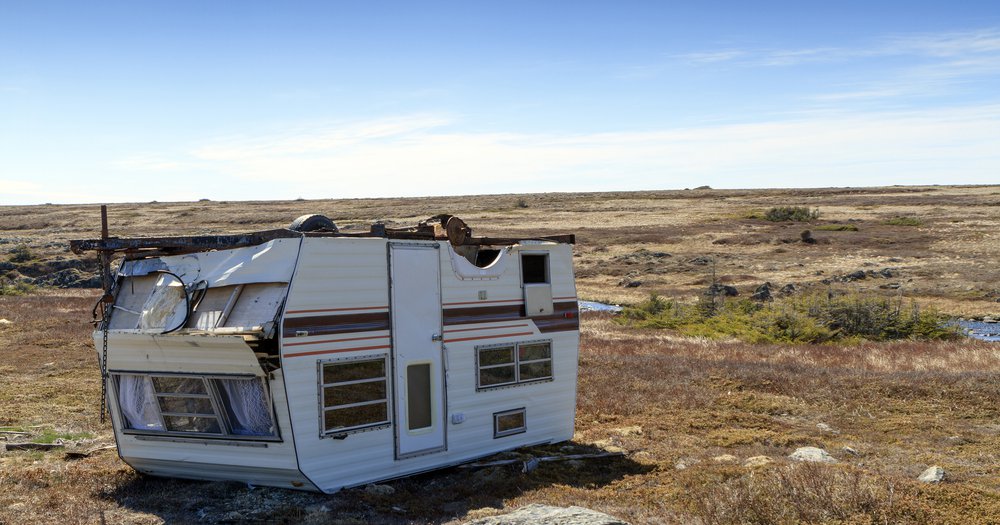
The mention of tornadoes often brings to mind Dorothy and Toto, flying cows, and helpless red barns on the Great Plains. It鈥檚 not called Tornado Alley for nothing.
But due to shifting weather patterns, tornadoes are now striking 鈥擫ouisiana, Mississippi, Alabama, and Georgia鈥攎ore frequently. These storms in so-called 鈥淒ixie Alley鈥� often result in greater fatality rates, as mobile home owners are especially to tornadoes. Even when these marginalized people survive a storm, their mobile homes are often wrecked.
What鈥檚 worse, at this moment of maximum vulnerability, some of these Americans may not be able to receive federal aid for reconstruction, for lack of a way to prove their home ownership.
Dixie Alley states made up four of the top 10 states for in 2017. Many mobile home buyers never receive titles from the seller or from the manufacturing company, and this lack of documentation can block them from receiving FEMA assistance to rebuild their houses鈥攁nd lives鈥攆ollowing a tornado.
We鈥檙e Not in Kansas Anymore
The cause of this change in severe weather patterns is unknown, although theories point to . Dry Midwestern conditions may halt moisture-dependent storms from developing until they travel further east. And the result is deadlier tornadoes.
For instance, a powerful EF4 tornado ripped through the rural town of , on March 3, killing 23 people and injuring dozens more. Two months later, on April 25, an EF3 tornado struck , killing two people and causing widespread damage.
While tornado-related fatalities are certainly not limited to Dixie Alley, academics and officials throughout the region highlight a number of unique circumstances that can contribute to higher death tolls.
Factors such as larger populations and , as well as the prevalence of and , are all cited as fueling more deaths. Tornadoes in Dixie Alley also tend to last longer and cut larger paths of destruction. Finally, various parts of the South contain a higher share of than other parts of the country.
Trailers and Twisters
According to a by the Manufactured Housing Institute, at least 22 million Americans now live in mobile homes. Due to the ongoing , this number is projected to .
Following the adoption of a , mobile houses are now better constructed, and they must pass rigorous tests related to structural integrity. Yet a recent found that the likelihood of a tornado-related fatality is 15-20 times greater in a mobile home than in traditional housing. That鈥檚 because rural and poor mobile home owners throughout the South often lack proper access to warning mechanisms and storm shelters.
Many mobile homes are also not properly to the ground, which allows tornadoes to easily lift up or roll the structures. So even when mobile home owners flee to safety, they often return to a .
And for some, the problems may only begin here.
Southern Inhospitality
Rebuilding a home destroyed by a tornado starts with the title. Homeowners usually must present this key document to access FEMA aid funds or receive insurance.
The problem is that many mobile home owners countrywide don鈥檛 have a title to their home. For example, the California Department of Housing and Community Development that 160,000 mobile home owners throughout the state lack a proper title and registration. Sometimes, a buyer can鈥檛 get in touch with to ask for the title. Or the will neglect to mail ownership documentation following a purchase.
So what happens when a Dixie Alley tornado destroys the mobile home of an individual without a title?
If we鈥檙e to take any hints from recent disasters in the United States, the likely outcome is troubling. Following Hurricane Maria in , roughly 60 percent of applications for FEMA aid were denied because individuals couldn鈥檛 prove home ownership. Mobile home owners in were denied federal assistance following the massive 2017 and 2018 wildfires鈥攁ll because they lacked titles or possessed fraudulent documents.
The potential inability for Southern mobile home owners to prove ownership and receive aid would the fact that many live in underprivileged communities. The poor are generally less resilient when a disaster strikes, and many are unable to rebuild on their own.
Using flexible approaches and emerging technologies, mobile home owners in Dixie Alley might be able to better document their property rights.
Declarations and Data Trails in Dixie Alley
Property rights insecurity is often an in the United States. Sometimes, it reveals itself only after disasters such as Hurricane Katrina or the Camp Fire in Paradise, California鈥攚hen Americans need to prove home ownership to receive aid, but can鈥檛. Yet other options are available.
In the chaos after Hurricane Maria, when FEMA realized that the majority of its applicants lacked titles, it began accepting as proof of home ownership. A similar method, which might also include neighbors鈥� attestations, heirship affidavits, and legal aid, could be applied to mobile home parks and small, rural towns throughout Dixie Alley. These communities are usually close-knit, and they often have comprehensive support systems and social knowledge.
Alternatively, with the proliferation of smartphones, satellites, and social media platforms, more and more of our lives are leaving a data trail. Google Maps documents where we sleep every night. Uber knows where drivers drop us off. Domino鈥檚 records where it delivered our pizza. It鈥檚 usually all the same place鈥攐ur home.
Emerging digital identity platforms, accessible via smartphones, could soon allow mobile home owners to compile all of this information into a 鈥渢apestry鈥� of alternative evidence to prove home ownership. Financial institutions around the world are already using an individual鈥檚 to help them open a bank account and derive an alternative credit score. FEMA and insurance companies might similarly accept personal data and grant aid.
Shifting weather patterns mean that more and more tornadoes will strike the southeast. In turn, millions of American mobile home owners may struggle with insecure property rights following destructive storms. Aside from the obvious yet difficult task of tracking down titles, innovative approaches and emerging technology can help these marginalized individuals better document property ownership and rebuild.
Tornadoes may always pose a threat to mobile home owners in Dixie Alley. But there鈥檚 no reason we can鈥檛 improve the recovery process and help these individuals return home.
Deputy Director of Housing and Climate, Future of Land and Housing


