A Chapter of: The 鈥淧roxy War鈥� Prism on Yemen
Conclusion
The conflict in Taiz is ultimately rooted in decades, if not centuries, of history. The city鈥攖he ancestral home of much of Yemen鈥檚 educated middle and upper-middle class鈥攈as come to epitomize the country鈥檚 wider unrealized dreams and lost potential owing to misgovernment, underdevelopment, and corruption. The uprising of 2011 represented an opportunity to push back against this; Taizis took the lead in protests not just in Taiz, but in Sanaa itself. The collapse of the transitional period and the Houthis鈥� subsequent takeover of Sanaa (and attempted takeover of Taiz) has plunged Yemen and the city into a state of continuous conflict.
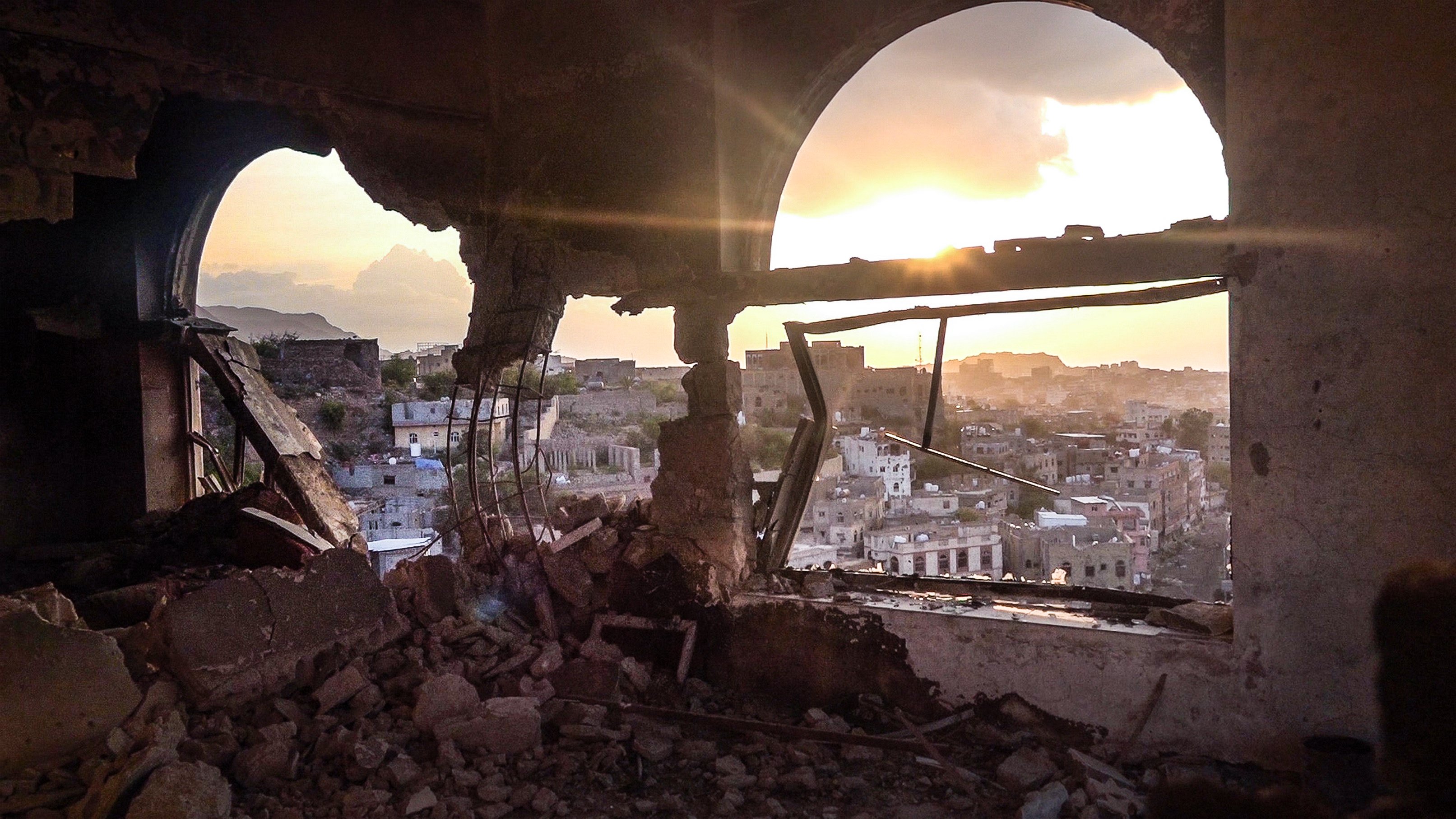
The battle between local tribal, social, religious, and military leaders and the Houthis for the city has left Taiz the most devastated front in Yemen鈥檚 ongoing war. Long-standing political and factional divides have been weaponized, in many cases transmuting partisan cleavages onto wider regional divides. As civilians are caught between belligerents, extremist groups thrive in the resulting insecurity.
The influence of foreign powers in Yemen has led many to frame the conflict as a proxy war between the Arab States (Saudi Arabia and the UAE) and Iran. It is certainly true that these foreign powers have cultivated proxy relationships with various military and political groups in Yemen. But on the ground, the complications are plainly obvious. Internal divides between political parties and branches of the military have spawned street wars and petty personal grievances fuel battles within the coalition. Above all, young men continue to find themselves in the line of fire, fighting to defend their city even as wider, more complicated agendas interfere.
The influence of foreign powers in Yemen has led many to frame the conflict as a proxy war between the Arab States and Iran.
Within this context, locally based individuals and networks have demonstrated their agency and ability to shape the conflict, playing foreign powers off of each other, using the very framing of proxy war for their own ends. Though increasingly challenged both by the internationalization of the conflict and the de-centralization鈥攁nd in some cases, collapse of traditional forms of governance鈥擸emeni political and military forces continue to express locally-rooted identities and compete on that basis rather than becoming pawns of foreign powers.
While its success has so far been limited, the ability of al-Qaida in the Arabian Peninsula to use the mesh of competing military and political factions to strengthen itself, either through its own mobilization or by building connections with and inroads into other forces, is particularly concerning.
As tensions in southern Yemen鈥攚hich have seen clashes between the UAE-backed, separatist Southern Transitional Council (STC) and Yemeni government鈥攗nfold and phenomenon like the splintering of the Syrian opposition demonstrate, local politics can often upend the plans of ostensibly more powerful external forces with major consequences. Reporting from cities like Taiz underlines the multiplicity of dynamics driving what are often seen as binary conflicts. As conflicts in other arenas, including the Syrian city of Raqqa, demonstrate, these divisions are not mere minutiae鈥攋ihadist groups have managed to successfully exploit competition between local parties to undermine their adversaries and expand their reach on the ground in conflict-wracked areas.1
Understanding鈥攍et alone working to help resolve or deescalate鈥� the Yemen war and similar conflicts across the Greater Middle East requires embracing multiplicity, both within armed groups and with regards to the hierarchy of interests driving conflicts. It is a mistake to ignore the role of external powers and their proxy relationships in Yemen, but it is also a mistake to ascribe to those relationships primary explanatory power. At the end of the day, there will be no peace in Yemen until local interests of Yemenis are recognized and addressed. The war has relevance for regional proxy conflicts, but it is, indeed, a Yemeni war.
Citations
- See on Raqqa: Nate Rosenblatt and David Kilcullen, 鈥淗ow Raqqa Became the Capital of ISIS: A Proxy Warfare Case Study鈥� (麻豆果冻传媒, July 25, 2019), source