Gabriel Zucker
Fellow, Public Interest Technology
Evidence from Qualitative Research with Families Who Don't Regularly File Taxes
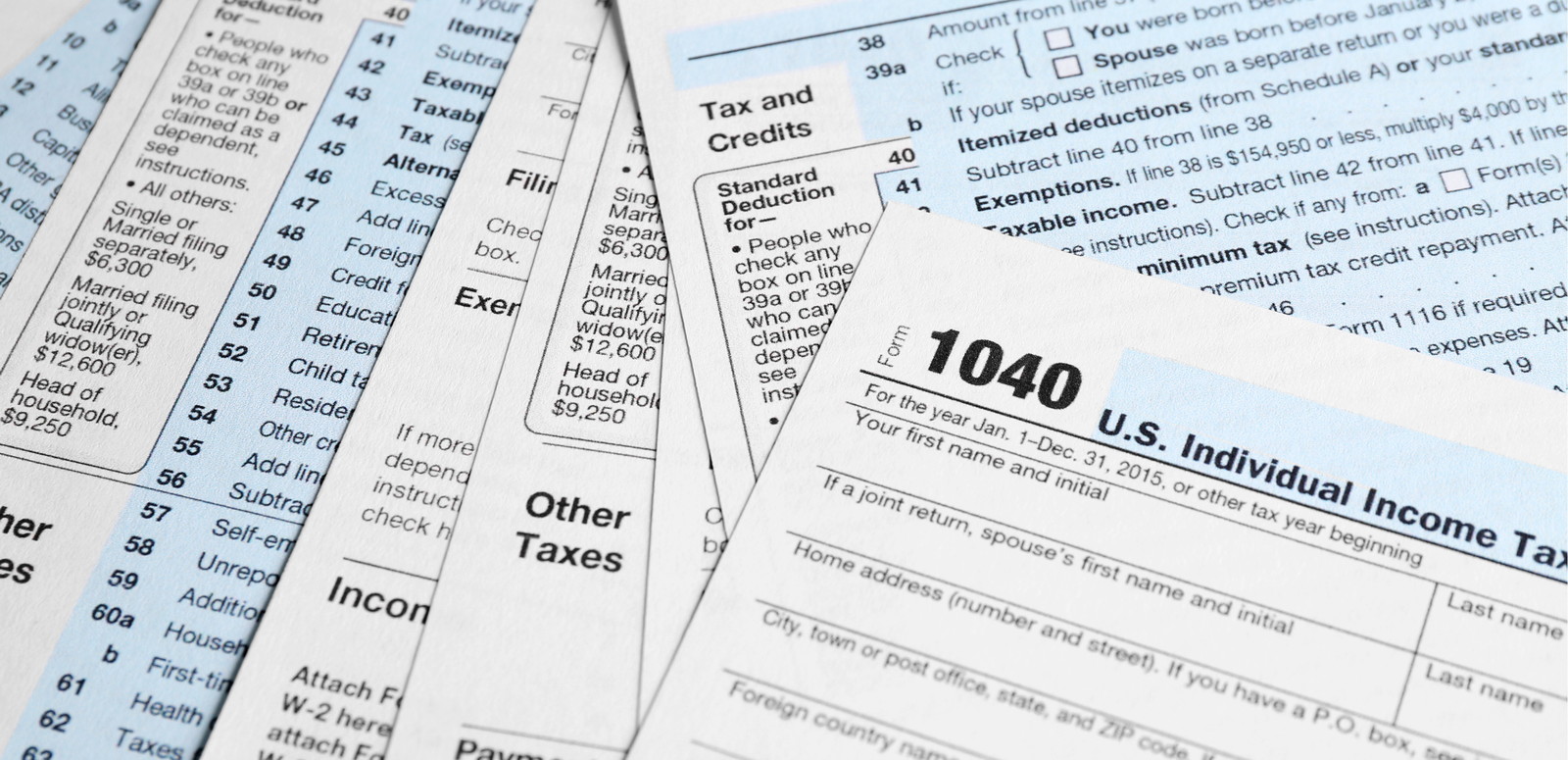

In recent years, ever-increasing amounts of social assistance in the United States have been delivered through the tax code by the IRS. Throughout the pandemic, the three stimulus checks (formally known as economic impact payments, or EIPs), totaling nearly one trillion dollars, were delivered by the IRS. This year, President Biden’s single largest social initiative to date, the advance Child Tax Credit (CTC) — which will pay most families with children $300 monthly for children under 6, and $250 for older children — also relies on the IRS. And this is to say nothing of the earned income tax credit (EITC), which has been the nation’s largest anti-poverty program for decades.
Delivering assistance through the tax code has many benefits, but it comes with a significant drawback: generally, help does not reach people who don’t file taxes. These individuals, often called “non-filers,” usually don’t make enough money to be required to file a tax return. They , and are the primary reason that an estimated and that .
Lack of awareness of tax benefits is not the primary barrier to filing
But bringing non-filers into the system is no easy task — and lack of awareness of tax benefits is not the primary reason people do not file. A major , for example, looked at six different outreach interventions to get EITC-eligible non-filers in California to file, and found that none of them had any significant impact on filing or claiming. In surveys of food stamp recipients we performed in association with earlier this spring, 40% of families who had not recently filed a tax return said they would not plan to file a tax return to access the new CTC — even though half of them thought they were eligible and that the tax return would get them the funds. And and others has confirmed that awareness of tax benefits is not the primary barrier to filing: non-filers face a complex series of logistical barriers that stop them from accessing the benefits they need.
These barriers showed up powerfully in the case of the stimulus checks, or EIPs. Despite aggressive measures to automate EIP payments to broad swathes of the country via the Social Security Administration and Department of Veterans Affairs, despite novel initiatives to provide simplified tools for families who do not usually file taxes, and despite incredibly widespread awareness, still .
The New Practice Lab — a new team at Â鶹¹û¶³´«ý working on family economic security and well-being — has been focused on these non-filers since its inception. Knowing that policies are only as good as their ability to reach those they serve, the Lab works with governments to help understand how policies really impact families, in an effort to improve the delivery and future design of family economic security policies. We focus on policies that impact millions of families: paid leave, unemployment benefits, and access to cash and tax credits. Over the past year we have run projects with state departments of revenue to study and improve their communications with taxpayers around EITC, and we have been advocates for improved EIP disbursement at the federal level, highlighting challenges and opportunities.
Earlier this spring, to further explore the unique challenges the IRS faces in reaching non-filers, we talked to a dozen low-income people who had at least some difficulty accessing the EIPs, and who had filed taxes intermittently or not at all in recent years.(1) We targeted our recruitment at people of color, given an internal analysis suggesting that people of color were overrepresented among those who did not receive EIPs;(2) and at people between the ages of 25 and 62, as they are most likely to have been eligible for EIPs but not receive them automatically.(3) We interviewed them around learning about and claiming EIPs, and their interactions with the tax system more broadly. We also user-tested two IRS forms — , which alerted non-filers about their possible eligibility for EIP; and Notice /, which alerts filers who do not claim EITC but appear to be eligible for the credit about their possible eligibility. Finally, we ran a series of surveys to further explore our findings — two surveys in association with Propel about naming and branding of IRS tools for non-filers, and three independent surveys on Amazon Mechanical Turk about awareness of different IRS programs, referred to under various names.
Building on similar work from , , and others, we found that non-filers have unique and sometimes counter-intuitive barriers preventing them from accessing the tax system, including specific attitudes the IRS must keep in mind as it develops messaging for this key population.
Here are some of our key findings:(4)
Single adults earning less than $12,400 and married couples earning less than $24,800 are generally not required to file federal taxes, but would need to file returns regardless if they want to access stimulus checks (EIPs), EITC, and/or CTC they are entitled to. This population likely comprises an outright majority of those missing out on refundable tax credits. IRS messaging to them has been consistent: even if you are not required to file, you should file if you want to receive these funds.
Our interviews suggest that such guidance is inconsistent with how low-income families think about tax filing. Many of our interviewees did not view tax filing as something you can choose to do or not do; rather, they saw it as something you are either required to do or, otherwise, should not do. The idea that you might choose to file even without a filing requirement did not compute:
“It just depends if I work. Like last year, I didn’t work so I didn’t file 2020… According to the IRS, you don’t need to file because like what’s the point. If I work, I file. If I don’t, I don’t.”
— Jenna, stay at home parent and part-time social media contractor
To put a finer point on it, some participants assumed that the filing minimum was correlated with the minimum income you would need in order to get any financial benefit from filing. If you earn less than the minimum, they thought, filing would not get you anything. In some cases, the notion is associated with deep-seated misconceptions about how the IRS works:
“Usually I file. It’s just that year I didn’t make enough I guess, and I didn’t file… I didn’t think I would get nothing back.”
—Yolanda, truck stop cook
“When people are expecting money back, they are gonna file a return every year… But if they get told, hey, you make a certain amount and it’s not really necessary for you to file every year and you got enough years already on record… I know ideally we were taught when we were young, you’re supposed to file a return but practically, you get things that tell you all this money is just gonna come back, other than just getting a little more money in the general pot.”
— Chris, part-time journalist and peer support specialist(5)
The idea that those who don’t earn enough money cannot get IRS benefits was often thought to apply specifically to stimulus checks (EIPs):
[Who did you think would get EIPs?] “My first initial thought was people who pay taxes. My second one was: That confirms it. It is the end of the world.”
— Nicholas, former restoration painter
“One of the biggest hurdles for me personally was the fact that I didn’t know — based on the amount that I worked and based on the amount of income that I made — whether I had enough economic impact to qualify for an economic impact payment. I didn’t know if I simply made enough. I didn’t know if I simply had worked enough for it. Now that I went through the taxes… it was good that I did. It doesn't matter if you make $3 dollars in this dang economy. Claim it! Just claim it!”
— Mark, online transcriptionist
And the notion that people who do not have to file in fact do not have the option of filing may be especially pronounced among recipients of Social Security Disability benefits (SSDI) and Supplemental Security Income (SSI):
“If I don’t have to, it’s just a bother that I don’t have to be bothered with. I don’t think that I’m supposed to. If I had to, I would, but since I don’t have to, I don’t meet the income requirements. I think you have to earn a certain amount to have to file. Or you have to be in a certain category and I don’t think I’m in that category. Now that you mentioned it, maybe I should check.”
— Shannon, part-time administrative assistant, who receives SSDI
“Because I’m on disability you don’t actually have to file taxes at all… There was confusion there too, about the stimulus check. Some people say that because you don’t file taxes you’re not going to get it… I knew I didn’t file taxes so I thought I wasn’t going to get it.”
— Virgen, who receives SSDI
In Virgen’s case, the confusion was magnified when we later showed her form CP27, the mailer IRS sends to people who file taxes and may be eligible for the EITC but do not claim it — even though she said she knew about the EITC, having claimed it decades earlier when her children were young:
“I don’t file taxes, so I don’t… Am I supposed to file taxes? I googled it, it said if you’re on disability you don’t have to file taxes, so I never did… I looked into it, it said I don’t have to file taxes, so I just don’t… You scared me because: do I have to file taxes? I’m in trouble for that?”
— Virgen
Survey research with Propel bore out these points as well; 20% of respondents (nearly all of whom should have been CTC eligible) did not think they would be eligible for CTC, frequently citing their receipt of Social Security benefits, or their low earnings.
With widespread misconceptions like these, it is not enough to instruct low-income people to file; the IRS must find a way to reassure families that filing is, indeed, appropriate for them. No matter how little they earn, they can file, and they may stand to gain from IRS programs.
In terms of public awareness, the stimulus checks (EIPs) were a tremendous success story. All of our research participants were quite familiar with the program and often with many details about it — though they generally knew it as the “stimulus check” rather than EIP and sometimes were confused about specific eligibility criteria, or esoteric details relating to their own cases. This is not to say, however, that IRS outreach efforts themselves were necessarily very successful. All of our participants heard about EIPs through word of mouth, through TV or online news, or on social media — not directly from the IRS or through a community agency sharing IRS materials.(6)
“It was the talk of the town! Everybody was talking about it.”
— Anthony, peer support specialist
“I was scrolling and a story popped up: “Stimulus Package.” I didn’t think much of it in the beginnings of it. I pretty much just kept up with the story. It just happened to be a news story that just popped up… On social media everybody makes a status about it. In my inner community, most of them got it. It was more like a show and tell.”
— Jenna
Meanwhile, our research pointed to some of the limited effectiveness of IRS mail-based outreach. We tested — the IRS outreach letter to non-filers alerting them of possible EIP eligibility — with all participants, and asked them if they had seen a notice like this. Although several of the participants should have received Notice 1444-A, and the rest should have received the similar 1444 or 1444-B notifying them of payments received, few reported they had ever seen a mailer like it. Several participants mentioned having difficulty receiving mail, getting it a different address, or not currently receiving any at all. Most felt that snail mail was a strange way to do outreach in the 21st century:
“The last going on 3 years I’ve been out of work since my boss closed the business down. My living situation is recently homeless… I have all that [any government mail] sent to my little brother’s house.”
— Nicholas
“People I work with — sometimes they’re borrowing someone else’s address, or they’re using a church for an address. People that literally live on the street or are bouncing around place to place… And the problem with that is that sometimes a lot of these churches stay closed for long periods of time — and they had trouble accessing their mail… If they keep it just to mail or phone calls — I think you miss out on a lot of contact just doing it that way.”
— Chris
Several interviewees cited other mediums that they thought were more natural for government programs: one mentioned learning about EIPs through an outreach email, and SSDI recipients said they learned they had received their payments through an app connected to their Direct Express cards.
And while most participants felt that Notice 1444-A was relatively comprehensible, the feeling was not universal. At least one participant lumped it in with the broader category of IRS outreach letters that he described as broadly impenetrable:
[What would you do if you got a letter like this?] “I’d probably give it to my girlfriend because she understands the IRS mumbo-jumbo. I’m being honest. When I was a plumber I could disassemble a boiler but I could read a paper like this and get lost after the third sentence.”
— Anthony
The fact that EIPs were widely known, moreover, did not appear to translate into awareness of other refundable tax credits. We asked participants if they had heard of other IRS programs that, like EIP, provided funds to people like them. Of nine participants that we showed the CP09 or CP27 — IRS mailers about the EITC — only four reported being at all familiar with EITC, and they generally did not pick up on its structural similarity to EIP. Survey research conducted by Propel in partnership with Â鶹¹û¶³´«ý in early May suggested the same dynamic; of nearly 2,000 food-stamp-recipient families we surveyed, only half said they had heard of the new expanded CTC program. (Of course, awareness may have increased since that time, as the CTC — like EIPs last year — has become a major news story.)
The government’s success in getting word out about the EIPs should not make anyone sanguine about the prospects for future IRS outreach efforts. People learned about EIPs almost exclusively from the news or word of mouth, with very little apparent effectiveness of direct IRS outreach, and very little spillover from EIP to other programs.
In a country where large-scale public assistance remains scarce or hidden, many of our participants were skeptical when they first heard about the EIP:
“I thought I was maybe making too much money, but then I verified that I wasn’t. And I’m the type of guy who doesn’t get too many things for nothing, so I was skeptical, from the start I was like, I’m not gonna get a check. It was a blessing; it helped pay some bills.”
— Anthony
“I was on unemployment so I’m like, I don’t know if I’m going to qualify… I wasn’t going to get my hopes up because I still had to figure out other ways to pay my rent, my utilities, and keep food in my stomach. So I was more focused on that, finding part-time jobs… But when I did see my first stimulus check direct deposited to my bank, I literally smiled and I was almost about to cry because I really was surprised. I was staring at my phone screen like ‘I can’t believe I got it!’”
— Lauren, Administrative Assistant
The skepticism led one participant to delay taking action to claim the payment until he was more confident it was real:
“So when the second stimulus was announced as Biden was coming into office… then it was like alright… I’ll do the time. I’ll take the time. I’ll figure out how to file my taxes! And I did. … It was totally Biden’s tone, that he was like: ‘I’m in and this is what I plan to do.’… The immediacy of him saying, ‘Look, this is a non-negotiable. I’m going to put it on the first day I’m in office. We’re going to get this done.’ … It wasn’t the amount nearly as much as how quick it was. I think it was 60% the immediacy and 40% the amount… He was really making the point to me and others that he was taking it very seriously right from day one. And if he’s taking it that seriously, I should too.”
— M²¹°ù°ì
And in some cases the skepticism actually derived from perceptions of other government benefits, bleeding over into EIPs:
“I lost faith! I thought there are millions of people applying [to unemployment] with the pandemic, and I don’t think they’re going to look at me now… The system is crashed!”
— Nancy
More narrowly, we saw a misconception that assistance was only for people with children:
“No; I don’t have children. So I was like: what’s the point of even finding out about it. I’m not going to get my hopes up. Because when I applied for food stamps I got denied the first time because I didn’t have children! So that’s not fair. So I was like, you know what, forget it.”
— Lauren
This specific misconception about children mirrors a similar finding from Â鶹¹û¶³´«ý’s research on New York’s Earned Income Credit.(7)
For some interviewees, it was only when others around them started getting checks that the program became real enough to be worth seeking out:
“I actually think my girlfriend got hers and her mother got hers. And I was like, hmmm, why didn’t I get mine?”
— Anthony
“And then, when people started getting their stimulus payments it was like, ok, we need to get on this.”
— Mark
Government agencies providing broad-based assistance are fighting against the ingrained perception that this is not what the government actually does. Arguably, in the near term, it is only the lived experience of checks going out the door that will convince skeptics that the assistance is real.
In our qualitative research, while interviewees generally referred to EIPs as “stimulus checks,” nearly all ultimately discerned that the EIP program described on Notice 1444-A was indeed the same program. But the connection was not always obvious. Nancy started by telling us that she had not gotten any stimulus checks, but later mentioned that perhaps she had, although it wasn’t clear to her:
“The only thing I got — I was very surprised — this year, in January, I got a check from the government for $600 that I didn’t expect and I was surprised. It says ‘stimulus check’ or something ‘Treasury Department.’ … I thought it was the stimulus check, part of it or something… I remember it said ‘Treasury Department’ and I don’t remember what else it said… [Later in the conversation] I found the check! It says ‘United States Treasury, Economic Impact Payment, President Donald J Trump.’ That’s why I didn’t rip it off because it has my name on it! And address and apartment number and everything so I read it. If I didn’t read it, I would have thrown it in the trash. Thank god I read it… Because it looks similar to the check I get from FPL about life insurance. I thought it was one of those advertisements.”
— Nancy
Moreover, these participants had been primed to think about stimulus checks from our earlier questions in the interview, and the advertised name of the study. Despite the high recognition of the term “Economic Impact Payment” in the interviews, we were not convinced average people, without context, would know what EIP was.
To further test the awareness of different program names, we ran a series of surveys on Amazon Mechanical Turk, the online platform often used for high-level market research. In general, most people knew about EIPs, especially when the name was paired with information about the program. 86% of respondents whom we showed Notice 1444-A said they had heard of the program described, and even some of the remaining 14% accurately identified the program when asked to guess. When just naming “Economic Impact Payments (EIPs),” without the letter of context, about three quarters could correctly identify what it was.
On the other hand, when asked about “Recovery Rebate Credit (RRC),” the name of the program when belatedly claiming EIPs missed last year, name recognition is low; only 35% of respondents said they knew what the RRC was, and though some of those who did not know actually guessed correctly, they were not confident.
In general, EIPs are commonly known as stimulus checks. The IRS is in a lucky situation that many know about the technical term “Economic Impact Payment” as well — but even here using the technical terminology leaves a sizable minority in the dark. And this substitutability of names has its limits; most do not know what the RRC is. When talking to taxpayers, it is advisable to use the name that most people know.
Despite the fact that we did not use it in our own messaging, two participants independently brought up the term “non-filer”:
“That’s what they call non-filers: people that are not earning enough money. I don’t know what the income level is.”
— Shannon
Several more used the term to refer to the simplified filing tool the IRS introduced last year, which allowed low-income people to submit slimmed down tax returns to access stimulus checks (EIPs), and which was marketed at the time as “Non-Filers: Enter Payment Info Here,” or more colloquially as the “Non-Filer Portal.” Interviewees often referred to it as, e.g., “doing the non-filer” or “the non-filing thing.”
Survey research we performed in partnership with Propel about possible branding for the as-yet unnamed CTC Non-Filer Sign-Up Tool underscored the same point. We first surveyed 466 food stamp recipients (users of Propel’s app for food stamps users, FreshEBT) about the name of a tool that they would use to help deal with their CTC payments. (“Imagine you have questions about the new Child Tax Credit program and you searched for information online. Which one of these tools would you be *most likely* to click on?”) The options were: CTC Claiming Portal, ClaimMyCTC, GetMyCTC, Non-filer portal, Simple Filing Portal, and Submit my CTC info. Among the 381 who said they had recently filed taxes, the most popular names were GetMyCTC and ClaimMyCTC, totaling 52%; but among the 85 who said they had not recently filed, the most popular name was Non-filer portal, preferred by 51% of respondents. We fielded a follow-up survey to see if the preference for “non-filer” language might change with more appealing descriptions of the other names, offering: (1) Child Tax Credit: Sign-up Portal; (2) Get My IRS Benefits: A simple tool to help non-filers get CTC and stimulus payments; (3) Non-filer Portal: A simple tool to help you file taxes and claim CTC and stimulus checks; and (4) Simple Filing Portal: A tool to help non-filers get CTC and stimulus payments. The choices were more distributed, but Non-filer Portal was again the most popular choice among non-filers, selected by 24% of non-filer respondents.
Notably, both times, the worst-performing tool was one hypothetically called Simplified Filing Portal. Those who do not file were not clearly looking for an easy way to file. They were looking for a simplified process targeted at themselves.
“Non-filer” was not a term in common usage before 2020; indeed, a Google search for “non-filer” on the IRS.gov website before 2020 turns up only sporadic usage, mainly in research. But, last year’s outreach for EIPs prominently centered the term, and the usage appears to have stuck. IRS officials and advocates are understandably wary of calling non-traditional filing tools “non-filer,” given the misleading implications for tools that do, indeed, file a tax return. But, in the short run, moving to other names quickly and without explanation may not be clear to users.
Policymakers and advocates often assume that receipt of benefits like the stimulus (EIP) is binary; filers and federal beneficiaries received the EIPs, and non-filers did not. In practice, there is often much more ambiguity, with families having received some payments and not others, or not being sure exactly which payments they did or did not receive. While some of these cases are based on families’ imperfect understanding of eligibility rules and procedures, others are genuinely ambiguous, and there is no substitute for clearer reporting and better direct customer service.
Of our 11 interviewees, four received payments with no issues. Of the remaining seven, five were such ambiguous edge cases — and even the other two reported some irregularities:
Two other interviewees got their own payments in relatively good order, but told us stories about others who had confusing experiences that cannot be easily collapsed into receipt or non-receipt:
These stories underscore the importance of real, tangible customer service, with the ability to access accounts and troubleshoot. General guidance may not always address the issue, given such tricky edge cases. The stories also raise the troubling possibility that the relatively high EIP coverage rates reported by the IRS may be somewhat exaggerated; some of those who allegedly got the payments may not have gotten the full amount, or received the money that was issued to them. And they imply that processes that require people to report how much EIP they already received — for example, RRC claims on the new CTC non-filer tool — may not be terribly feasible.
Low-income people perceive filing taxes to be challenging and daunting. This is not a new finding — it is even frequently covered in — but it is worth reiterating how widespread and pervasive the sentiment is. They are very afraid of making mistakes in filing, and they feel they do not have the expertise to deal with the IRS directly, relying instead on the help of intermediaries:
“With the IRS and taxes, I wish there was a book for dummies to explain the jargon that they say sometimes because it can sound like, ‘If you don’t do this, they’re gonna knock on your door with the black sunglasses!’ I feel like they need to simplify their wording because not everybody is educated like society wants us to be. If you’re trying to help us out, don’t help us out by freaking us out, by giving us professional jargon… Why don’t you have a simplified form? I know there’s a lot of people out there living in poverty who are eligible for a stimulus payment, but maybe haven’t filed or have something that is deterring them from filing. But they don’t know what the heck they’re doing, cause every time they go to the website, this stuff is so confusing — then they don’t do it and they miss out! I feel like this stuff should be more simple, because, hell, even rich people aren’t smart. Rich people misspell stuff. Everybody could use a more simplified tactic to this stuff… If the people don’t know what the hell you’re talking about, they’re not gonna know they’re eligible. They might not even know what eligible means.”
— Jenna
“I’m not good at math. I don’t know taxes. I don’t really know stimulus, how they do the calculations for it, but I was grateful I got one.”
— Lauren
Moreover, the cost of soliciting assistance can be its own barrier to filing:
“Last year the reason why I didn’t [file] was that I thought it was going to be expensive and I waited until I was working in case I did owe more than like $200 — because at the moment I needed every penny… I only did my taxes this year because I was working and I could afford to pay the accountant at H&R. And then whatever penalties I owed on unemployment or any other penalties or anything like that.”
— Lauren
“We’ve been struggling to pay rent. We’re behind on rent. It’s hard! So we are behind with taxes, too.”
— Nancy
And, in some cases, the reliance on intermediaries causes its own, much larger, issues:
“I asked this chick to do my taxes last year. In the middle of her doing them, she ran into a problem so she basically stopped. She then proceeded to use my info and filed for the pandemic unemployment stuff. It happened to be that the week that I filed, she filed. And she called me up and told me that I qualified and was getting like $3000 back. So I met up with her and got the card. That’s where all my trouble started. Long story short: this chick filed for the unemployment, changed all my info to hers, got the money, took some of it, and then gave me some. As I was using the money, so was she! She was accessing the account under my nose at the same time as I was accessing it. She tried to steal about $9000 from me. She got away with 5. I was arguing with the bank about that, until I came to this one lady who helped me out, got it all straightened out. Come to find out that she not only got the first stimulus check, she might have even gotten my taxes also and, then she got part of the refund from the bank from the first initial lump sum from the unemployment.”
— Nicholas
The challenges around filing are especially serious for gig workers, who may have an especially hard time understanding how and what they are supposed to pay:
“Confession, because this is confidential: I haven’t filed in about 4 years, specifically because of this issue. I have been consistently wondering: how do you account for income that you derive… from gig work… It’s one of the biggest things I’ve been wondering about ever since 2013/2014… You realize you’re a self-employed contractor; you’re a business! That 1099 scares me, big time. I am convinced that most people in this economy have been trained to be workers, not business owners… We were never taught business tax principles. For a lot of people this first year of filing under these new guidelines, when they’ve been driving for Uber or Lyft, or doing gig work… it’s going to be really tricky. And so for me, that was the thing I was most concerned about.”
— Mark
Those who have not filed recently may also fear opening themselves up to investigations for prior years if they finally file now:
“I wanted to make sure I didn’t put in more than I needed to, to where I was gonna get audited… but enough to where it satisfied what they needed. I’ll tell you, it’s not a perfect process. I thought I owed just a little bit of money from an old return, but guess what happened just a little while later [after using the non-filer tool]: All of a sudden, they found my address even though it’s not the main address on my ID, and they sent me something asking for that money. You’re johnny-on-the-spot about that but when it comes to trying to make sure I get my stimulus, you could care less about that.”
— Chris
There is no getting around the fact that filing taxes is widely understood to be complex and intimidating. Without aggressive measures to simplify the filing process and provide hands-on assistance, government and advocates are fighting an uphill battle to get low-income families in the door of the tax system.
Of course, for all the myriad and serious challenges we documented, using the tax code to administer benefits has real advantages. The IRS has shown it can move incredible amounts of money very quickly, to a substantial fraction of eligible households, and with a minimum of overhead cost. Compared to more traditional benefit programs, IRS benefits have higher coverage and lower administrative burden for recipients — and some even have very high awareness among the population.
The remaining challenges can be overcome — but it will require ongoing work to improve the front door (the application or filing process), and to improve the assistance available to these hard-to-reach populations. Generic awareness campaigns, even well targeted and well designed ones like the SMS and mail campaigns have shown limited or no impact. Communications need to dispel the specific misconceptions stopping non-filers from accessing their benefits. Government agencies and community groups need to use language that makes sense to the populations they are trying to reach, and they need to talk about tax filing in ways that is consistent with how the target population thinks about it. And all of these communications need to be paired with efforts to remove barriers standing between non-filers and the tax system (clearer applications, less jargon, calculating payments instead of asking non-filers to do so), and to provide direct assistance. The IRS needs to make the process for non-filers far simpler and provide more direct customer service to handle individual cases that are too confusing for generic rules and guidance to really address.
Of course, when these benefits actually reach the people they are intended to, the impact is profound:
“This year has definitely been daunting on my mental health… Mental health is definitely a big part of, honestly, the stimulus package; you’re kind of giving somebody a way to live. Some people think of it just as free money from the government; I think of it as a way to stand on my own two feet.”
— Jenna
Tax programs like the child tax credit, the stimulus payments, and the earned income tax credit programs have the potential to change lives. There is much work to do to get them to really reach everyone.
(1) Of the 11 interviewees: two receive disability benefits and had not recently filed. Three had filed in recent years with the help of friends/acquaintances; two of these then went on to use the non-filer tool as well. Four had filed at some point in the recent past using H&R Block or another tax prep company. Two had not filed at all in the recent past; one ultimately used the non-filer tool late in 2020, and one went to VITA services in 2021.
(2) In September 2020, the IRS of how many Notices 1444-A had been sent in each zip code. Notice 1444-A was sent to non-filers who appeared to be eligible for EIPs but had not received them, based primarily on data from Forms W-2 and 1099. Â鶹¹û¶³´«ý used this data in concert with zip-code-level Census American Community Survey data to look for trends in the EIP-eligible non-filer population. We found that non-filers were overwhelmingly likely to live in zip codes with more poverty, higher recipiency rates of food stamps and cash assistance, higher proportions of people of color, and lower high-school graduation rates. They were also somewhat more likely to live in zip codes with higher populations of young adults (25-34 years old), lower populations of senior citizens, and greater concentrations of employment in sectors hard hit by the pandemic, including Administrative/Support Services (including janitors and stockers), and Construction. Some specifications also suggested they were more likely to live in zip codes with lower rates of internet access, higher rates of gig workers, and lower rates of white collar industries.
(3) Those under 25 are somewhat likely to have been dependents on another return, making them ineligible; and those over 62 are likely to be receiving old-age Social Security benefits, meaning they would receive EIPs automatically.
(4) The findings reported in this post primarily have to do with higher-level dynamics about filing, and focus on the EIP program more directly than CTC or EITC. There were, though, a few interesting learnings about the and . While interviewees generally found the introductory language relatively clear, most respondents misunderstood one or more aspects of the eligibility worksheet:
(5) Chris elaborated on a specific perception about the impact of filing on Social Security payments: “I know for a fact, when you have over a number of years worked — I think it’s at least 10 years — they just look at your biggest years… and then they do an annual assessment off that, and that becomes what your Social Security would be. If you do years that are a lot lower, generally that just goes into a pot that’s general for everybody, but it’s not going to impact your payment.”
(6) The closest thing to government outreach was what we heard from Lauren, who heard about EIPs firstly from TV news, secondarily from word of mouth, and, thirdly from an email blast from her city councilperson or the mayor’s office.
(7) In February-April 2021, the New Practice Lab interviewed 18 New York taxpayers who had received or might at some point receive the state’s EIC. Some participants reported that they thought EIC was exclusively for families with children.
(8) “My husband also asked his friends and coworkers, a lot of his coworkers got the help, they got the actual money. We didn’t get anything and we couldn’t figure out why we didn’t get it. We came to the conclusion maybe it’s because my husband doesn’t have the residency. We applied for the papers, it’s three years we are waiting, and we haven’t got any response from immigration department. My husband said it was on the news as well, it was denied for a couple where one was not a resident. We heard this much later on the news — I think it was on Telemundo. They were making it sound like it was racist, saying they were going to sue the government, going to sue the president, making a big deal out of it. That’s the first time we heard that, we thought, oh, that’s why we didn’t get it.” — Nancy
Fellow, Public Interest Technology
Design Researcher, Public Interest Technology