
Shift Commission Candid Conversations: The founder of Zipcar on self-driving cars and the future of work
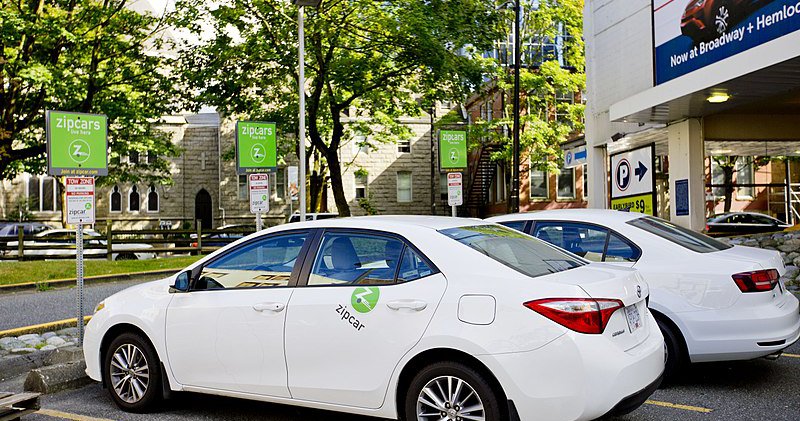
The Shift Commission meetings officially kicked off in New York City on Sept. 30.聽聽is a member of the Commission, co-founder and former CEO of Zipcar, and author of聽Peers Inc: How People and Platforms are聽Inventing the Collaborative Economy and Reinventing Capitalism. She found time during the New York meeting聽to sit down with me to talk about the future of work.
In the wide-ranging chat that follows, she discusses the impact of self-driving cars鈥娾�斺�妏redicting that within five years of the introduction of autonomous vehicles, 80 percent of the vehicles in those cities will be autonomous. Robin also shares her thoughts on the effects of climate change, and why she thinks our networked age leads to a magnified perception of inequality.
Jack:聽Why don鈥檛 we start by you telling me who you are and why you decided to come here today?
Robin:聽I鈥檓 Robin Chase, mostly known as founder and former CEO of Zipcar, and I also wrote a book called Peers Inc. When I was writing it, I realized that if everything that can become a platform does becomes a platform鈥娾�斺�奱nd most employment is pushed outside the corporation鈥娾�斺�妛orkers will be working without social safety nets and workplace rules, all of which are now attached to full-time employment. This new way of work, on platforms, is completely different.
I have this sentence I got from someone: 鈥淢y father had one job in his lifetime; I鈥檒l have five jobs in my lifetime; and my children will have five jobs at the same time.鈥�
Jack:聽It seems like a whole class of people across America are waking up to the vulnerable state they鈥檙e in due to shifts in the economy. Why is this a conversation we鈥檙e starting to have now?
Robin:聽I spotted the implications of this transition late in the game. 麻豆果冻传媒 a year and a half ago, I thought, oh my God. Look at this thing that鈥檚 happening. In the transportation sector I look at the pace at which autonomous vehicles are coming upon us, and instead of the technology hype being overpromised and that future staying distant, the promised dates for self driving cars are instead getting closer! I know a lot about cars in cities鈥娾�斺�奿t鈥檚 going to be economically compelling for bus, shuttle, and taxi services to get rid of drivers in cities, and from the demand side this will be a much cheaper way to travel than owning my own car. The result will be a huge loss of jobs at a very fast pace.
Jack:聽When you say 鈥渧ery fast,鈥� are we talking under a decade in terms of the period of disruption?
Robin:聽I鈥檝e been arguing鈥娾�斺�妛ell discussing鈥娾�斺�妛ith a lot of people over this point! In major dense metropolitan areas, within five years of the introduction of autonomous vehicles, I鈥檒l think we鈥檒l see 80% of the vehicles in those cities being autonomous. So if we鈥檙e looking at 2020 as the date in which most manufacturers and people who are building them promise to start selling them, that means by 2025 most big cities will be mostly autonomous vehicles.
Jack:聽What鈥檚 the difference between this and when we had the launch of smartphones? Smartphones have had a huge effect on employment but we didn鈥檛 seem to anticipate it in the same way.
Robin:聽Whenever I get into a taxi in the cities I鈥檝e been in, I鈥檝e been asking drivers, 鈥淗ave you thought about autonomous vehicles? Do you see them coming? Is it changing what you鈥檙e thinking about your own work?鈥� Every taxi driver I鈥檝e talked to has understood what鈥檚 going on and has started to think about it. They haven鈥檛 come up with solutions yet, but in their minds, they鈥檝e been thinking, 鈥淥h my God, this thing I鈥檝e been doing is about to disappear.鈥�
Jack:聽Autonomous vehicles is one of the huge trends you see shaping work and working life. Are there any other ones that you expect will have a huge effect on things?
Robin:聽All the big companies are seeing themselves as very vulnerable to disruption right now, and they are seeing that they need to become more platform-like, because if they don鈥檛 do it someone else is going to disrupt them. That is happening in every sector. In retail, they are really seeing that the way they deliver services is in a moment of high disruption because of smartphones and connectivity.
Something we haven鈥檛 talked at all about today and that is constantly in my mind that I think is a huge disruptor is climate change. We are having to reinvent our supply chain and our consumption chain at a very rapid pace. All the while, the natural ecosystems are being disrupted. I keep thinking about the impact of climate refugees, like Syrians. We have this huge economic unrest as economies are made vulnerable because of climate change. That makes them economically stressed, resulting in huge, chaotic disturbances and people are now fleeing to better economic opportunity.
What I鈥檝e been struck by is that a lot of our solutions around this precarious future of work are to provide social safety nets to everyone regardless of their work status, right? That is in direct conflict with the idea of having a whole bunch of new immigrants come to your country. This is what we鈥檙e seeing in the Nordic countries and in France and Germany, and perhaps here in the US with Trump supporters anti-immigration focus; there鈥檚 this tension between a country that provides great social safety nets that are ubiquitous and this influx of a new population.
Jack:聽So, say we got in a time machine and we went up to Robin Chase 20 years ago and brought you here today, what do you think you would have been surprised by and what do you think you would have been surprised had not happened by this point?
Robin:聽Let鈥檚 go to 16 years ago, 17 years ago, when I started thinking about transportation and Zipcar. I profoundly believed we were going to see the rise of shared vehicles as the dominant form of transportation in cities. I might be surprised at the slowness of the transition. The move to shared transportation is moving faster in cities now, but I thought it would happen sooner. Twenty years ago the Internet was so nascent that we hadn鈥檛 understood its talents yet. We hadn鈥檛 understood the powers of empowering individuals so much and how that would ripple through the economy. I definitely did not perceive that.
Jack:聽Final question: What do you think we are failing to measure about the modern economy that leads to government officials seeming to be surprised by changes which are rippling through it?
Robin:聽I think today we are underestimating the power of income inequality in a world of ubiquitous media. If we think about what television did to the people in their huts in Kenya, they say, 鈥淲ow. This is something I want to aspire to or this is something I want to have.鈥� Now, even in your own city, you are seeing the haves against the have-nots and that is a very powerful push for unrest, right? That鈥檚 what I think we鈥檙e seeing with Brexit and that鈥檚 what I think we鈥檙e seeing with the rise of Trump. People are really feeling, 鈥淚 see this other world happening and I鈥檓 not a participant in it.鈥� That makes you really unhappy.
More 麻豆果冻传媒 the Author
Issues
Programs/Projects/Initiatives
Related

The Future of Work for Women
Shifting Gears on Automation
Local Perspectives from Workers on Automation and the Future of Work
