Sarah Jackson
Principal at SJackson LLC
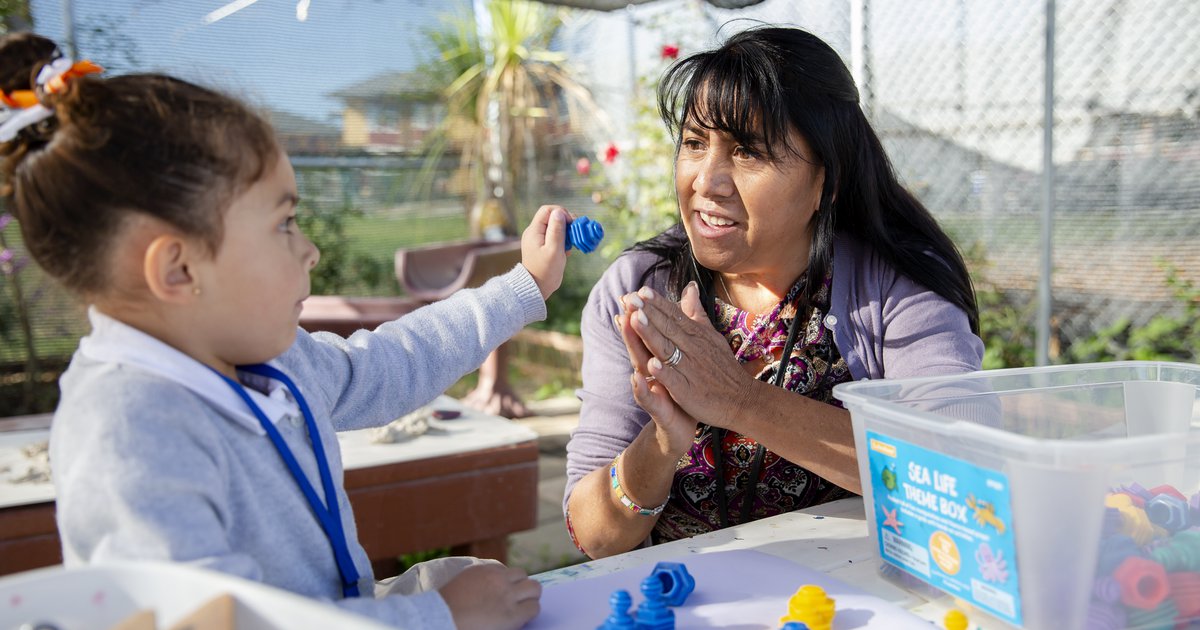
If you are a teacher of young children in California you鈥檙e likely to have students in your classroom than your own. In addition to native English and Spanish speakers, you may be teaching children who speak Arabic, Cantonese, or Farsi at home with their families.
Experts and policymakers in California say supporting children in becoming bilingual and bicultural is a key part of building the workforce California will need in the future. Yet in order to succeed, they say, we must start early. For teachers leading these diverse classrooms, questions about how they can help these children get ready for kindergarten and develop a love of learning that they鈥檒l need to be successful as they progress in school can be overwhelming. This is especially true if they don鈥檛 speak their students鈥� home language.
Luckily, knowledge about what skills early childhood educators need to support multilingual students continues to grow. A from Sobrato Early Academic Language (SEAL) shows a path forward for the state.
Findings from Building an Effective Early Childhood Workforce: The Need for Professional Development for Educators of Dual Language Learners (DLLs) show teachers in the state are hungry for this information, and that when done well, professional development can make a real difference in building teachers鈥� knowledge and skills to be able to support this population of young children.
鈥淲e know that teachers are looking for strategies that work best to support multilingual children,鈥� says Anya Hurwitz executive director at SEAL.鈥淏ut many of them haven鈥檛 had this kind of training in their coursework. And professional development options are really limited, especially for teachers of our youngest kids.鈥�
SEAL has been committed to meeting this need and received grant funding from the California Department of Education in 2018 to pilot this work. At the time, SEAL was one of five organizations to receive funding from a $5 million allocation the state made for professional development specifically geared towards DLL teachers. Since then, the state has also called for greater attention to DLLs in its 2020 Master Plan for Early Learning and Care.
Thanks to this support, SEAL has worked with school districts and county offices of education to provide professional development that continually supports teachers to build children鈥檚 language skills through exposure to a culturally responsive, hands-on curriculum based on the CA Preschool Learning Foundations. Trainers worked with teachers and administrators in each community on topics such as creating language-rich environments, early literacy, and how to connect young children鈥檚 learning to their experiences in the world. And now as participants reflect on the pilot, evaluations show that the training had a big impact on teachers who took part.
鈥淚鈥檝e seen a tremendous difference in the teachers who are participating in SEAL,鈥� said one educator from San Bernardino. 鈥淓verything changed. … The parents were involved, the teachers were overly excited, which I loved, and the students were really learning.鈥�
Teachers say the training helped increase their understanding of what instructional practices are most effective for kids growing up learning two languages and how to use those practices in the classroom.
Though the training took place during the pandemic and some sessions had to be moved online, over 360 early childhood educators and administrators across California participated, serving almost 4,000 children.
It is evident that there is a big demand for this work among teachers and administrators in California, SEAL found it difficult to deliver this training to teachers and caregivers of young children who often don鈥檛 have anyone to substitute for them during the day, don鈥檛 have transportation to training sites, and those who work during off-hours.
To address these barriers, the report calls on the state to: prioritize investments in teacher development so that all early childhood educators can be trained on the content knowledge and skills they need to support dual language children; ensure California鈥檚 early learning system has the structure and resources needed to support high quality, sustained professional learning across this sector; and utilize regional infrastructure and partners, like California鈥檚 58 County Offices of Education and include flexible and virtual options for teacher training.
Now that the pilot is over, Hurwitz said she hopes the state will continue to invest in models like SEAL that value and support biliteracy. 鈥淭hese are the children we have here in California,鈥� she said. 鈥淲e need to make sure all of our teachers are trained in how best to support them.鈥�
Enjoy what you read? Subscribe to our newsletter to receive updates on what鈥檚 new in Education Policy!
Principal at SJackson LLC