A Chapter of: Building Early Education Leaders
Building on Pre-K Success with Alabama Principals
One unseasonably warm April morning, about two dozen principals from around Alabama gathered at the Council for Leaders in Alabama Schools (CLAS) office in Montgomery just one block from the Alabama State House. CLAS is an association that provides professional learning for school and district leaders throughout the state. Principals were attending their third and final full-day, in-person meeting of the year for the National Association for Elementary School Principals (NAESP) Pre-K鈥�3 Leadership Academy, and they were eager to present their capstone projects. In back-to-back presentations from 9:15 a.m. to 3:00 p.m., the school leaders explained how they鈥檝e taken the material they鈥檝e learned throughout the year and applied it to their schools. Each capstone project focused on one of NAESP鈥檚 core competencies.1
One principal from a small town about two hours west of Montgomery chose to focus on Competency 2: 鈥淓nsure Developmentally Appropriate Teaching.鈥� In her presentation, she explained that getting kindergarten and the early grades to mirror the good work happening in pre-K required a mindset shift for her teachers. Detailing pushback she received from one particular kindergarten teacher, 鈥渁 very seasoned educator,鈥� the principal said, 鈥渟he would say, 鈥榯he children can play at home; we don鈥檛 have time to play in kindergarten.鈥欌�� But once a few teachers bought into the changes and were successful, reluctant teachers started to shift their mindsets too. One teacher told the principal that she now goes home at the end of the day feeling refreshed instead of exhausted.
This principal said, 鈥済oing through this process for me has been transformative. There is a whole shift in the way kindergarten is being taught. It鈥檚 particularly benefited two students who I know are going through a lot at home. We鈥檝e taught teachers how to look at the whole child.鈥� She plans to continue this work next year with ongoing professional learning communities (PLCs), summer professional learning on early grade assessments, and a visit to a model pre-K through third grade school.
In 2000, Alabama piloted a state-funded pre-K program that has been linked to higher reading and math proficiency on the state鈥檚 assessment through middle school.2 First Class Pre-K, administered by the Alabama Department of Early Childhood Education, currently serves 28 percent of the state鈥檚 four-year-old population. It鈥檚 one of only three state pre-K programs that meet all 10 of the National Institute for Early Education Research鈥檚 quality standards benchmarks.3
While pre-K has been a bright spot for Alabama, when looking at the larger picture for children and their families, many are underserved. According to the National Center for Child Poverty, in 2016, 30 percent of young children in Alabama lived in poverty compared to 21 percent nationally.4 Close to three-quarters of those children lived with a single parent. In Alabama, there is a long waitlist for child care subsidies for families in need, and reimbursement rates for providers are very low, meaning safe, high-quality care can be difficult to provide.5 Among school-aged children in 2017, only 31 percent of Alabama fourth graders were proficient in reading and math, according to the National Assessment of Educational Progress. Alabama has a great deal of work to do to better meet the needs of young learners.6
State policymakers view building on the success of First Class Pre-K by continuing its best practices into kindergarten and the early grades, which are overseen by the Alabama State Department of Education, as a potential lever for improving student outcomes writ large.
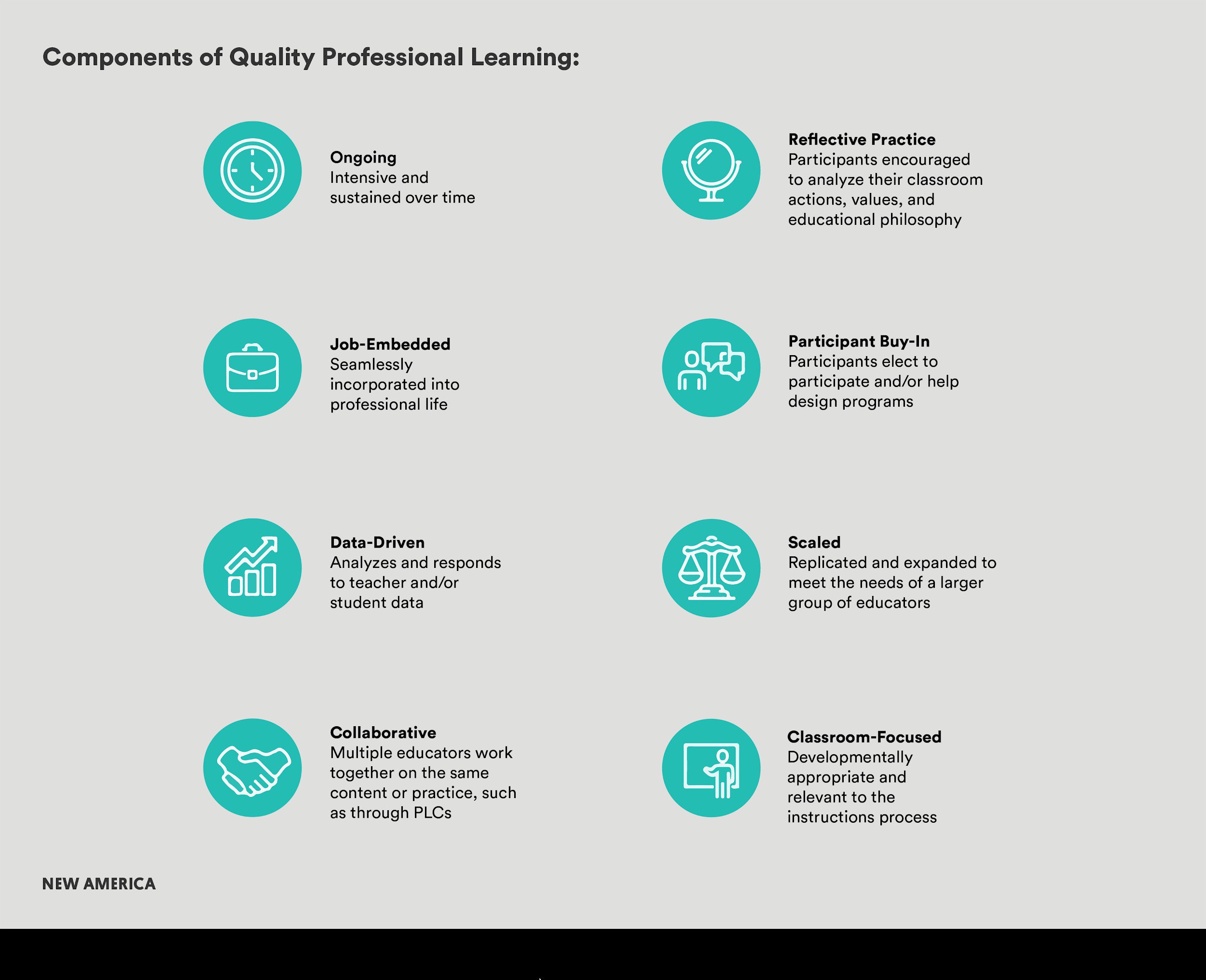
In 2017, Alabama started a grant program called the 鈥淧reK鈥�3rd Grade Integrated Approach to Early Learning鈥� to make this a reality.7 This work involves a three-pronged focus on leadership, instruction, and assessment. Local education agencies apply for year-long grants that provide financial resources for classroom improvements and job-embedded professional learning for teachers and leaders. Every principal who receives a grant is required to apply to participate in the NAESP Pre-K鈥�3 Leadership Academy.
The leadership academy is a partnership between NAESP, CLAS, and the Alabama Department of Early Childhood Education. According to Jeannie Allen at the Department of Early Childhood Education, the academy is offered statewide, so principals who are not participating in the state鈥檚 broader pre-K through third grade alignment efforts can also opt in. While NAESP designs the curriculum and the application for participants, CLAS and the Department of Early Childhood Education are responsible for reviewing applications, selecting participants, pairing them with advisors, and creating cohorts.
The leadership academy uses a blended model. In addition to three in-person meetings throughout the year, there is online coursework, online discussion, and check-in phone calls. Participating can be a significant ask for principals who already have a lot on their plates. On this particular morning, the senior cohort advisor, Deborah Baker, started by calling attention to the commitment required, congratulating everyone on their dedication to the program: 鈥淵ou鈥檝e read over 500 pages of literature, watched over two hours of video clips鈥�.鈥� The program administrators were proud that almost all of the 30 school leaders who started in this cohort stayed throughout the year despite the time commitment.
During their presentations, each of the principals shared ways they benefited from this program鈥檚 content and capstone experience. However, those elementary school principals coming from a secondary background had perhaps the most to gain. One principal said, 鈥渨hen I came into this role four years ago, it was my first time interacting with pre-K students.鈥� Another principal, formerly a high school football and basketball coach, said, 鈥淚 don鈥檛 have the depth and breadth and knowledge that most of you have, but I鈥檓 trying to learn. This is a great opportunity for those of us who don鈥檛 have an elementary background.鈥�
While each capstone project was unique, there were a few common themes, particularly around lessons learned. One principal told the group, 鈥渄iscipline has seriously decreased in kindergarten and first grade now that instruction is more appropriate. There were more 鈥榙iscipline鈥� problems when kids are told to sit in desks all day before they are ready.鈥� Multiple principals had similar experiences and reported fewer office referrals for behavior.
Throughout the day, the principals requested resources from each other based on their peers鈥� presentations. Baker kept a list of requested materials to share out with the group after. There appeared to be rapport between the school leaders and an eagerness to help each other tackle similar challenges.
This final day also functioned as participants鈥� graduation from the program. Upon completion, graduates earn an NAESP Leadership Certificate and Professional Learning Units (needed for certificate renewal in Alabama).8 Gail Morgan, Associate Executive Director of Professional Learning at NAESP, who led the graduation ceremony, said that NAESP works closely with state agencies to provide credit aligned with state leadership certification. Separate from the Academy, Morgan also announced that NAESP will soon be offering micro-credentials, which will enable leaders to learn about each of the six competencies individually.9 As of May 2019, three Leadership Academy cohorts have been completed in two states, one is currently in progress, and a new one is scheduled to launch in an additional state in June.
This was Alabama鈥檚 second cohort of the PreK鈥�3rd Grade Leadership Academy. Baker, who was involved during its inaugural year, said things have gone more smoothly this year now that the program administrators have learned what types of supports participants need. She was enthusiastic about the third cohort, which started in early May 2019. There was enough interest in the third cohort that not all applicants could be admitted.

Citations
- Leading Pre-K鈥�3 Learning Communities Competencies for Effective Principal Practice: Executive Summary (Alexandria, VA: National Association of Elementary School Principals, 2014), default/files/leading-pre-k-3-learning-communitiesexecutive-summary.pdf.
- J. Preskitt, H. Johnson, D. Becker, J. Ernest, M. Fifolt, J. Adams, T. Strichik, J. Ross, and B. Sen, Proficiency in Reading and Math: First Class Pre-K Benefits Persist in Elementary and Middle School, (Alabama Department of Early Childhood Education, 2018), .
- Allison H. Friedman-Krauss, W. Steven Barnett,Karin A. Garver, Katherine S. Hodges, G. G. Weisenfeld,Nicole DiCrecchio, The State of Preschool 2018: State Preschool Yearbook (New Brunswick, NJ: National Institute for Early Education Research, 2019),
- National Center for Children in Poverty, 鈥淎labama Demographics of Young, Poor Children,鈥� .
- Christine Johnson-Staub and Shiva Sethi, CCDBG Implementation: Alabama, (Washington, DC: CLASP, 2019), .
- The Nation鈥檚 Report Card, 鈥淪tate Profiles鈥� .
- Learn more about Alabama鈥檚 PreK鈥�3rd Grade Integrated Approach to Early Learning here:
- Rule of the Alabama State Board of Education, Chapter 290-3-2, .
- Lindsey Tepe, 鈥淢icro-credentials Should be the Next Experiment in Education,鈥� The 麻豆果冻传媒 Weekly, April 9, 2015, source.