David Sterman
Deputy Director, Future Security; Term Member, Council on Foreign Relations
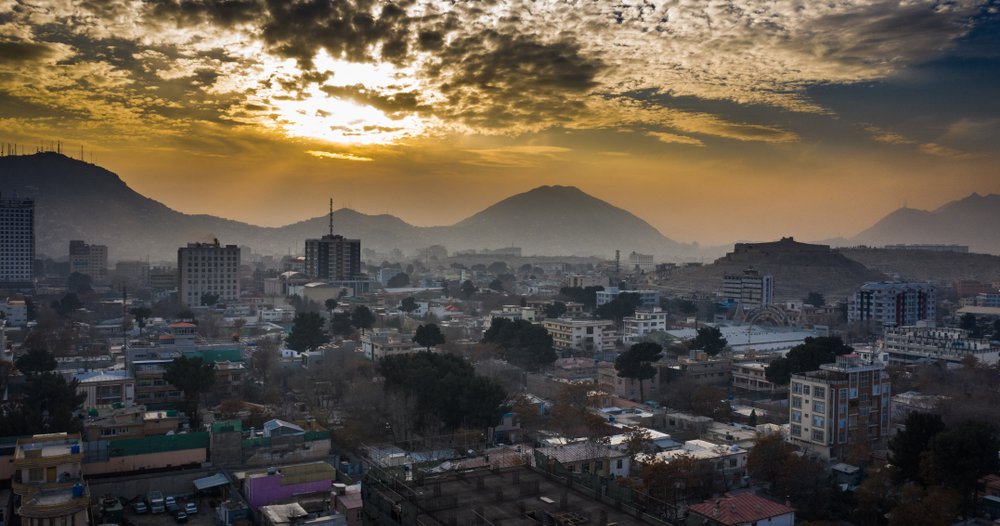
On March 18, a drone strike outside Mogadishu reportedly killed more than 20 people, including children. Citing two security sources, the Washington Post that 鈥渢he strike was carried out by a Turkish drone,鈥� adding, 鈥淭urkey routinely carries out drone strikes in Somalia in support of Somali government forces.鈥� United States Africa Command (AFRICOM), which is responsible for U.S. military strikes in Somalia, told me and that the U.S. did not carry out the strike. Meanwhile the Somali government to an operation carried out by Somali forces with international support, regional media that Turkish drones carried out the strike following an al-Shabaab ambush of the Turkish-trained Gorgor commando unit, and al-Shabaab put out a accusing Turkey of conducting the strike.
The March 18th strike emphasizes the importance of carefully attributing drone strikes in Somalia, where multiple forces are capable of carrying out such strikes. This attribution issue poses a substantial challenge for those tracking the U.S. drone war in Somalia. It amplifies tensions between the benefit of broad inclusion criteria to ensure accountability on the part of the United States 鈥� particularly given the United States鈥� history of covert American strikes as strikes by others 鈥� and the risks of attributing other belligerents鈥� strikes to the United States and thus misstating the character of the U.S. campaign.
础颈谤飞补谤蝉鈥� has long been an important source for understanding the U.S. war in Somalia, and illustrates these tensions. While 础颈谤飞补谤蝉鈥� criteria provide a valuable foundation for examination of potential cases of civilian harm and covert strikes, those using its Somalia data should be aware of important caveats and the uncertainty generated by a crowded battlefield. In particular, a crowded battlefield challenges inferences of an American role from Somali government references to international partners.
础颈谤飞补谤蝉鈥� Director Emily Tripp says 础颈谤飞补谤蝉鈥� approach is necessary given the uncertainty of the battlefield and need for state accountability, adding regarding 础颈谤飞补谤蝉鈥� approach to Somali references to international involvement, 鈥淎s ATMIS [the African Union Transition Mission in Somalia] are winding down their presence, and as the role of the Turkish state is also still unclear in Somalia (beyond the supply of drones and training), the mention of 鈥榝oreign鈥� actors was therefore assessed by our specialist team working on Somalia to be sufficient at least in this context given our methodology and the purpose of our research to point to potential US involvement.鈥�
The March 18 strike stands as an important signal for those tracking and analyzing America鈥檚 drone and air wars to carefully consider how today鈥檚 crowded battlefields in Somalia and elsewhere pose important challenges and limits for those tracking U.S. strikes. It also emphasizes the need for the United States to ensure its own tracking of strikes is as transparent and capable of credibly denying (or even attributing to other forces) non-American strikes as possible 鈥� a task made difficult by the United States鈥� history of covert strikes in its counterterrorism wars.
An Alleged Major Escalation in U.S. Strikes?
Take for example the question of whether and to what extent the U.S. drone war in Somalia escalated in 2023. Whether U.S. strikes are escalating or de-escalating 鈥� and the rate at which it is doing so, is a core question for understanding the U.S. war in Somalia.
According to 础颈谤飞补谤蝉鈥� of strikes in Somalia, the United States may have more than doubled the number of strikes it conducted from 20 in 2022 to 47 in 2023. Such an increase would suggest a substantial escalation of U.S. strikes. However, this seeming escalation is likely the product of the attribution of strikes by other forces to the United States.
A close look at 础颈谤飞补谤蝉鈥� data cautions against reading the increase in reported strikes as evidence of an escalating U.S. war. Airwars divides its records of strikes into two categories: declared strikes and alleged strikes. Declared strikes are those that the United States acknowledges conducting 鈥� generally in the form of a press release. As Airwars , 鈥淢ost US actions in Somalia are carried out by US Africa Command (AFRICOM) and are publicly declared by press release.鈥� Other strikes recorded by Airwars lack such an acknowledgment of responsibility by the United States and are included based on reporting, social media references, and other sources. As Airwars continues to explain, 鈥淗owever US military ground operations are not routinely reported 鈥� and CIA strikes are officially neither confirmed nor denied. In addition, there are some actions in Somalia where the belligerent is presently contested (eg possibly by the US or AMISOM), or unknown.鈥�
The in total reports recorded by Airwars in 2023 is almost entirely generated by this second category of alleged strikes. In 2023, Airwars recorded 15 declared U.S. strikes compared to 13 in 2022. In contrast, the number of alleged strikes Airwars recorded more than quadrupled from seven in 2022 to 32 in 2023. (麻豆果冻传媒鈥檚 tracking shows a small rise in U.S. strikes from 2022 to 2023).
Notably 2023 also marks the first time in more than a decade that 础颈谤飞补谤蝉鈥� data records more alleged strikes than declared strikes. The sudden increase in alleged strikes without a similarly large increase in declared strikes alongside a reversal in the balance of alleged and declared strikes should raise a warning about basing conclusions about the U.S. campaign off of the combined Airwars strike total for 2023. It also suggests that the challenges to those tracking strikes posed by the attribution issue may be growing, at least for those who use broad inclusion criteria.
Inferring U.S. Responsibility from Strikes in a Crowded Battlefield
Close examination of 础颈谤飞补谤蝉鈥� data raises concern that the count of alleged strikes is high because it is attributing strikes by other forces to the United States 鈥� even when sources do not directly implicate the United States. Such a broad inclusion criteria may be justified depending on the purpose of one鈥檚 analysis. However, analysts and commentators relying upon 础颈谤飞补谤蝉鈥� data should be cautious about the costs that come with its broad approach to inclusion and attribution when applied in a crowded battlefield.
Of 30 descriptive entries for alleged strike incidents in 2023 (two alleged strikes appear not to have separate descriptive entries) 21 are recorded as contested strikes. Thirteen of these contested entries explicitly note that they lack sources directly implicating the United States. These entries include allegations of U.S. strikes on , , , , , , , , , , , , and .
Such entries infer a U.S. role from Somali government references to international partner involvement. However, as the strike on March 18, 2024 strongly suggests, even if such references 鈥渋n the past indicated US involvement鈥� (), they are no longer a reliable indicator of a U.S. strike. Because there are multiple forces capable of air and other strikes in Somalia, such an inference is almost certain to over-attribute operations not involving direct U.S. strikes to the United States.
It is also important to note that some of these contested entries may regard a U.S. role in ground operations 鈥揳n area where U.S. military reporting tends to be less extensive than with regard to air strikes. However, references to international partners leave open questions regarding whether the assistance being referenced constituted a strike or instead reflected some other form of assistance short of a direct U.S. operation 鈥� if there was U.S. involvement at all.
础颈谤飞补谤蝉鈥� categorization of the aforementioned thirteen strikes as contested provides a valuable tool to help analysts take care in analyzing the data amid an uncertain and crowded battlefield. However, the categorization can blur the difference between cases where a source provides a direct but contested allegation of a U.S. role and cases where the U.S. role is only inferred from references to international involvement.
In addition, the inclusion of strikes based on a U.S. role inferred from general references to international partners is not restricted to strikes labeled as contested. Another six alleged strikes in 2023 are listed as being based on single sources (a different category from contested strikes). In its methodology, Airwars distinguishes such claims and civilian casualty reports based on single-source reporting as 鈥渨eak.鈥�
While a 鈥渨eak鈥� or single source categorization should provide a warning to an attentive analyst, it does not distinguish between single-sourced but direct allegations of U.S. strikes and allegations that both rely on a single source and lack a direct claim of a U.S. strike. If a general reference to international partners is enough to potentially attribute a strike to the United States, it is unclear why it is also not sufficient to potentially attribute to other belligerents active in Somalia. In such a situation, these strikes should presumably merit not just a single-source categorization, but a categorization that foregrounds the potentially contested nature generated by a lack of direct attribution as well.
Instead, of six single source alleged strike entries, three only list US Forces as the suspected attacker despite a lack of direct allegations of a U.S. role. For example, one single source for a July 21 strike included a reference to the involvement of 鈥渋nternational friends,鈥� but notes, 鈥淣o other information was available regarding the strike and who was responsible.鈥�
Two more single-source claims relate to on August 25, 2023, and rely upon a by reporter Harun Maruf that references 鈥渟tate media reporting.鈥� However, the tweet does not refer to U.S. strikes 鈥� only referencing 鈥渃ollaboration with international partners鈥� and both entries state, 鈥淲hile no sources directly implicated the US in the operation, the Somali government鈥檚 reference to 鈥榠nternational partners鈥� has in the past indicated US involvement.鈥�
Notably, one of these two operations occurred (specifically near Basra), placing it in a to the March 18, 2024 alleged Turkish strike (specifically near Bagdaad). The other occurred , which places it in a similar location to a that also may have been a Turkish strike.
Airwars labeled the strike as a likely strike with only the U.S. listed as a suspected attacker based on social media posts, but it appears to be more properly understood as a contested strike with possible Turkish responsibility (or with Somali forces using Turkish drones). Garowe Online the strike to Turkey, and the forward operating base near which the strike occurred was the Turkish-trained Gorgor commando unit, the same force that the March 18, 2024 strike was reportedly in support of.8
A source cited by 础颈谤飞补谤蝉鈥� entry mentions the drones as being . Yet instead of listing the strike as contested, 础颈谤飞补谤蝉鈥� entry that the source indicated 鈥渢he drone to be Turkish manufactured, but didn鈥檛 say who was responsible for the strike.鈥� This line rightly flags ongoing over the extent of Turkish involvement in strikes and the of Turkish military personnel, although reports dating to suggest an active one. But a reference to a Turkish-made TB-2 is a strong indicator of a non-U.S. belligerent鈥檚 potential involvement regardless of who pushed the button. To the extent that the line operates as a justification for not coding the strike as contested, it appears to use a higher standard for attributing potential responsibility (whether to Turkey or Somali forces operating Turkish drones) than Airwars applies to generalized references to international partner support that provide no direct evidence of U.S. involvement.
AFRICOM for its part denied conducting any strikes on September 10 in a response to a query from this author. In January 2024, AFRICOM told this author it conducted 18 strikes in Somalia in 2023 (the U.S. has also acknowledged one ground raid) – a list of all 2023 strikes declared by AFRICOM can be found here.
The Value of Inclusion and the Cost of Over-Attribution
The above analysis does not demonstrate that 础颈谤飞补谤蝉鈥� inclusion criteria is necessarily too broad. An expansive inclusion criteria can be essential for identifying the larger set of possible American strikes. 础颈谤飞补谤蝉鈥� data can be sorted by various levels of credibility and reporting (and have descriptive entries providing more detail), allowing an attentive reader to mitigate the issues described above. As a result, Airwars plays a key role in enabling scrutiny of potential civilian casualty incidents, the core focus of its work, as well as in identifying possible covert strikes.
As 础颈谤飞补谤蝉鈥� Director Emily Tripp puts it, 础颈谤飞补谤蝉鈥� broad attribution and inclusion criteria, 鈥渆nsure that we are able to capture potentially underreported incidents – which we then present to actors like AFRICOM for them to clarify their own involvement, and which we see very much as a starting point for others.鈥� Tripp also emphasizes that Airwars is a 鈥渃ivilian harm watchdog organisation – our attention and emphasis is always on trying to understand the human toll of war. It is incumbent upon states themselves to declare their strikes – our attribution is only ever as good as the information available on the ground.鈥�
However, adopting an expansive inclusion criteria focused upon providing a starting point for investigation and confirmation by state actors comes with its own costs. 础颈谤飞补谤蝉鈥� presentation of its data foregrounds the United States. Alleged strikes all become alleged U.S. strikes in the total count, and the net for alleged strikes is cast wide enough to include strikes with no direct allegation of direct U.S. action. The choice to cast a large net limits the data鈥檚 value for comparison to other belligerents or wars or even prior periods of the same war 鈥� as it blurs whether it is American strikes being tracked or merely strikes that could potentially be American strikes.
This tradeoff may be worth making in order to provide a foundation for identifying underreported or covert strikes and supporting investigation of civilian harm cases. However, it is a tradeoff.
Meanwhile, there is no Airwars tracker for alleged Turkish strikes in Somalia or the toll of Somali forces operating without the support of direct U.S. air strikes. Tripp notes, 鈥渋n Somalia our attention has always been on US involvement, in line with our broader portfolio of US accountability work, so we do not collect a wider dataset of other violent incidents in the country.鈥�
However, because the focus is on U.S. accountability and uses a broad inclusion criteria, analysts and commentators relying upon 础颈谤飞补谤蝉鈥� data risk obscuring the responsibility of other belligerents 鈥� who appear as caveats to an alleged U.S. role, even if the existing evidence would suggest they are the more likely responsible party. The combination of broad inclusion criteria with a focus on one belligerent鈥檚 accountability can also create a perverse incentive for belligerents to proliferate claims of U.S. strikes in order to muddy the waters regarding their own strikes. On the other hand, those rightfully concerned about the potential for broad criteria to obscure Turkey鈥檚 or others鈥� responsibility should remember the United States鈥� own history of portraying its strikes as someone else鈥檚.
This blog post was updated on April 19, 2024 to improve clarity and add further detail. This post was further updated on May 7 to correct the date of the alleged Turkish strike, which occurred聽on the evening of March 18 not on March 19th.
Deputy Director, Future Security; Term Member, Council on Foreign Relations