A Chapter of: America鈥檚 Endless Counterterrorism War in Yemen
1. Introduction
In the wake of the September 11 attacks, the United States embarked on a global war on terrorism. As part of this global war, the United States also initiated a series of wars in countries across the Greater Middle East. Twenty years later, many of these wars continue with no end in sight. Among the wars the United States initiated as part of its larger war on terror was its war on al-Qaeda in Yemen, which would later brand itself as Al-Qaeda in the Arabian Peninsula (AQAP).
This report argues that 鈥渆ndless war鈥� is a meaningful concept that is useful for understanding the counterterrorism war in Yemen. It defines endless war as a war in which a belligerent is pursuing objectives it cannot achieve but is also not at risk of being defeated or denied access to the battlefield. The U.S. record across three administrations suggests that the United States鈥� war in Yemen meets these criteria. The United States has too often sought unlimited objectives, seeking the complete destruction and defeat of AQAP or the al-Qaeda network more broadly.1 Even if references to defeat are mere political rhetoric, such commitments have warped American strategy. On the other hand, when the United States has sought objectives short of AQAP鈥檚 destruction, it has failed to publicly describe the supposedly limited objectives in a clear and stable manner.
While there may have been a legitimate case for U.S. military action in Yemen in 2009, when AQAP almost brought down an airliner, nearly killing hundreds of people, the threat to the United States homeland from AQAP is substantially lower today. Continuing to wage war on AQAP in these circumstances risks embracing a military posture increasingly driven by preventive war logic in which war is justified based on the belief that war now is preferable to other options as a way of preventing growth in a rival鈥檚 capabilities that would pose a greater threat in a future war.2
Meanwhile, conditions in Yemen have deteriorated precipitously since 2009. Yemen faces an enormous humanitarian crisis while an internationalized civil war rages. This deterioration is rooted in local Yemeni political disputes and regional dynamics that cannot be reduced to the war on terror. However, pursuing a preventively framed counterterrorism war in such an environment is likely to further entangle the United States in local conflicts, constrain U.S. strategic options, and exacerbate the ongoing crises while also militarizing American politics.
Facing this situation, some analysts argue for greater commitment to the unlimited objective of defeating AQAP and the movements from which it arises.3 Others argue for the development of a sustainable counterterrorism strategy that acknowledges the problems with the objective of defeating AQAP but which seeks to maintain the ability to use military force for limited objectives in an open-ended manner.4 Both of these approaches are likely to backfire. Instead, the United States should define achievable limited objectives, where the accomplishment of an objective means an end to the war footing.
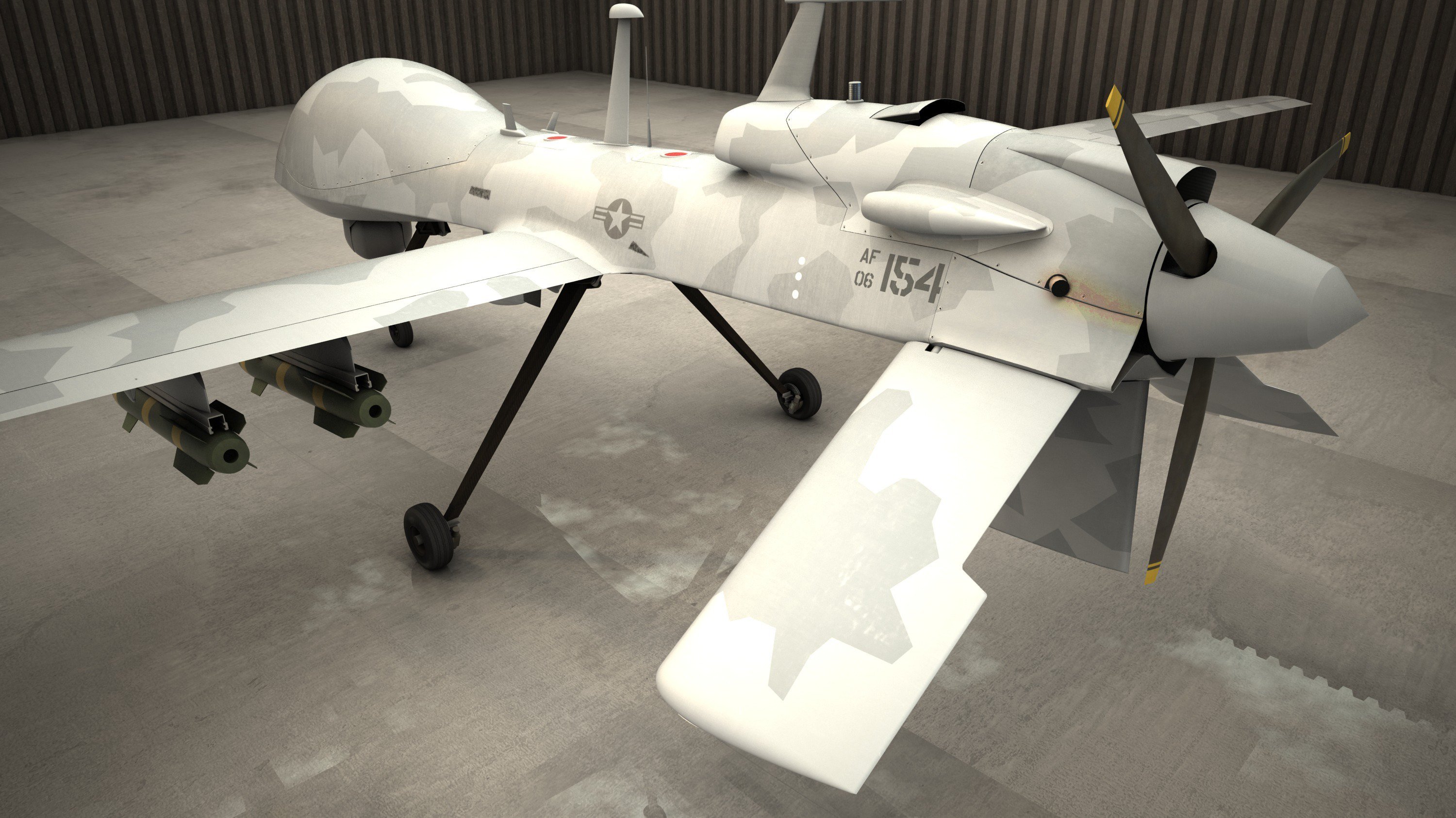
The U.S. counterterrorism war in Yemen has a long history. On November 3, 2002, the United States conducted its first drone strike in Yemen, killing six people as they drove across the desert of Yemen鈥檚 Marib province. The strike killed its target, Qaed Salim Sinan Al-Harithi, who was believed to have devised the 2000 attack on the USS Cole.5 It also killed an American citizen, Kamal Derwish, who allegedly recruited a group of Yemeni-Americans to train in camps in Afghanistan, where they met Osama bin Laden.6
The strike demonstrated that Yemen would, at times, be a battlefield in the larger global war on terror. However, facing backlash over the strike, the Bush administration tended to treat Yemen not as a battlefield but as a partner in the war on terror, focusing on advising and cooperating with the Yemeni government rather than directly carrying out strikes.7 The 2002 strike is the only one Bush is known to have conducted in Yemen.
In 2009, the Obama administration perceived an increasing threat from al-Qaeda in Yemen. As Obama took office, AQAP announced its formation via a merger of previously existing networks in Saudi Arabia and Yemen.8 Over the course of that year, Americans inspired in part, but not directed, by AQAP or by the propaganda of Anwar Awlaki, an American involved in AQAP鈥檚 attack plotting, killed 14 people in two attacks inside the United States.9 AQAP also conducted attacks in Yemen and Saudi Arabia. Over this same period, the United States prepared to carry out a campaign of direct, unilateral strikes against AQAP and to encourage the Yemeni government to escalate its own actions.10
The United States began carrying out a small number of strikes in December 2009 and early 2010. On December 25, 2009, Umar Farouk Abdulmuttalab, a Nigerian trained and directed by AQAP and Awlaki, attempted but failed to bring down a civilian flight over Detroit, using an innovative bomb designed to circumvent airport security. The attack sparked significant concern about AQAP as a global threat.11 Over the next three years, that concern was amplified by two other, foiled plots to attack American aviation.
As a result, Yemen increasingly became the site of its own specific war between the United States and AQAP.12 The war was embedded within the war against al-Qaeda, but also had its own identity. It combined direct U.S. air strikes with ramped-up efforts to train and equip the Yemeni government鈥檚 forces as well as other assistance. In 2011, the pace of U.S. strikes increased, reaching its peak under the Obama administration in 2012 amid AQAP鈥檚 territorial gains in the aftermath of the Arab Spring.13
In 2014 and 2015, conditions in Yemen worsened as a civil war between Yemen鈥檚 Houthi rebels and the Yemeni government broke out, leading to the functional collapse of the Yemeni government, and a Saudi and Emirati intervention backed by the United States. Initially, AQAP appeared to benefit from this instability, once again seizing territory.14 The Obama administration continued its strikes during this period. The Trump administration further escalated the pace of strikes to an unprecedented extent in 2017. Even as it escalated its own strikes, the United States sought to enable the counterterrorism efforts of its Saudi and Emirati partners.15
In the final years of the Trump administration, and as the Biden administration took office, the pace of strikes substantially declined and potentially halted.16 United States Central Command has not acknowledged conducting any strikes in Yemen in 2020 or 2021.17 However, that does not rule out covert strikes, and the U.S. government has more broadly acknowledged conducting strikes in Yemen in 2020.18 Reporting regarding the Biden administration鈥檚 review of counterterrorism strikes suggests a near total pause in 2021, although there are contested reports of U.S. strikes.19 Even with a possible pause, the U.S. counterterrorism war in Yemen has taken on an endless character rooted in a lack of clear and stable American objectives and the United States鈥� long-standing maintenance of an unlimited and likely impossible objective of destroying al-Qaeda. While the United States may have halted its strikes in Yemen, the state of war against AQAP continues. The United States has neither abandoned nor fully achieved its objectives. Nor has any administration declared the counterterrorism war in Yemen over.
The Biden administration鈥檚 move towards a vision of sustainable counterterrorism further institutionalizes this situation.20 Even though the Biden administration appears to have abandoned unlimited objectives, it has not replaced them with clear statements of alternative achievable ends. The unlimited objectives that defined prior strategies can come to fill in as a projected end point, even if the administration remains largely silent about them.
As the United States claims to be adopting sustainable counterterrorism, the broader situation in Yemen remains a political and humanitarian disaster. The war has shown signs that it could escalate with the U.S. strike on an IRGC official in Yemen in 2020, and Houthi rebels firing ballistic missiles at the UAE in 2022, implicating American forces, being two examples.21 At the same time, the posture of endless war for rationales rooted in the futurology of preventive war logic undermines American democracy and the traditional moral restraints on warfare. Promulgating a vision of sustainable counterterrorism that retains the state of war underrates the potential for crises to collapse such a strategy and prevents the kind of strategic analysis of ends needed to navigate these treacherous conditions. Instead, the United States should develop a full policy platform aimed at ending its endless counterterrorism war鈥攏ot sustaining it.
This report is divided into seven sections, including this introduction. The next section defines endless war and describes the dynamics that have made the U.S. war in Yemen endless. The third section assesses the threat that AQAP poses. The fourth section identifies the objectives the United States pursued in its war in Yemen and examines how a combination of expansive and unclear objectives helped generate the war鈥檚 endlessness. The fifth section analyzes whether U.S. objectives in Yemen are achievable. The sixth section analyzes the level of war termination planning. The concluding section discusses what it would take to sustainably end the war.
America鈥檚 Endless Counterterrorism War in Yemen
- Executive Summary
- 1. Introduction
- 2. A Theory of Endless War and its Applicability in Yemen
- 3. Evaluating the Threat from AQAP
- 4. Assessing the Clarity and Character of American Objectives
- 5. Assessing the Achievability of American Objectives
- 6. Assessing the Level of War Termination Planning
- 7. Conclusion: Towards A Path Out of Endlessness
- Appendix 1: U.S. Intelligence Community Threat Assessments
- Appendix 2: Presence of Unlimited Objectives in CENTCOM Press Releases Under the Trump Administration
Citations
- See for example: 鈥淣ational Security Strategy鈥� (The White House, May 2010), 1, 4, 21, ; 鈥淣ational Strategy for Counterterrorism鈥� (The White House, June 28, 2011), 14, ; 鈥淣ational Strategy for Counterterrorism of the United States of America鈥� (The White House, October 2018), 1, 11, ; 鈥淪ummary of the 2018 National Defense Strategy of the United States of America鈥� (Department of Defense, 2018), 4, 9, .
- On defining preventive war logic see: David Sterman, 鈥淒ecision-Making in the Counter-ISIS War: Assessing the Role of Preventive War Logic鈥� (麻豆果冻传媒, November 15, 2019), source; Jack S. Levy, 鈥淧reventive War and Democratic Politics.: Presidential Address to the International Studies Association March 1, 2007, Chicago,鈥� International Studies Quarterly 52, no. 1 (March 2008): 1鈥�24, ; Colin Gray, 鈥淭he Implications of Preemptive and Preventive War Doctrines: A Reconsideration鈥� (Strategic Studies Institute, July 2007), .
- Katherine Zimmerman, 鈥淏eyond Counterterrorism: Defeating the Salafi-Jihadi Movement鈥� (American Enterprise Institute, October 2019), ; Daniel Green, 鈥淒efeating Al-Qaeda鈥檚 Shadow Government in Yemen: The Need for Local Governance Reform鈥� (Washington Institute for Near East Policy, September 19, 2019), ; Katherine Zimmerman, 鈥淎 New Model for Defeating al Qaeda in Yemen鈥� (AEI, September 2015), .
- Matthew Levitt, 鈥淩ethinking U.S. Efforts on Counterterrorism: Toward a Sustainable Plan Two Decades After 9/11,鈥� National Security Law & Policy 12, no. 2 (June 11, 2021), .
- Peter Bergen, David Sterman, and Melissa Salyk-Virk, 鈥淎merica鈥檚 Counterterrorism Wars: The War in Yemen鈥� (麻豆果冻传媒), accessed February 18, 2022, source; Chris Woods, Sudden Justice: America鈥檚 Secret Drone Wars (New York, NY: Oxford University Press, 2015), 51, 55鈥�61; Gregory D. Johnsen, The Last Refuge: Yemen, al-Qaeda, and America鈥檚 War in Arabia, 1st ed (New York: W.W. Norton & Co, 2013), 121鈥�23; David Johnston and David E. Sanger, 鈥淭HREATS AND RESPONSES: HUNT FOR SUSPECTS; Fatal Strike in Yemen Was Based on Rules Set Out by Bush,鈥� New York Times, November 6, 2002, .
- Woods, Sudden Justice, 58鈥�61; Dina Temple-Raston, The Jihad Next Door: The Lackawanna Six and Rough Justice in an Age of Terror, 1st ed (New York: Public Affairs, 2007); Matthew Purdy and Lowell Bergman, 鈥淲HERE THE TRAIL LED: Between Evidence and Suspicion; Unclear Danger: Inside the Lackawanna Terror Case,鈥� New York Times, October 12, 2003, .
- For discussion of U.S. policy during this period see: Eli Berman, David A. Lake, and Julia Macdonald, eds., 鈥淵emen 2001-11: Building on Unstable Ground,鈥� in Proxy Wars: Suppressing Violence through Local Agents (Ithaca: Cornell University Press, 2019); Stephen Tankel, With Us and Against Us: How America鈥檚 Partners Help and Hinder the War on Terror (New York: Columbia University Press, 2018); Jack Watling and Namir Shabibi, 鈥淒efining Remote Warfare: British Training and Assistance Programmes in Yemen, 2004-2015鈥� (Oxford Research Group Remote Warfare Program, June 2018), ; Woods, Sudden Justice, 55鈥�61; Edmund J. Hull, High-Value Target: Countering al Qaeda in Yemen, 1st ed, ADST-DACOR Diplomats and Diplomacy Series (Washington, D.C: Potomac Books, 2011).
- 鈥淎L-QA鈥橧DA IN THE ARABIAN PENINSULA (AQAP),鈥� National Counter Terrorism Center, accessed November 23, 2021, ; Tankel, With Us and Against Us, 220.
- On June 1, 2009, Abdulhakim Mujahid Muhammad (Carlos Bledsoe) killed one person in an attack on a military recruiting station in Little Rock Arkansas. He had traveled to Yemen and later claimed to be affiliated with AQAP. On November 5, 2009, Maj. Nidal Hasan, who was inspired by and communicated with Anwar al-Awlaki, killed 13 people in an attack at Fort Hood Texas. James Dao, 鈥淢an Claims Terror Ties in Little Rock Shooting,鈥� New York Times, January 21, 2010, ; 鈥淔ort Hood Suspect Charged with Murder,鈥� CNN, November 12, 2009, .
- Jeremy Scahill, Dirty Wars: The World Is a Battlefield (New York: Nation Books, 2013), 254鈥�64.
- Woods, Sudden Justice, 197.
- On counterterrorism broadly under the Obama administration in Yemen see: Luke Hartig, 鈥淯.S. Counterterrorism Policy in Yemen: 2010-2020鈥� in Michael A. Sheehan, Erich Marquardt, and Liam Collins, eds., Routledge Handbook of U.S. Counterterrorism and Irregular Warfare Operations (Abingdon, Oxon; New York, NY: Routledge, 2022).
- This is based on 麻豆果冻传媒鈥檚 tracking. Exact counts of strikes and death tolls vary. Non-governmental trackers of U.S. strikes are limited by the covert nature of many strikes. However, broad trends in activity show up in the data of multiple groups tracking U.S. strikes. See: Bergen, Sterman, and Salyk-Virk, 鈥淎merica鈥檚 Counterterrorism Wars: The War in Yemen鈥�; 鈥淯S Airstrikes in Yemen,鈥� Long War Journal, accessed September 24, 2021, ; 鈥淏ureau of Investigative Journalism 鈥� The Covert Drone Wars Archive,鈥� Airwars, accessed September 24, 2021, .
- 鈥淵emen鈥檚 al-Qaeda: Expanding the Base鈥� (International Crisis Group, February 2, 2017), .
- For an illustration of how U.S. military actions enabled Emirati efforts see: James Mattis, 鈥淢emorandum for Assistant to the President for National Security Affairs Subject: Department of Defense Support to UAE Shabwah Offensive in Yemen鈥� (Department of Defense (Released via ACLU FOIA), January 24, 2017), ; James N Mattis, 鈥淢emorandum for Assistant to the President for National Security Affairs. Subject: Department of Defense Request to Extend the Authorization for DoD Support to UAE in Yemen鈥� (Department of Defense (Released via ACLU FOIA), April 28, 2017), . See also: Luke Hartig, 鈥淔ull Accounting Needed of US-UAE Counterterrorism Partnership in Yemen,鈥� Just Security, December 7, 2018, .
- Bergen, Sterman, and Salyk-Virk, 鈥淎merica鈥檚 Counterterrorism Wars: The War in Yemen鈥�; 鈥淯S Airstrikes in Yemen鈥�; 鈥淏ureau of Investigative Journalism 鈥� The Covert Drone Wars Archive鈥�; Gregory D. Johnsen, 鈥淭rump and Counterterrorism in Yemen: The First Two Years鈥� (Sana鈥檃 Center for Strategic Studies, February 2019), .
- CENTCOM told the author that there were no strikes in 2021. On November 18, 2021, CENTCOM told Airwars that 鈥淐ENTCOM conducted its last counterterror strike in Yemen on June 24, 2019. CENTCOM has not conducted any new counterterror strikes in Yemen since.鈥� Author鈥檚 Email Correspondence with CENTCOM, February 8, 2022; 鈥淎irwars Assessment: USYEMBi004-C,鈥� Airwars, accessed February 18, 2022, .
- See: 鈥淎ttorney General William P. Barr and FBI Director Christopher Wray Announce Significant Developments in the Investigation of the Naval Air Station Pensacola Shooting鈥� (Department of Justice Office of Public Affairs, May 18, 2020), ; Katie Benner and Adam Goldman, 鈥淔.B.I. Finds Links Between Pensacola Gunman and Al Qaeda,鈥� New York Times, May 18, 2020, ; 鈥淐ountry Reports on Terrorism 2020鈥� (United States Department of State Bureau of Counterterrorism, December 2021), 2, .
- For reports regarding the review see: Spencer Ackerman, 鈥淭he Peril and the Promise of Biden鈥檚 Drone Review,鈥� Forever Wars, December 6, 2021, ; Charlie Savage and Eric Schmitt, 鈥淏iden Secretly Limits Counterterrorism Drone Strikes Away From War Zones,鈥� New York Times, March 3, 2021, . For reports of U.S. strikes in Yemen in 2021 see: 鈥淭wo Qaeda Suspects among Three Killed in Yemen Drone Strike,鈥� Ahram Online (AFP), November 14, 2021, . United States Central Command denied conducting such a strike. Author鈥檚 phone inquiry to CENTCOM Public Affairs, November 15, 2021. Airwars has tracked other alleged U.S. strikes in 2021 reported by local news sources or on social media but which have not been reported by wire services or Western news sources. See: 鈥淯S Forces in Yemen,鈥� Airwars, accessed December 9, 2021, . In early 2022, AQAP released a eulogy for a senior figure that it said was killed in a U.S. air strike. It did not provide a location or date though. 鈥淚ntelligence Group Says AQAP Announces Death of Former Bin Laden Associate in U.S. Strike in Yemen,鈥� Reuters, January 20, 2022, .
- On the Biden administration鈥檚 embrace of 鈥渟ustainable counterterrorism鈥� see: Liz Sherwood-Randall, 鈥淩emarks as Prepared for Delivery by Assistant to the President for Homeland Security, Dr. Liz Sherwood-Randall on the Future of the U.S. Counterterrorism Mission: Aligning Strategy, Policy, and Resources鈥� (White House, September 8, 2021), ; Levitt, 鈥淩ethinking U.S. Efforts on Counterterrorism: Toward a Sustainable Plan Two Decades After 9/11.鈥�
- Kareem Fahim and Sarah Dadouch, 鈥淵emen鈥檚 Houthi Militants Launch New Attack on UAE as Conflict Widens,鈥� Washington Post, January 24, 2022, ; John Hudson, Missy Ryan, and Josh Dawsey, 鈥淥n the Day U.S. Forces Killed Soleimani, They Targeted a Senior Iranian Official in Yemen,鈥� Washington Post, January 10, 2020, .