A Chapter of: Airstrikes and Civilian Casualties in Libya
The U.S. Counterterrorism War and Libya
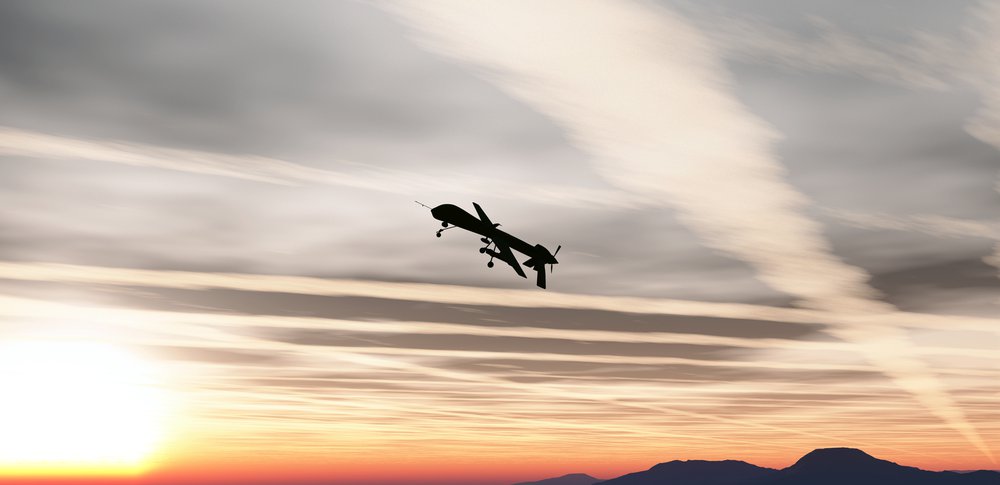
Libya is the latest country to which the United States has extended its controversial armed drone program鈥攑art of its robust counterterrorism campaign in countries outside of conventional war zones such as Afghanistan and Iraq. These countries include Pakistan, Somalia, and Yemen.1
The U.S. drone targeted-killing program began in Yemen in 2002, under the Bush administration, when a Predator struck a sedan packed with six men driving east of Yemen鈥檚 capital.2 It would be seven years before another strike occurred there. However, during this pause the United States conducted capture and rendition operations in Somalia, beginning in 2003, and on June 19, 2004, the United States conducted its first known drone strike in Pakistan, which targeted and killed the prominent Taliban leader Nek Muhammad in South Waziristan.3 The covert wars in these three countries increased dramatically under President Barack Obama, and in 2013, the Obama administration promulgated the Presidential Policy Guidance (PPG). This governed the execution of counterterrorism direct action operations, including drone strikes and ground raids, in countries outside of declared war zones such as Afghanistan and Iraq.
Libya is the latest country to which the United States has extended its controversial armed drone program鈥攑art of its robust counterterrorism campaign in countries outside of conventional war zones such as Afghanistan and Iraq.
Strikes in Libya were authorized under Obama鈥檚 PPG in the second half of 2016, in an effort to destroy ISIS鈥檚 stronghold in the coastal city of Sirte. At the request of the internationally recognized Government of National Accord, the United States launched a three-phase initiative to counter jihadist groups in Libya. The effort encompassed Operation Odyssey Resolve, which consisted of surveillance and reconnaissance missions; a target selecting operation named Operation Junction Serpent; and Operation Odyssey Lightning, a combination of drone attacks and airstrikes that started in August 2016.4 The August tranche of strikes followed months of covert ground operations by U.S. Special Forces gathering intelligence from rebel groups.5 鈥淲e are employing a variety of platforms to provide key information to the GNA-aligned forces. As well, we have the ability to conduct manned and unmanned airstrikes against [ISIS] targets in Sirte to help enable the GNA-aligned forces to make a decisive and strategic advance,鈥� Col. Mark Cheadle, a spokesman for the U.S. Africa Command (AFRICOM), told the Military Times at the time.6
AFRICOM concluded Operation Odyssey Lightning on Dec. 19, 2016, announcing in a press release that its goal of expelling ISIS from Sirte had been accomplished. 鈥淚n partnership with the Libyan Government of National Accord,鈥� the release stated, 鈥渢he operation succeeded in its core objective of enabling GNA-aligned forces to drive Daesh [ISIS] out of Sirte by conducting 495 precision airstrikes against Vehicle Borne Improvised Explosive Devices, heavy guns, tanks, command and control centers and fighting positions.鈥�7
That operation didn鈥檛 completely quash ISIS in Libya, however, and since 2016, the United States has continued targeting the group with air and drone strikes. AFRICOM, which also oversees the strikes and raids in Somalia, publishes brief accounts of the strikes in Libya. However, U.S. government reporting of these strikes is inconsistent and, at times, incomplete. For example, the Department of Defense occasionally reports numbers on series of strikes without detailing specific incidents, excluding details such as the precise locations of strikes or casualty numbers. Additionally, AFRICOM does not distinguish between airstrikes and drone strikes in its reporting of individual attacks. According to the U.S. Air Force, 60 percent of the 495 strikes against ISIS in Sirte in 2016 were conducted by Reaper drones. Unmanned aircraft play a large role in the U.S. operations in Libya, mirroring U.S. counterterrorism tactics in similar conflicts.8
The United States has the highest standard of reporting strikes among international parties to the aerial conflict in Libya, and has the lowest number of strikes that have been reported to result in civilian fatalities, according to 麻豆果冻传媒 and Airwars data. However, there are reasons to doubt some of the Pentagon鈥檚 reports of strikes and casualties鈥攁nd to continue to push for greater transparency.
First, there is a lack of clarity around how the United States investigates allegations of civilian casualties. In a June 2017 briefing, Brig. Gen. Paul Bontrager, deputy director of operations for the U.S. Central Command, told reporters that the military rarely conducts site visits to locations where civilian casualties have been reported. 鈥淚t鈥檚 a rare thing with strikes like this that we can get on the ground in person, or that we can talk to anybody on the ground.鈥�9 He was speaking about a March 2017 strike on a mosque in Aleppo, Syria, that Human Rights Watch says killed at least 38 civilians.10
Also, the Pentagon has seemingly taken steps to conceal the extent of its operations in Libya and elsewhere. Since January 2017, the U.S. Air Force has conducted at least eight airstrikes in Libya. However, AFRICOM initially self-reported only four of those strikes in press releases on its website鈥擩anuary 19, September 24, and September 28 in 2017; and March 24, 2018.
The United States has the highest standard of reporting strikes among international parties to the aerial conflict in Libya, and has the lowest number of strikes that have been reported to result in civilian fatalities
The March 24 strike, which occurred near Ubari, Libya and killed two 鈥渢errorists,鈥� according to AFRICOM, did not originally appear in a press release. When asked in email about the existence of a press release for this strike, Maj. Karl Wiest responded, 鈥溾�ur goal is always to be as transparent as possible while taking into account operational security, force protection and diplomatic sensitivities. Unless operational requirements prevent doing so, we acknowledge all strikes 鈥� either by press release or response to query. When we limit our acknowledgement to responses to query, as we did with the strike on March 24, it is because of a realistic operational security concern, a significant force protection matter, or potential diplomatic sensitivities.鈥�11
AFRICOM spokesman Maj. Wiest later disclosed, after being asked by a reporter, the additional four U.S. strikes in Libya that hadn鈥檛 appeared in Pentagon press releases. Wiest told the New York Times that commanders decided to use a practice called 鈥渞esponses to questions.鈥� That means certain strikes are revealed only if journalists, who are sometimes tipped off by local reporting, specifically ask about them.12 In response to direct questions from Airwars and 麻豆果冻传媒, the dates and locations of these four additional recent U.S. strikes in Libya have now been released. The dates and locations of these strikes are as follows: Friday, September 29, 2017, approximately 100 miles southwest of Sirte; Monday, October 9, 2017, approximately 250 miles south of Sirte; Wednesday, October 18, 2017, in the Wasdi al-Shatii district; and Tuesday, January 23, 2018, near Fuqaha in central Libya.13 All but one strike killed a 鈥渟mall number of ISIS militants.鈥�14 The January 23 strike destroyed two vehicles.15
Similarly, 麻豆果冻传媒 and Airwars reached out to AFRICOM on June 6, 2018, after local social media reports linked U.S. aircraft to a strike on a car in Libya. AFRICOM responded in email, saying 鈥淯.S. forces conducted a precision airstrike near Bani Walid, Libya, on June 6, killing four (4) ISIS-Libya militants鈥� and then released an official statement to the media about the strike.16
In response to direct questions from Airwars and 麻豆果冻传媒, the dates and locations of these four additional recent U.S. strikes in Libya have now been released.
Second, on May 1, 2018,17 the Trump administration missed a statutory requirement put in place by Congress for the Pentagon to submit a report to the legislature, no later than May 1 each year, on U.S. military operations that zero were 鈥渃onfirmed, or reasonably suspected, to have resulted in civilian casualties.鈥�18 The congressional mandate and a similar Obama-era executive order were part of a comprehensive effort to increase transparency around counterterrorism operations occurring 鈥渙utside of a declared theater of active armed conflict,鈥� which include Pakistan, Yemen, Somalia, and Libya.
The Pentagon released the report on June 1, 2018, one month overdue, reporting 499 civilian fatalities from 2017 in Iraq, Syria, Afghanistan, and Yemen.19 The report says there were no credible allegations of civilian deaths to emerge from Libya. 麻豆果冻传媒 and Airwars data on airstrikes in Libya supports the Pentagon claim of no civilian deaths in 2017 from U.S. airstrikes in Libya.
AFRICOM has not reported any civilian deaths in its operations in Libya. Yet according to 麻豆果冻传媒 and Airwars data, local reporting suggests the United States has killed between 170 and 218 militants in Libya and is reportedly individually responsible for at least 10 and potentially as many as 20 civilian deaths there (Fig. 4). As stated earlier in the report, some strikes in our database are attributed to more than one belligerent. This is because multiple belligerents may be claimed for a single strike if the incident is contested or the strike was a joint action. In these cases which also name the United States as responsible, the United States could potentially be responsible for up to 54 additional civilian deaths. As stated earlier, AFRICOM has denied all allegations of civilian casualties.

On March 25, 2018, the United States conducted a drone strike targeting al-Qaeda in Libya, which was confirmed in a press release and to the New York Times by Robyn M. Mack, a spokeswoman for AFRICOM. Mack erroneously said this strike was the first against al-Qaeda in Libya, according to the Times report.20 However, there had been a June 2015 airstrike targeting Mokhtar Belmokhtar, the mastermind of an attack on an Algerian gas plant that killed three Americans and dozens of other hostages鈥攖he first U.S. direct action against al-Qaeda in Libya, which preceded the counter-ISIS strikes.21 Nevertheless, the March 25 strike might signal a shift in the U.S. counterterrorism campaign in North Africa. Barring the Belmokhtar strike, all previous strikes between 2012 and 2018 in Libya specifically targeted ISIS.22 A move to expand U.S. strike targets to include al-Qaeda militants, who operate in pockets of southern Libya, could extend U.S. military activity in the country.
In the course of our research we鈥檝e documented 540 total airstrikes that were attributed to the United States in media reports. Strikes in our database attributed solely to the United States resulted in a minimum of 20 and maximum of 17 civilian deaths. For some strikes, reports were mixed, with separate news sites attributing the same attack to the United States or other belligerents. These strikes resulted in a minimum of 34 civilian deaths and potentially as many as 54. For the dates and locations of all of these strikes, see Appendix B.
Airstrikes and Civilian Casualties in Libya
- Key Findings
- Glossary of Belligerents
- Map of Territorial Control in Libya as of May 2018
- An Overview of the Air Campaigns in Libya since 2012
- The Conflicts in Libya 2011-2018
- The Jihadist Environment in Libya Today
- The U.S. Counterterrorism War and Libya
- Strikes by Libyan Belligerents: the GNA and the LNA
- Reported Strikes by France, Egypt and the UAE
- Conclusion
- Appendices
Citations
- 麻豆果冻传媒 tracks U.S. drone strikes and other operations in Pakistan, Yemen and Somalia. Our data can be accessed here: source
- 麻豆果冻传媒鈥檚 data and analysis of drone strikes in Yemen can be accessed here: source
- 麻豆果冻传媒鈥檚 data and analysis of drone strikes in Pakistan can be accessed here: source
- Andrew Tilghman, 鈥淯S Conducts New Round of Airstrikes Against ISIS in Libya,鈥� Defense News, Aug. 1, 2016,
- Ibid.
- Ibid.
- U.S. Africa Command Public Affairs, 鈥淎FRICOM Concludes Operation Odyssey Lightning,鈥� United States Africa Command, Dec. 20, 2016,
- Senior Airman Christian Clausen, 鈥淧roviding freedom from terror: RPAs help reclaim Sirte,鈥� Aug. 1, 2017,
- Airwars Staff, 鈥淭ranscript of Pentagon鈥檚 Al-Jinah Investigation media briefing: Department of Defense Off-Camera Press-Briefing by Brigadier General Bontrager,鈥� Airwars.org, June 27, 2017,
- 鈥淎ttack on the Omar Ibn al-Khatab Mosque,鈥� Human Rights Watch, April 18, 2017,
- Researcher email from USAF Maj. Karl J. Wiest USAFRICOM/Media Relations, Received: March 26, 2018.
- Eric Schmitt, 鈥淯nder Trump, U.S. Launched 8 Airstrikes Against ISIS in Libya. It Disclosed 4.鈥� New York Times, March 8, 2018,
- Email correspondence with AFRICOM.
- Ibid.
- Ibid.
- Researcher email from USAF Maj. Karl J. Wiest USAFRICOM/Media Relations, Received: June 6, 2018.
- Greg Jaffe, 鈥淲hite House ignores executive order requiring count of civilian casualties in counterterrorism strikes,鈥� Washington Post, May 1, 2018,
- 鈥淗.R.2810 – National Defense Authorization Act for Fiscal Year 2018,鈥� Congress.gov. Dec. 12, 2017,
- Helene Cooper, 鈥淯.S. Strikes Killed Nearly 500 Civilians in 2017, Pentagon Says,鈥� June 1, 2018,
- Declan Walsh and Eric Schmitt, 鈥淯.S. Strikes Qaeda Target in Southern Libya, Expanding Shadow War There,鈥� New York Times, March 25, 2018,
- Benjamin Weiser, 鈥淯.S. Charges Algerian in Deadly Gas Plant Attack,鈥� New York Times, July 19, 2013,
- Walsh and Schmitt, 鈥淯.S. Strikes Qaeda Target in Southern Libya, Expanding Shadow War There.鈥�