
Wrong clients, or wrong products? Savings rising to the fore as crucial to microfinance

In a yesterday, Meritxell Martinez highlighted the recent assertion that microfinance may have little impact on education spending. But she followed up by highlighting three reports, citing our work as highlighting promising ideas and research in microfinance that could have a beneficial impact on education outcomes.
What does she cite?
- : Conditional cash transfers (CCTs)鈥攖he linking of government payments with desired behavior (school attendance, health checkups, etc.)鈥攈ave been around for over a decade. But payment methods are often messy, sometimes even as piles of cash-stuffed envelopes transported by trucks to beneficiaries in remote locations. In their issue brief (and a ) Jamie Zimmerman and Yves Moury argue that we should take advantage of the growing momentum surrounding CCTs to connect the unbanked to financial services, by linking CCT payments to savings accounts. A few youth-oriented CCT programs have already begun doing so; Mexico鈥檚 , for example, has led to demonstrable rises in school attendance and graduation rates.
- : 鈥淭he poor can save.鈥� We鈥檝e heard this mantra repeatedly, ever since the publication of Stuart Rutherford鈥檚 seminal The Poor and their Money, and Rutherford鈥檚 co-author Daryl Collins repeatedly emphasized this at . But even if the propensity to save isn鈥檛 an issue, matched savings programs and policies can provide a valuable gateway to financial services for the unbanked, and spur the habit of lifelong saving and asset building.
- : Why offer savings products to children? Savings products for young people have multiple outcomes. They of course can they be used to cultivate the habit of savings among younger generations. But CSA products, programs, and policies can likewise be designed with the intention of facilitating socio-economic development outcomes, such as furthering educational goals and enhancing health outcomes (the SUUBI Program in Uganda, spearheaded by Columbia University Professor and Global Assets Project Research Fellow Fred Ssewamala, has shown promising resutls in this respect).The Global Assets Project is already involved in the design of a , and with funding from the MasterCard Foundation, is collaborating with partners in the research and design of .
Citing Harvard econoimst and behavioral economics expert Sendhil Mullainathan, Martinez suggests that perhaps part of the reason why problems have arisen in the field microfinance recently is not because we鈥檙e lending to the wrong clients, but because we may not be offering all the right products. In that bundle of financial services, savings products should certainly be among them.
More 麻豆果冻传媒 the Author
Issues
Programs/Projects/Initiatives
Topics
Related
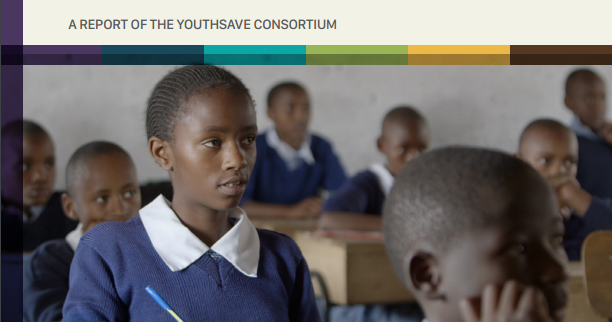
85,000 Low-income Youth Open Savings Accounts through YouthSave
A Conversation on the Weekly Wonk: Should We Bank On It?
Global Anti-Poverty Targets Tepid